01 · Bespoke Assessment
Free photo review
Submit three photographs. Dr. Arslan reviews every case personally within 24 hours and tells you plainly whether surgery is the right next step.
Surgeon-led hair restoration clinic in Levent, Istanbul since 2005.
Explore all →Send 3–5 photographs. Personal response within 24 hours — no intermediaries.
Request Now →Selected for your specific hair loss pattern and aesthetic goals.
FUE vs DHI →FUE, DHI or Algorithmic FUE™ — Dr. Arslan recommends based on your photographs and Norwood stage.
Get Assessment → Try Graft Calculator →FUE Europe member. Ministry of Health accredited clinic. Levent, Istanbul — 60–80% less than UK or US.
View Package →FUE Europe member. Ministry of Health accredited. 17+ years. 3,000+ personal procedures. One patient per day.
Full Profile →One patient a day, every package surgeon-led. Every result personally accountable.
Read Philosophy →No hidden costs. Hotel, transfers, surgery and aftercare in one price.
View Pricing →Silver · Gold · VIP — 5-star hotel · Airport transfers · PRP included
View Pricing → Graft Calculator →Every case personally overseen by Dr. Arslan Musbeh, from consultation to results.
Full Gallery →Not every case needs a transplant. Medical treatments, therapies and specialist options.
Overview →Guides, tools and expert content — written by Dr. Arslan Musbeh.
All Articles →Afro-textured follicles curve beneath the skin, while a standard punch is cylindrical — Dr. Arslan Musbeh adapts angle, punch size and extraction speed to each patient’s hair characteristics.
The Process
From your first photographs to a full result at 12 months, with Dr. Arslan Musbeh involved at every stage.
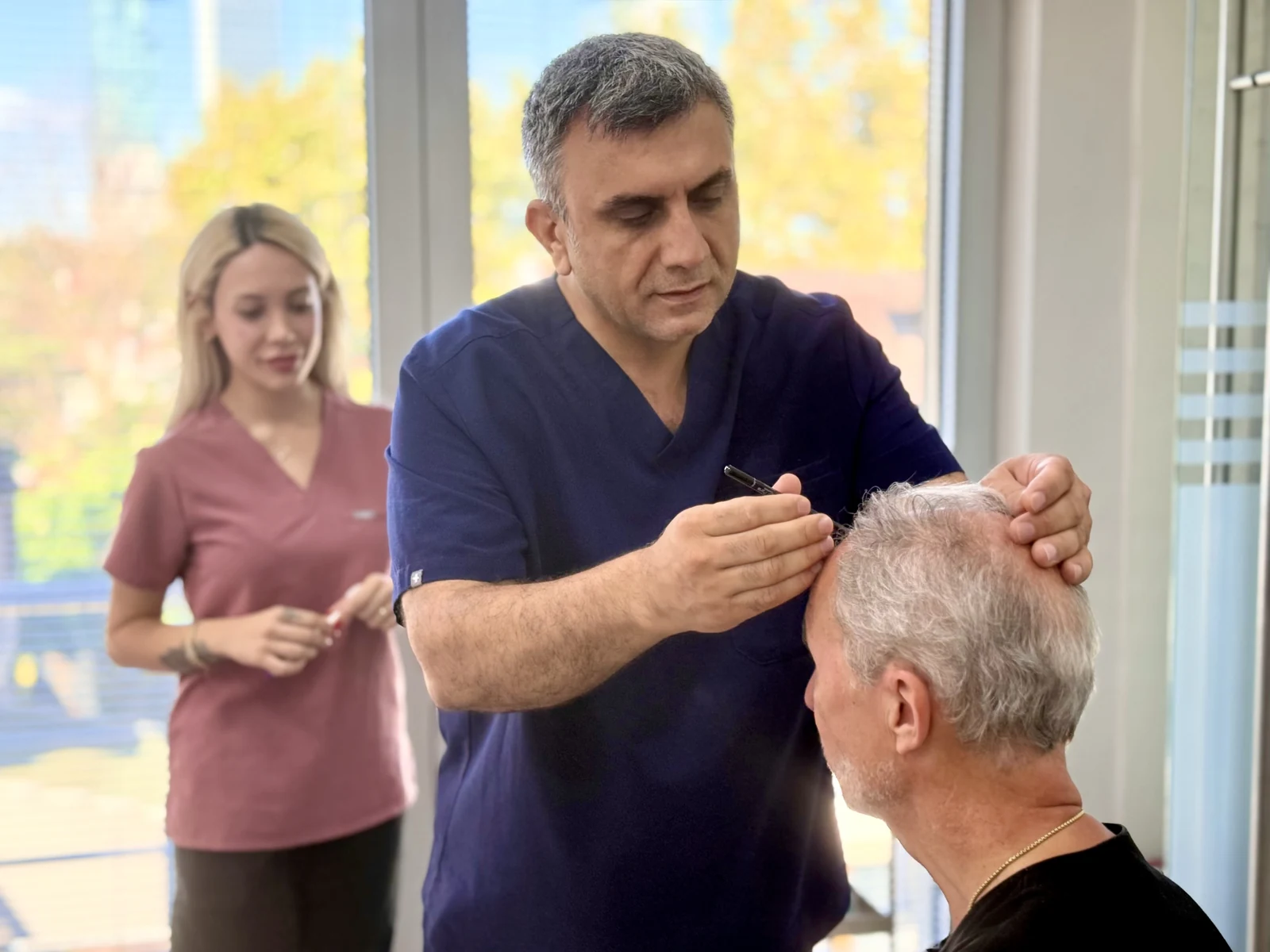
01 · Bespoke Assessment
Submit three photographs. Dr. Arslan reviews every case personally within 24 hours and tells you plainly whether surgery is the right next step.
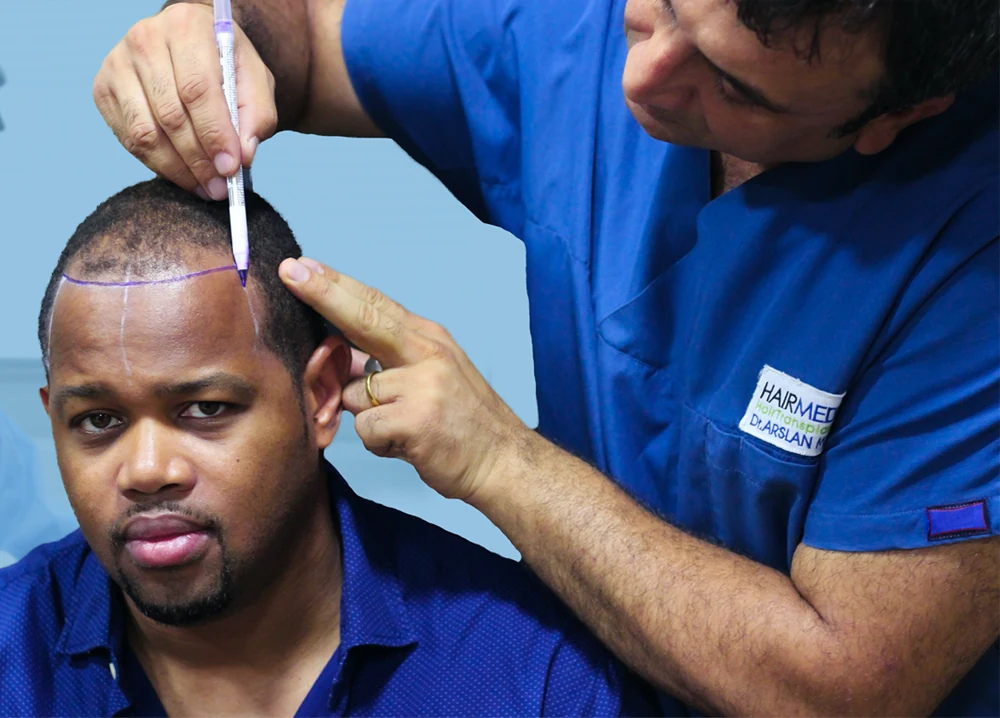
02 · Technique & Plan
FUE, DHI or Algorithmic FUE™ is confirmed by the surgeon directly, with a graft estimate and a fixed, all-inclusive price.

03 · Arrival Istanbul
A VIP transfer meets you at the airport and takes you to your 5-star hotel, followed by a pre-op consultation day at the Levent clinic.
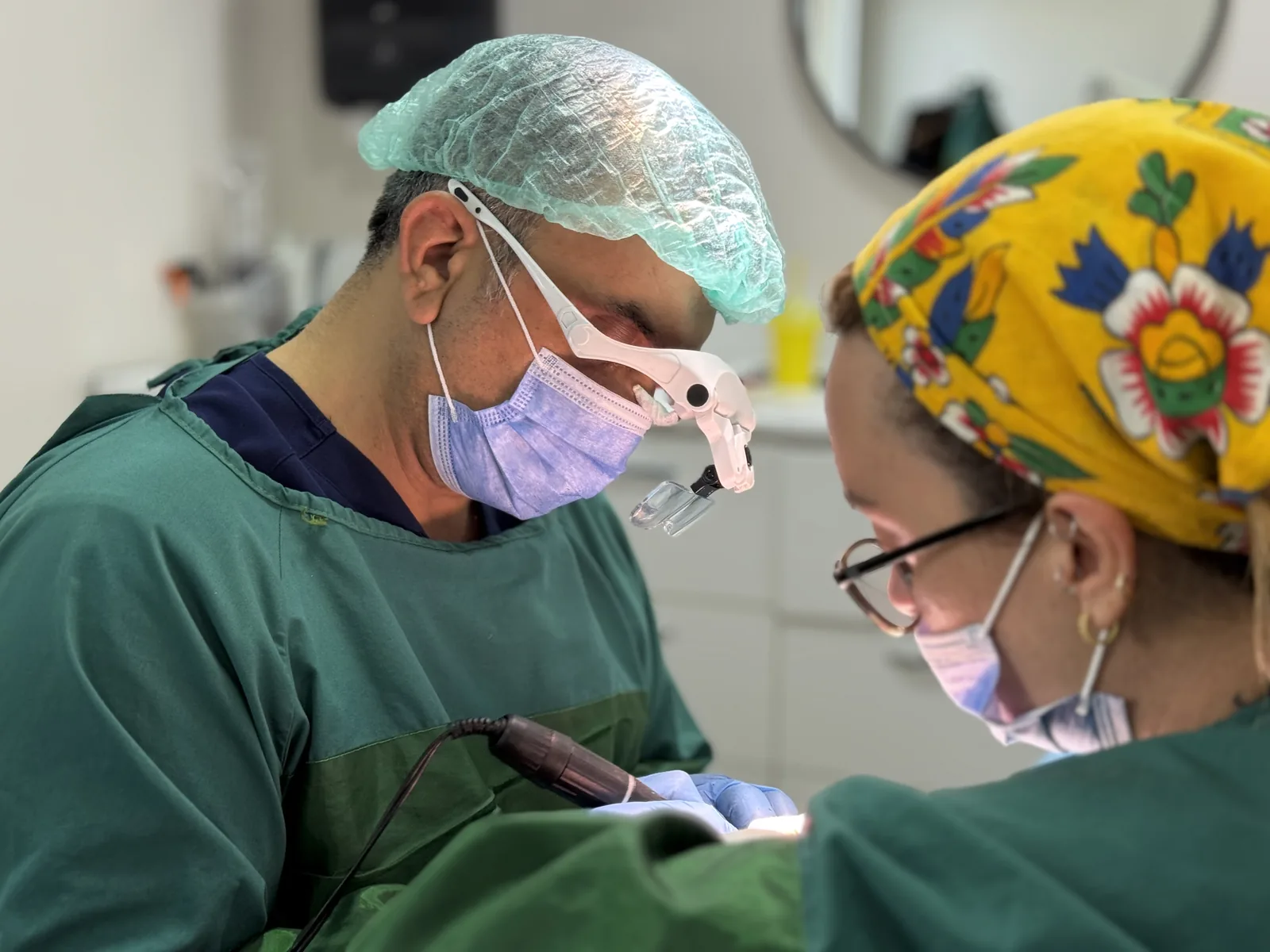
04 · Surgery Day
Dr. Arslan personally leads every package, performing the channel-opening incision himself in Gold and VIP. You are the only patient in the clinic that day.
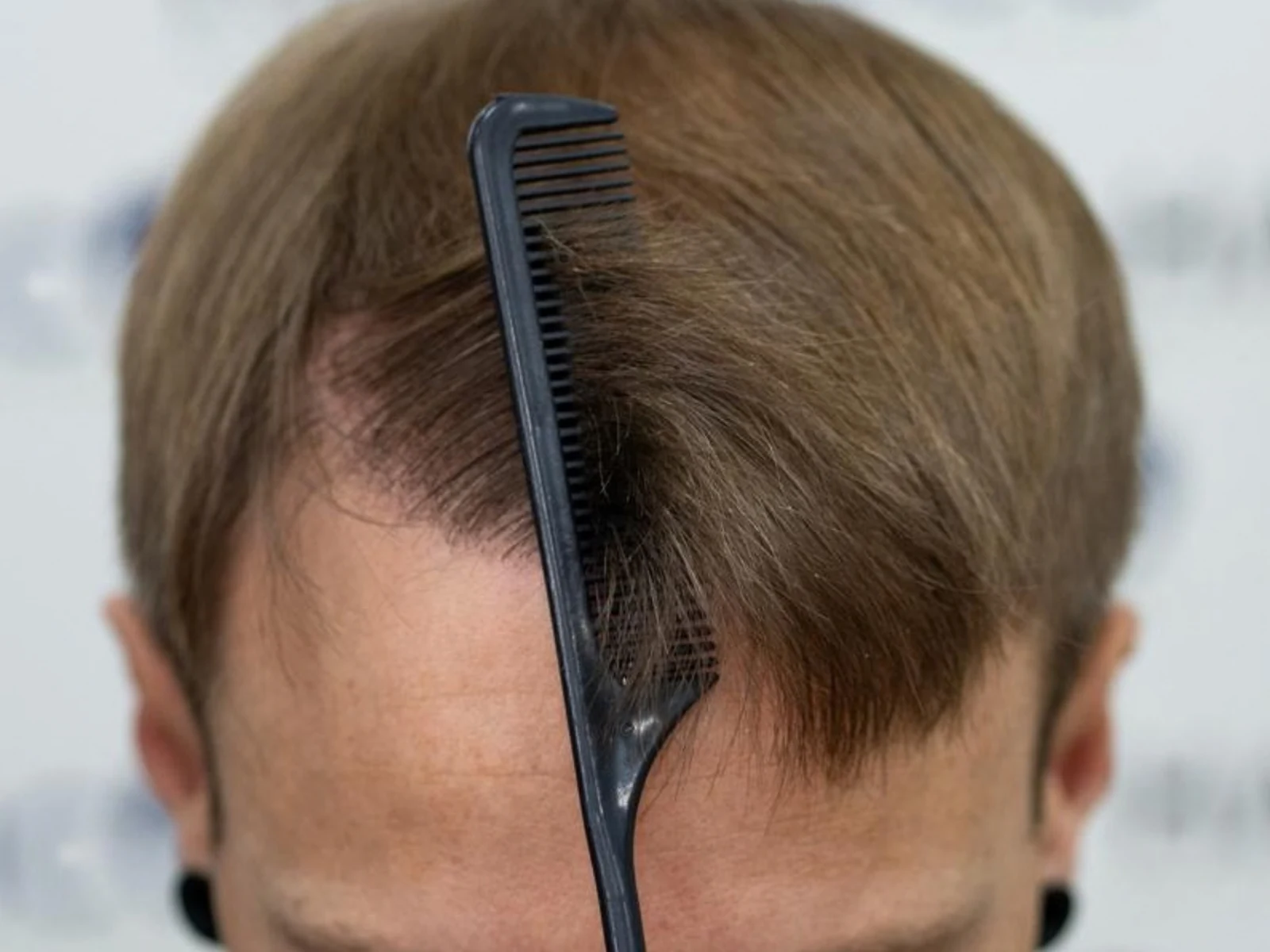
05 · Results at 12 Months
Full result visible at around 12 months. Our team supports you through 12 months of follow-up, including the first wash at the clinic.
Afro-textured hair presents a specific challenge in FUE surgery: the follicle beneath the skin is curved, while the punch used for extraction is cylindrical. This means that standard extraction angles used for straight hair lead to follicle transection (cutting the follicle) — damage rates that are typically much higher in the hands of surgeons without experience in afro-textured extraction.
At Hairmedico, Dr. Arslan Musbeh employs a modified extraction technique that accounts for follicle curvature: a combination of angle adjustment, punch size selection and extraction speed adapted to each patient's specific hair characteristics. This approach significantly reduces transection rates and preserves graft integrity.


A raised-scarring tendency is more common in darker skin and is something to establish before surgery rather than discover after it. The history that matters is simple and you already know it: how previous cuts, piercings, vaccination sites or operations healed. Raised, spreading or itchy scars in your history change the plan.
Where the tendency is present, the adjustments are practical — smaller extraction punches, wider spacing across the donor area so no single zone is over-harvested, and a follow-up schedule that keeps watching the donor site after the recipient area has settled. Where there is a strong keloid history, Dr. Arslan will discuss it openly with you before agreeing to operate.
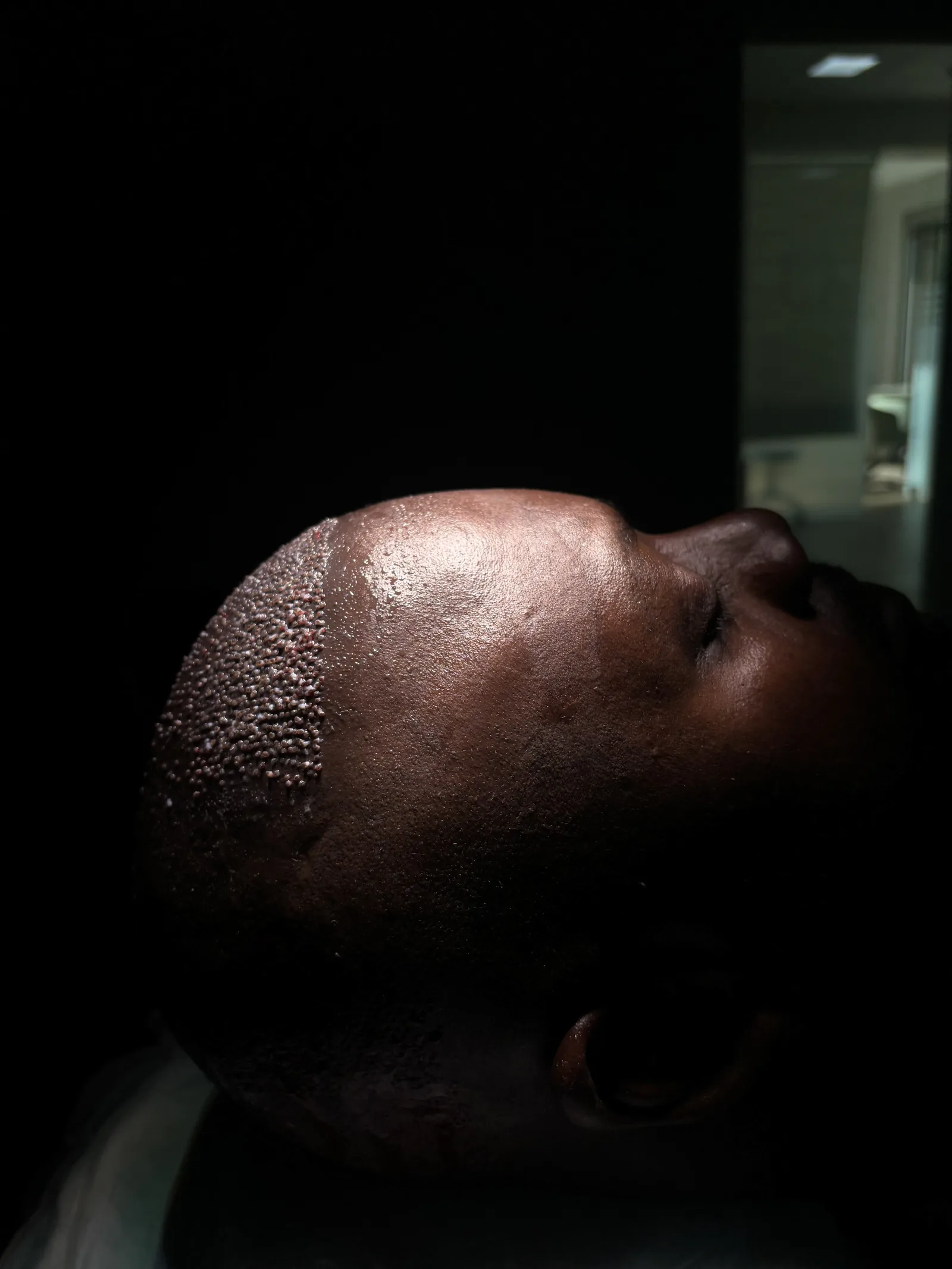
Traction alopecia — loss caused by sustained tension from braids, locs, weaves or tight ponytails — behaves differently from androgenetic loss. It is not progressive in the same way, so a hairline restored after the tension is removed is not chasing a pattern that keeps moving. That makes it, in principle, one of the more predictable cases to plan.
There is one condition attached, and it is not negotiable: the styling that caused it has to stop. Grafts placed under continuing tension face exactly the force that removed the original hair. Where the follicles have not yet scarred, removing the tension alone sometimes recovers density without surgery — which is worth establishing before booking anything.
Protective styles can usually resume once healing is complete, at a tension the scalp tolerates. The timing is set at follow-up rather than in advance, because it depends on how the grafts have settled.

Male pattern loss in Black men follows the same DHT-driven mechanism as in every other population, so the frontal hairline, the temples and the crown are the areas that recede first. What differs is the design. An afro hairline is typically flatter and sits with less temple recession than a Caucasian hairline, and many patients wear a defined line-up at the barber. The surgical hairline is not that line-up: it is placed a few millimetres behind where the barber would shape it, so the result still looks correct as the face ages and leaves room for the barber to work.
Because each coiled graft covers more surface area than a straight one, the men in the gallery below reached full-looking coverage with 2,500 to 3,200 grafts, counts that would read as medium density on straight hair. Where cornrows, locs or tight fades have added traction loss at the edges, the plan treats those zones as traction cases: the style has to change first, and the edges are restored once the tension is gone.
The majority of women who contact us with afro-textured hair are not losing hair in a male pattern. They are losing the edges: the frontal hairline and temples thinned by years of braids, weaves, wigs with adhesive or tight buns. This is traction alopecia and, once the pulling stops, it is one of the most reliable patterns to restore because the loss is not progressive.
One condition has to be excluded first. Central centrifugal cicatricial alopecia (CCCA), a scarring hair loss that starts at the crown and spreads outward, is more common in Black women and does not respond to transplantation while it is active. If the scalp shows smooth, shiny patches, tenderness or itching at the crown, Dr. Arslan will ask for a dermatology opinion or a biopsy before any surgery is planned. Where CCCA has been inactive for at least a year under treatment, a transplant into the stable area can be considered.
Women do not need a full shave. The donor strip at the back is clipped in a band that the surrounding hair covers immediately, and the recipient hairline is prepared without shaving the rest of the head. The 2,550-graft case in the gallery below was done this way.
Edges, temples, CCCA timing, keloid care and the return to protective styles are covered on the dedicated afro hair transplant for women page.
The extraction challenge is the same in both techniques: a curved follicle has to leave the scalp intact. The difference is the implantation. In Sapphire FUE the channels are opened first with a sapphire blade, which gives the surgeon full control of angle, direction and spacing before any graft is placed. In DHI the graft is loaded into a narrow implanter needle and placed in one movement.
For most afro-textured cases Dr. Arslan recommends Sapphire FUE. A coiled graft loaded into a narrow implanter is more likely to be bent or crushed than a straight one, and the channel-first approach lets the coil be seated in the direction the surrounding hair already grows. DHI is used selectively for afro hair: small areas, unshaven cases, and placement between existing hairs where the implanter's precision outweighs the handling risk. The choice is made at the in-person examination, not from photographs.
Afro-textured donor areas usually have fewer follicular units per square centimetre than straight-haired ones, but each unit carries more hairs, typically two to four, and the coil covers more skin. In practice the donor supply is comparable; it simply has to be harvested with wider spacing so no single zone looks thinned. Punch diameter is chosen per patient, generally slightly larger than for straight hair, after a test extraction confirms the transection rate is where it should be.
For advanced loss where the scalp donor cannot cover everything, beard hair is the second source. Beard grafts are coarser and are placed in the mid-scalp and crown, where they add density without being noticed, never in the frontal hairline. Chest and body hair are not used at Hairmedico: the yield is too low and the texture does not match.
Fewer than a straight-haired patient with the same bald area, because every coiled graft shades more scalp. The ranges below are what Dr. Arslan's afro cases typically require; the exact number is confirmed only after the donor area has been examined in person.
If you want a first estimate before sending photographs, the graft calculator gives a starting range; for afro-textured hair, expect the surgical number to land at or below it.
Healing follows the same sequence as any FUE, with two differences worth knowing in advance: the first regrowth often comes through finer and looser than your natural coil before it tightens, and coiled hair is more prone to ingrown hairs during months two to four.
The month-by-month detail is on the recovery timeline page; the afro-specific points above are what differ.
An afro-textured session takes longer than a straight-hair session of the same graft count, and that extra time is not billed. The price is the same fixed, all-inclusive package as every other Hairmedico patient, confirmed in writing before you travel and covering the surgery, hotel, VIP transfers, medication, the first wash and twelve months of follow-up.
For afro-textured hair most patients choose Gold or VIP, because extraction and channel direction are exactly the steps where the surgeon's hands matter most. Full inclusions and the deposit terms are on the pricing page.
Every photograph below is a Hairmedico patient with afro-textured hair, operated on by Dr. Arslan Musbeh in Istanbul and photographed at the clinic at 12 months. Tap a case to enlarge it.


Results vary with donor supply, the cause of loss and aftercare. These cases are shown with the patients' consent; the full gallery across all hair types is on the before & after page.
Short films from the Hairmedico YouTube channel: afro-textured patients in the clinic, their results, and Dr. Arslan at work. Videos load from YouTube only when you press play.
Answered by Dr. Arslan Musbeh.
Afro-textured follicles curve beneath the skin while the extraction punch is straight, so the angle, punch diameter and speed of extraction have to be adapted to each patient to avoid cutting the follicle. Dr. Arslan Musbeh has performed afro-textured cases for more than 17 years and runs a test extraction at the start of every session to confirm the transection rate before the full harvest.
Yes. The curl is determined by the follicle itself, not by the skin it is moved to, so a transplanted afro-textured graft grows with the same coil as the hair around it. The first regrowth at months three to five can look finer and looser; it tightens into your normal pattern by months six to nine.
Yes. Men are usually treated for pattern loss at the hairline, temples and crown; women most often for traction alopecia at the edges after years of braids, weaves or wigs. The technique is the same; the hairline design and the candidacy checks differ, which is why every case is assessed individually from photographs first and then in person.
It is harder to extract, not harder to grow. In inexperienced hands transection rates on afro-textured hair can be several times higher than on straight hair, which is where most poor results come from. With an adapted extraction technique the survival of the grafts is the same as for any other hair type, and the coil actually gives more visual coverage per graft.
For most afro-textured cases Dr. Arslan recommends Sapphire FUE, because opening the channels first gives full control over the angle and direction of each coiled graft, and the graft is not forced through a narrow implanter needle. DHI is used selectively: unshaven cases, small areas and placement between existing hairs. The final choice is made at the in-person examination.
Usually fewer than a straight-haired patient with the same area of loss, because each coiled graft shades more scalp. Edges and temples alone typically need 800 to 1,500 grafts; a full hairline and frontal third 1,800 to 2,600; hairline through mid-scalp 2,500 to 3,200. The men and the woman in our gallery were treated with 2,500 to 3,200 grafts. The exact number is confirmed after the donor area is examined.
Often yes, with adjustments. Dr. Arslan asks how previous cuts, piercings and operations healed; a mild hypertrophic tendency is managed with smaller punches, wider spacing in the donor area and closer follow-up. A strong keloid history is discussed openly before any decision, and in some cases a small test extraction is done first to see how the skin responds.
Yes, and it is one of the most predictable cases to plan, because the loss stops once the tension stops. Two conditions apply: the pulling style has to end for good, and the follicles must already be scarred rather than resting. If the edges are thinning but hair is still present, removing the tension alone can recover density, so we check that before booking surgery.
Central centrifugal cicatricial alopecia has to be inactive before a transplant can be considered, otherwise the grafts are placed into tissue that is still being destroyed. If the crown shows smooth, shiny patches, tenderness or itching, Dr. Arslan will ask for a dermatology assessment or a biopsy first. After at least a year of stability under treatment, transplantation into the stable zone is possible.
Men are usually shaved for the best access and the shortest session. Women are not: the donor band at the back is clipped under the surrounding hair, which covers it from day one, and the recipient hairline is prepared without shaving the rest of the head. A partial shave adds time to the session and is included at no extra cost.
Yes. Beard grafts are the standard second source for advanced loss. They are coarser than scalp hair, so they are placed in the mid-scalp and crown where they add density without being noticed, never in the frontal hairline. Chest and body hair are not used at Hairmedico because the yield and the texture match are poor.
No pulling styles for three months, and loose styles only after that. Relaxers and texturisers after six months. Dye after six to eight weeks with a patch test. Durags and wave caps can go back on after two weeks as long as they are soft and not tight; brushing for waves resumes after the first month.
The procedure is done under local anaesthetic; the only discomfort is the anaesthetic injections in the first minutes, which Dr. Arslan reduces with a slow, cooled technique. The session is longer than for straight hair because of the extraction care, but patients rest, eat and use their phone throughout. Afterwards most people manage with simple painkillers for one or two nights.
The same fixed, all-inclusive package as any other Hairmedico patient, with the extra session time not billed: Sapphire FUE from 2,600 euros (Silver), 3,900 euros (Gold, Dr. Arslan consults and opens every channel) and 5,500 euros (VIP, every step by Dr. Arslan); DHI from 3,200, 4,300 and 5,800 euros. Hotel, VIP transfers, medication, the first wash and twelve months of follow-up are included.
Three days is enough: arrival and consultation on day one, surgery on day two, and the first wash at the clinic on day three before you fly home. Two hotel nights and the VIP transfers are included in every package. Afro-textured sessions run longer than straight-hair sessions, so the surgery day itself is a full day.
Yes, when the donor area allows it. Beard and eyebrow work on afro-textured hair uses single-hair grafts placed at a very flat angle so the coil lies naturally. Dr. Arslan approves a combined session only after the donor assessment confirms there is enough supply for the scalp first; where the reserve is limited, the procedures are split into two visits to protect future options.
After researching countless clinics, I specifically didn't want a "hair mill." Dr. Arslan is hands-on throughout the entire process. I came from Australia and the experience was seamless.
Dr. Arslan was present throughout the surgery and personally performed the majority of key procedures. His professionalism and dedication made all the difference.
I already see good hair growth after only 17 weeks. The professionalism of the team and facilities was excellent.
Dr. Arslan was incredibly professional — he explained all procedures clearly. The clinic was spotless and the staff were super friendly.
From first contact, communication was prompt, transparent and efficient. My expectations were surpassed by the services and attention I received.
After 5 years of research I chose Hairmedico. Even on a basic package, Dr. Arslan performed the critical incision phase himself.