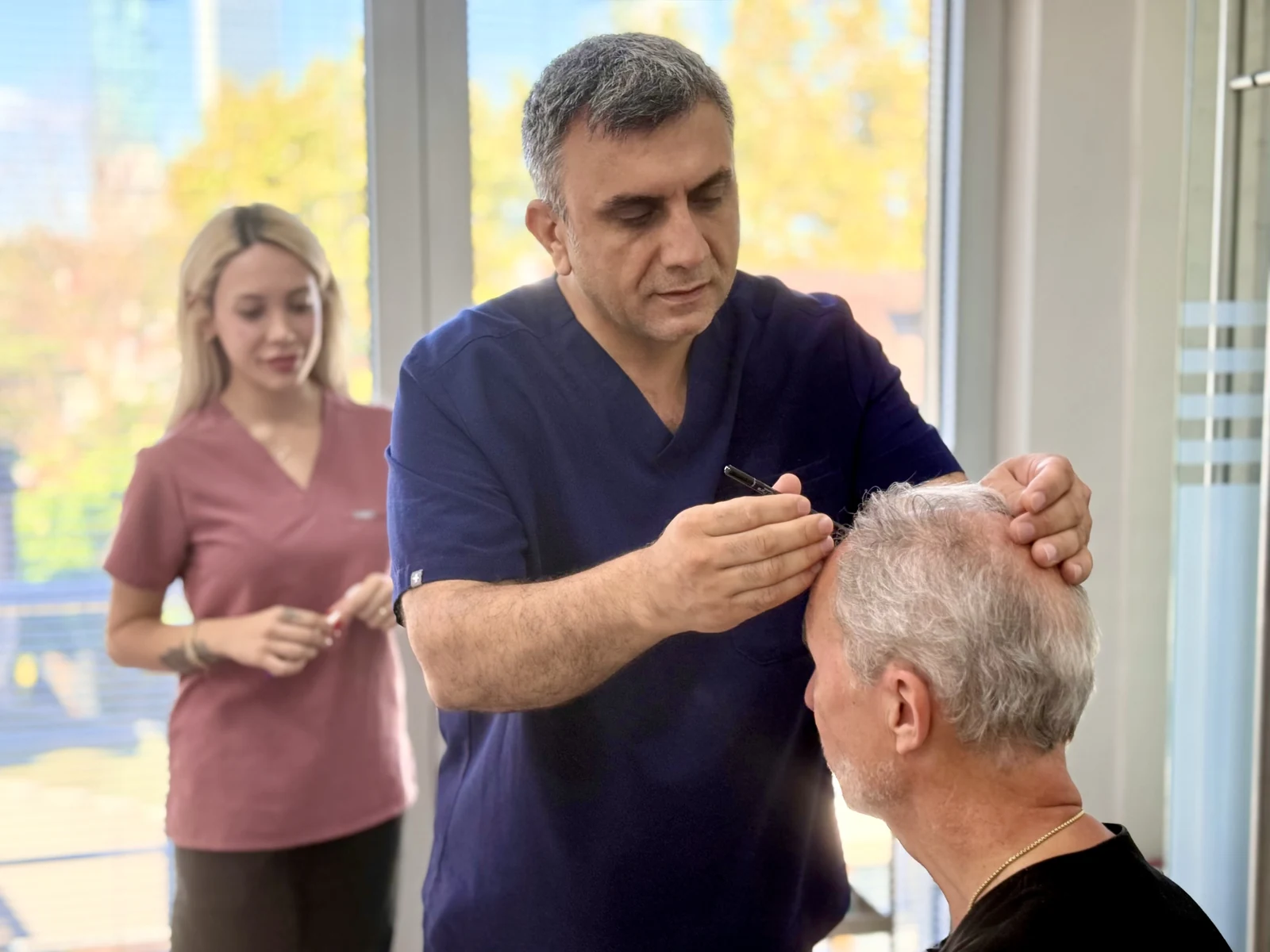
01 · Bespoke Assessment
Free photo review
Submit three photographs. Dr. Arslan reviews every case personally within 24 hours and tells you plainly whether surgery is the right next step.
Surgeon-led hair restoration clinic in Levent, Istanbul since 2005.
Explore all →Send 3–5 photographs. Personal response within 24 hours — no intermediaries.
Request Now →Selected for your specific hair loss pattern and aesthetic goals.
FUE vs DHI →FUE, DHI or Algorithmic FUE™ — Dr. Arslan recommends based on your photographs and Norwood stage.
Get Assessment → Try Graft Calculator →FUE Europe member. Ministry of Health accredited clinic. Levent, Istanbul — 60–80% less than UK or US.
View Package →FUE Europe member. Ministry of Health accredited. 17+ years. 3,000+ personal procedures. One patient per day.
Full Profile →One patient a day, every package surgeon-led. Every result personally accountable.
Read Philosophy →No hidden costs. Hotel, transfers, surgery and aftercare in one price.
View Pricing →Silver · Gold · VIP — 5-star hotel · Airport transfers · PRP included
View Pricing → Graft Calculator →Every case personally overseen by Dr. Arslan Musbeh, from consultation to results.
Full Gallery →Not every case needs a transplant. Medical treatments, therapies and specialist options.
Overview →Guides, tools and expert content — written by Dr. Arslan Musbeh.
All Articles →Everything to prepare before your procedure — medication timing, travel, and what to expect on arrival day. Reviewed by Dr. Arslan Musbeh.
The Process
From your first photographs to a full result at 12 months, with Dr. Arslan Musbeh involved at every stage.
01 · Bespoke Assessment
Submit three photographs. Dr. Arslan reviews every case personally within 24 hours and tells you plainly whether surgery is the right next step.
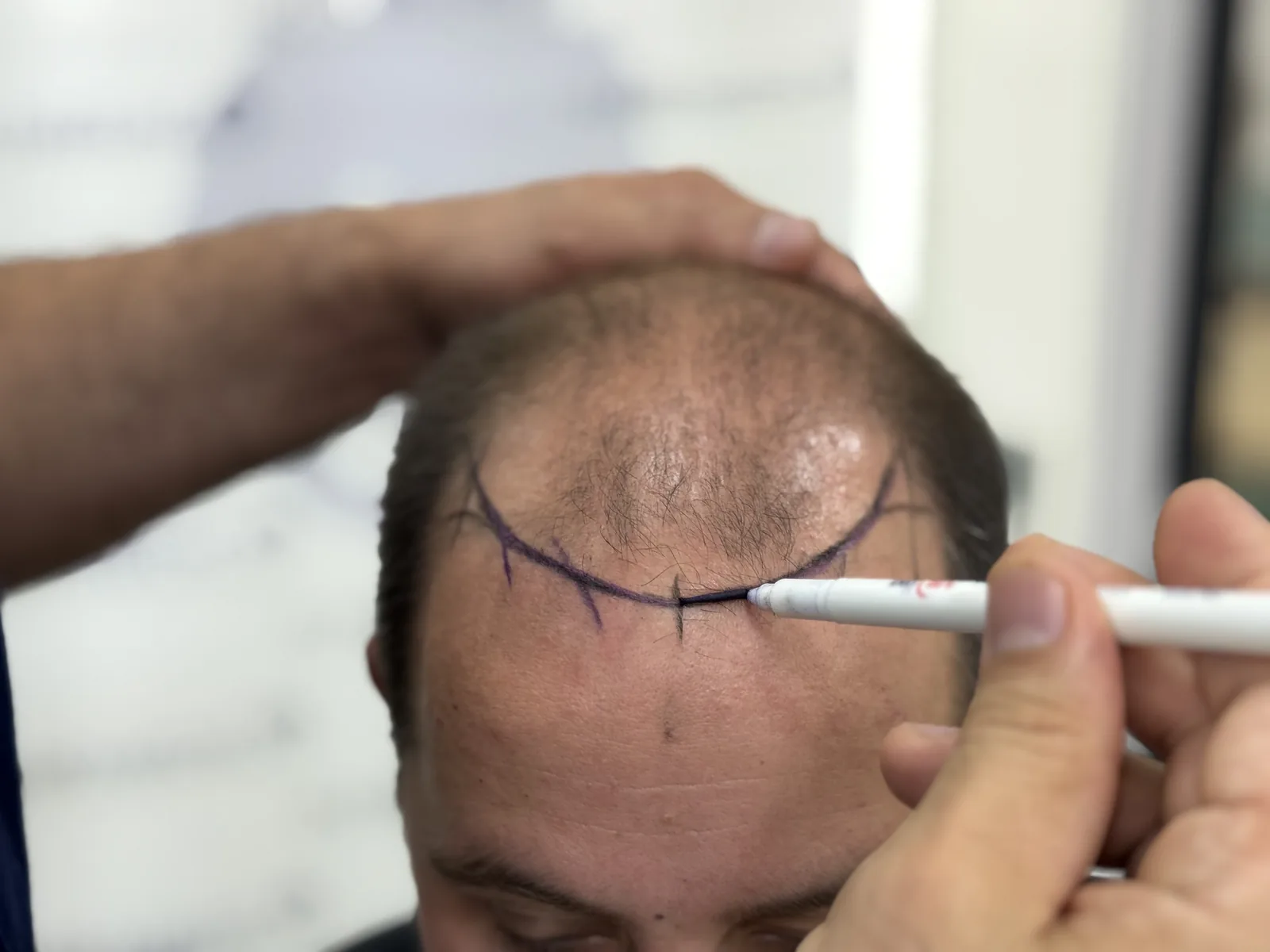
02 · Technique & Plan
FUE, DHI or Algorithmic FUE™ is confirmed by the surgeon directly, with a graft estimate and a fixed, all-inclusive price.
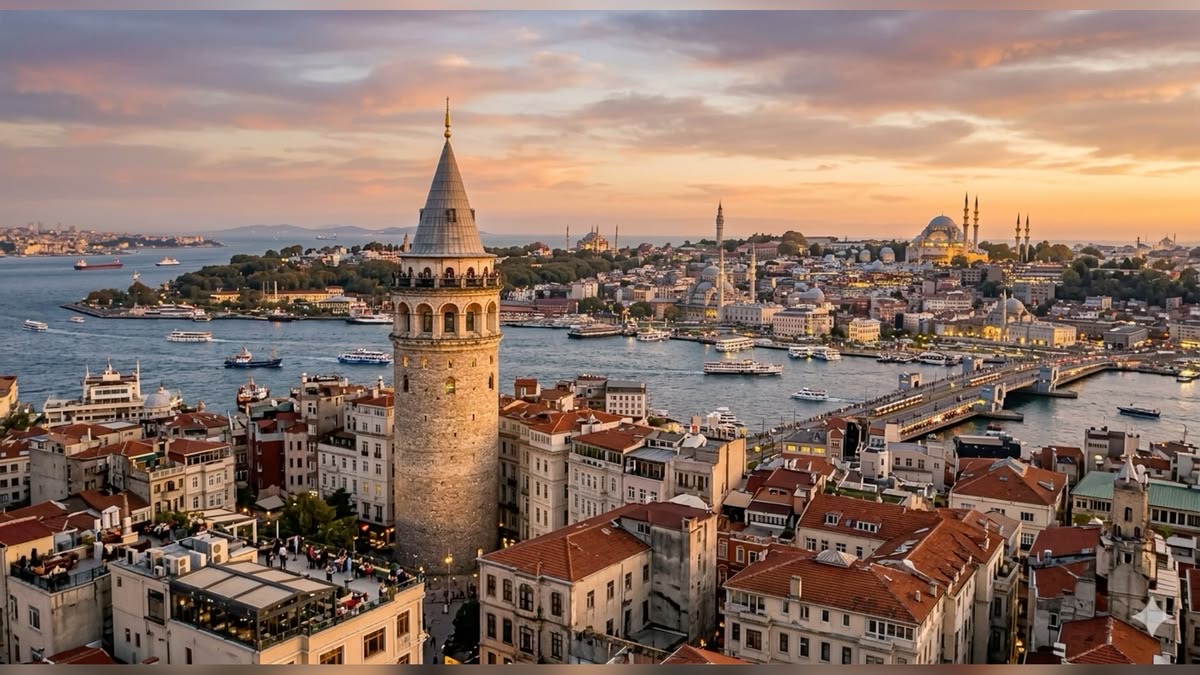
03 · Arrival Istanbul
A VIP transfer meets you at the airport and takes you to your 5-star hotel, followed by a pre-op consultation day at the Levent clinic.
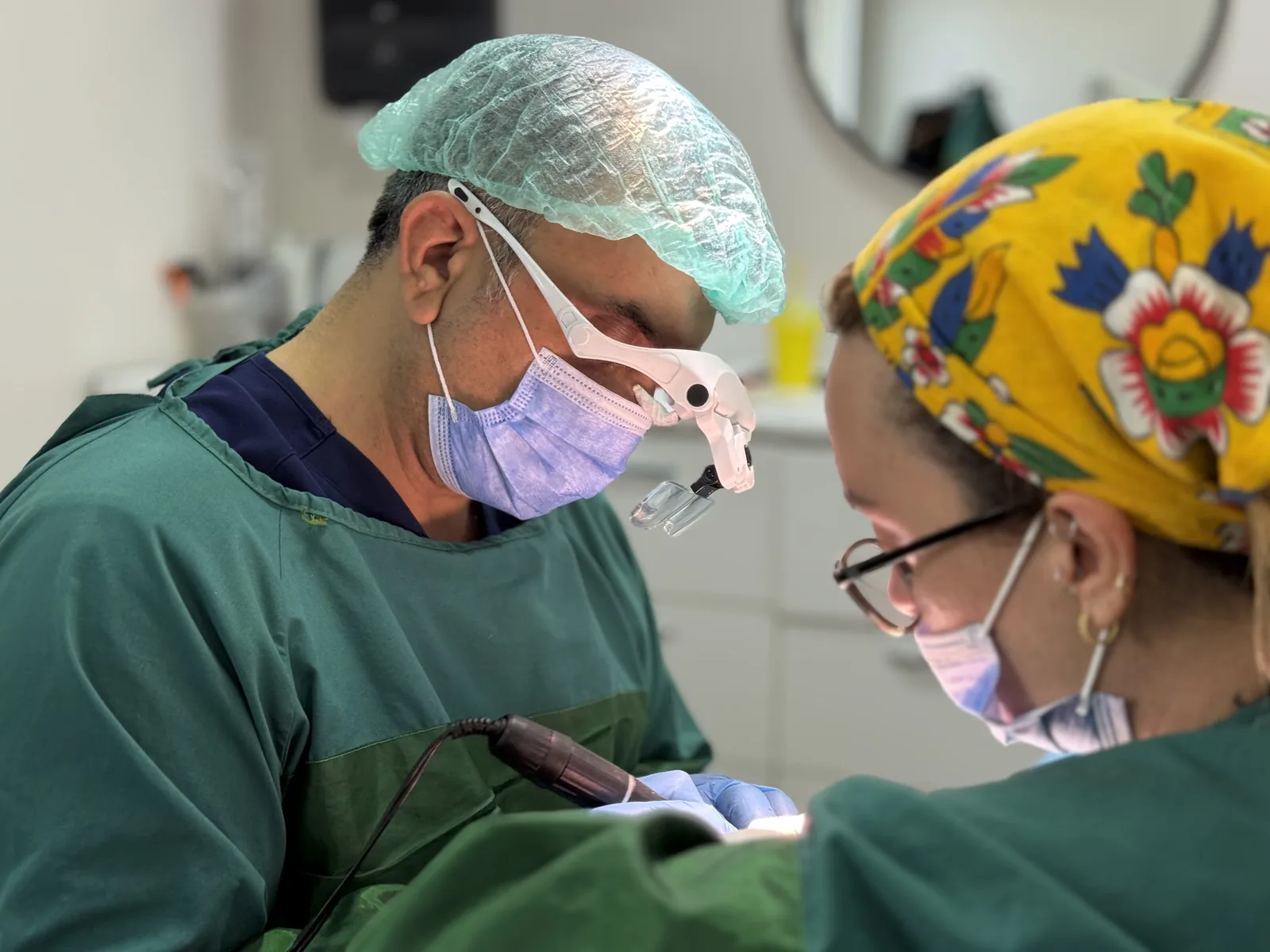
04 · Surgery Day
Dr. Arslan personally leads every package, performing the channel-opening incision himself in Gold and VIP. You are the only patient in the clinic that day.
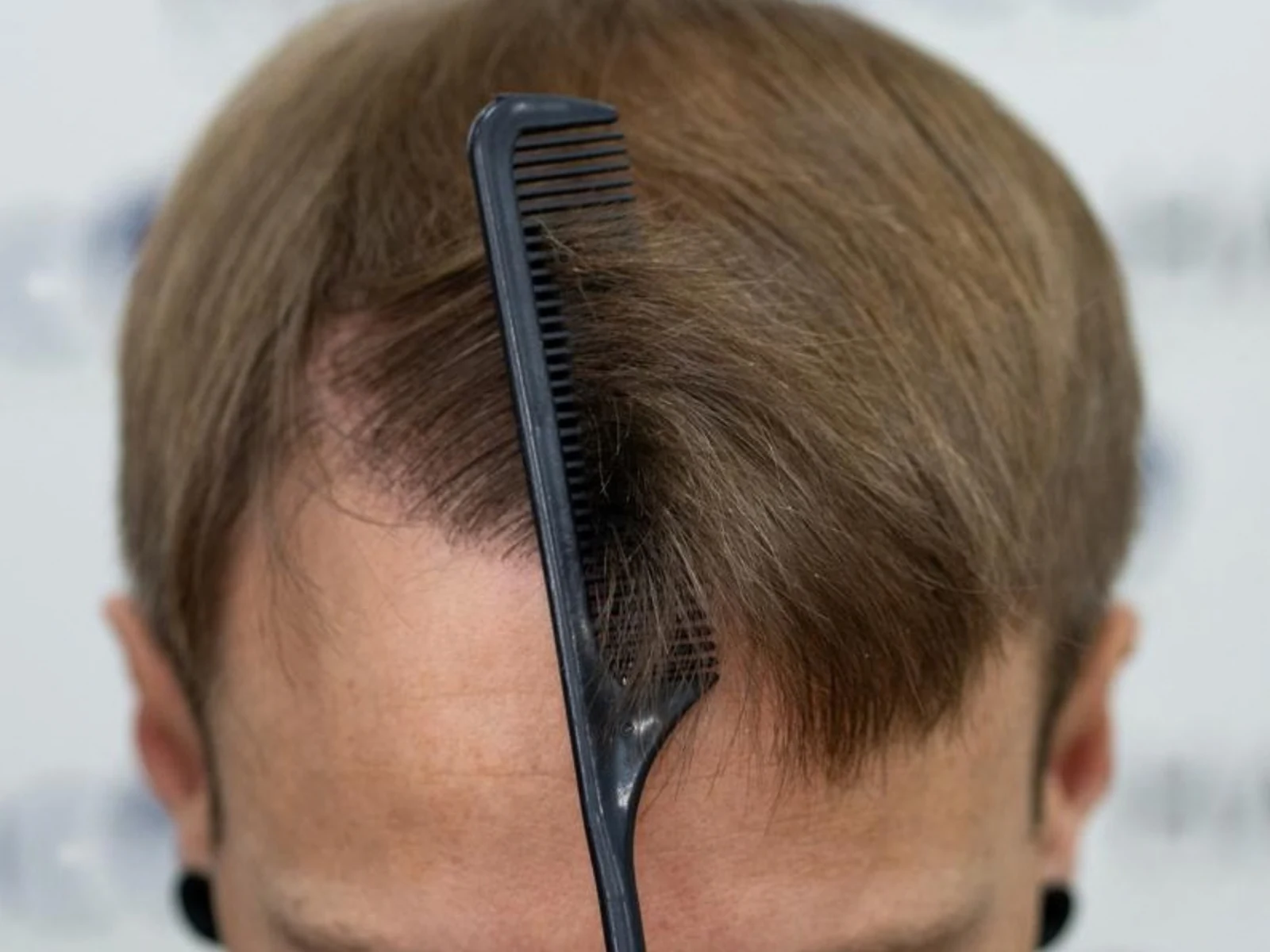
05 · Results at 12 Months
Full result visible at around 12 months. Our team supports you through 12 months of follow-up, including the first wash at the clinic.
Everything you need to know before, during and after a hair transplant at Hairmedico Istanbul — from preparation to final results.


Preparation starts about two weeks out. Stop any blood-thinning supplements — fish oil, vitamin E, ginkgo biloba — and aspirin unless your own doctor has told you otherwise; these increase bleeding and bruising during extraction. If you smoke, stopping two weeks beforehand gives the best result, though a minimum of three smoke-free days is required, since nicotine narrows blood vessels and slows how well transplanted follicles take to their new site. Alcohol should be avoided for the seven days before surgery for the same reason.
In the week before your appointment, leave the scalp alone: no minoxidil, no styling products, no harsh or medicated shampoo, and no cutting or shaving of either the donor area at the back and sides or the recipient area at the front. The night before surgery, wash your hair with a mild shampoo and skip conditioner, then eat a light breakfast the morning of — nothing heavy, since you'll be seated for several hours.
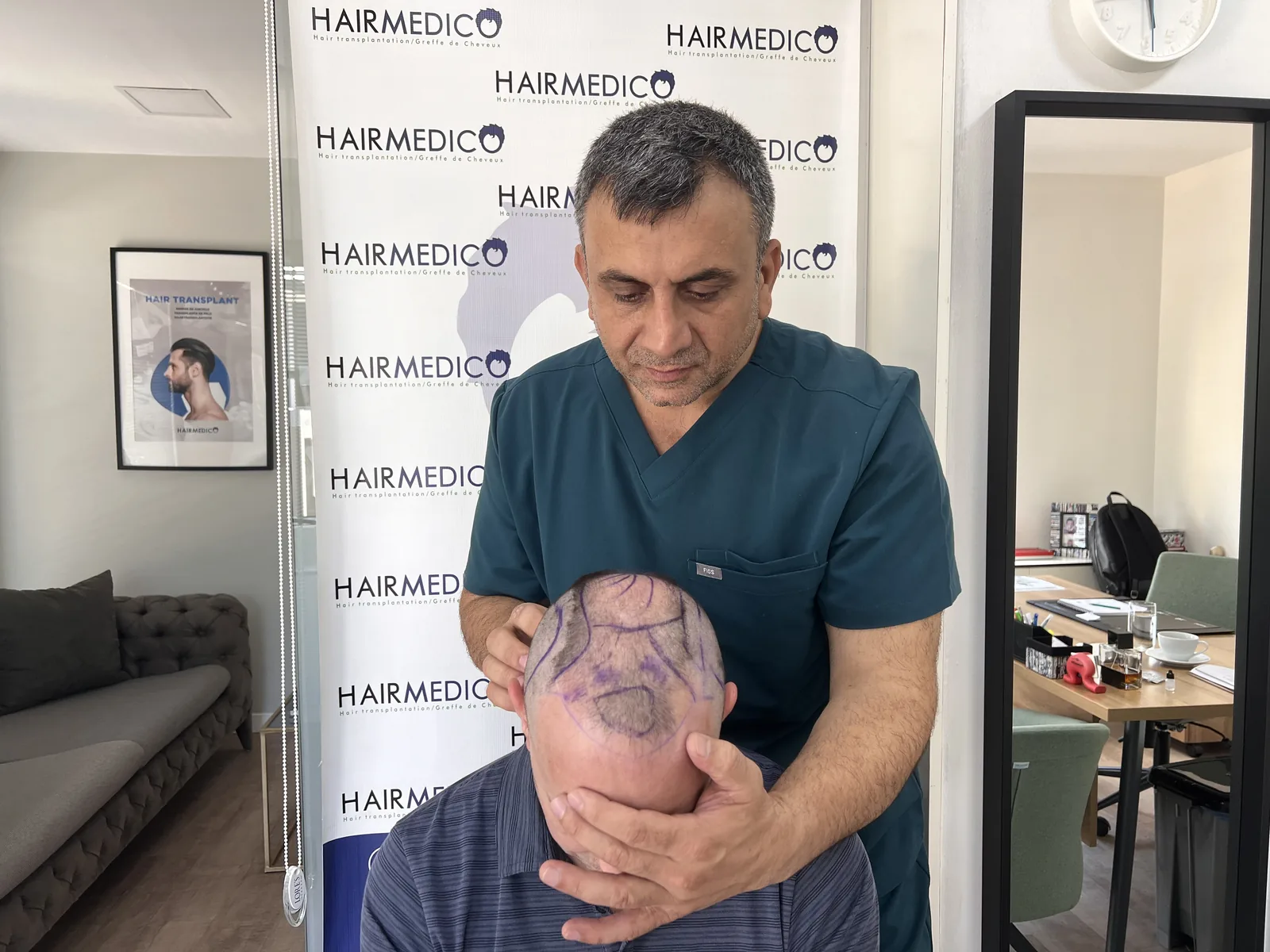
You'll be met on arrival for a short consultation where Dr. Arslan reviews your photographs in person, confirms the graft plan, and marks out the hairline and donor area by hand — this design is never delegated to a technician. Anaesthesia is administered using a needle-free "Comfort-In" system, which reduces the discomfort most patients associate with the numbing injections.
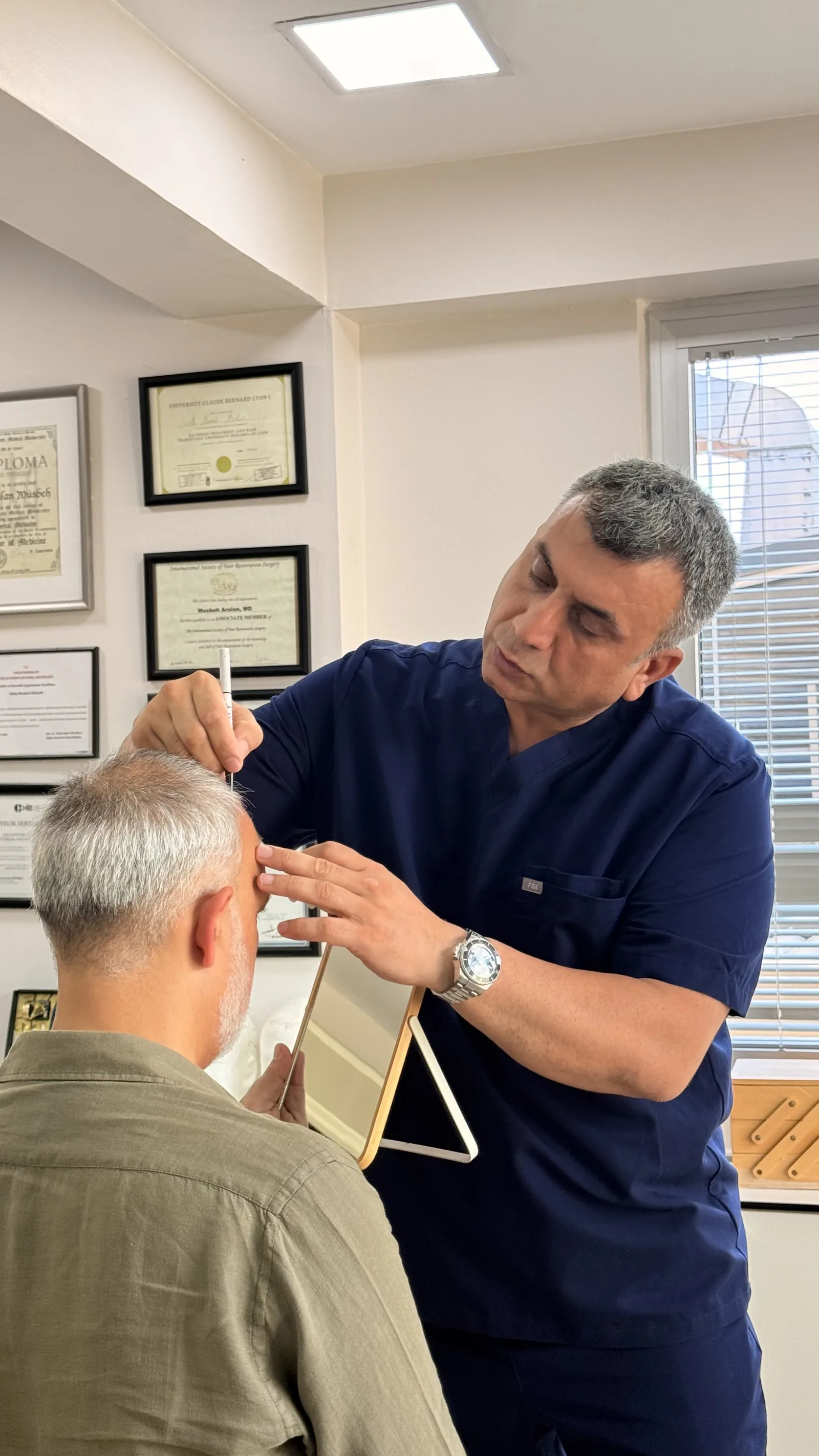
Extraction and implantation together typically take six to nine hours, depending on the number of grafts planned. Hairmedico operates on one patient per day — Dr. Arslan is present for the entire procedure rather than moving between multiple surgeries — his personal involvement scales with the package tier: he personally opens every canal in Gold and VIP, and personally performs the extraction and graft placement too in the VIP tier, rather than a rotating team of technicians handling the surgical steps. Before you leave for the day, the clinic team walks you through the first wash so you know exactly what to do that evening or the next morning.
Mild swelling across the forehead is common in the first few days and typically settles within three to five days on its own — it isn't a sign anything has gone wrong. The first wash takes place on day 1, using a gentle spray-bottle technique with the LOREW Paris aftercare kit included in every package; this avoids direct water pressure on the fresh grafts. From days 2 to 5, washing continues daily using the same gentle method, and small crusts forming around each graft are a normal and expected part of healing, not a complication.
Between days 7 and 10 these crusts loosen and fall away on their own, and by day 10 to 14 most patients feel presentable enough to return to normal social life. Ordinary shower pressure can resume around day 14. Contact sports, swimming, and saunas should wait until week 4, and sunscreen on the scalp is recommended for the first three months while the skin is still healing.
The LOREW Paris kit is designed to be used for the first 30 days: a lukewarm spray-bottle technique for days 1 to 7, gradually transitioning to a gentle, arm's-length shower stream for days 7 to 14. After day 30, any mild, sulphate-free shampoo is fine for ongoing use. It's worth avoiding anti-dandruff formulas containing ketoconazole or zinc pyrithione, along with strongly fragranced products, for the first month, since the scalp is still more sensitive than usual.
Recovery follows a fairly predictable rhythm, even though it can feel unpredictable while you're living through it:
| Timeframe | What's happening |
|---|---|
| Weeks 2–4 | Shock loss — most transplanted hairs shed. This is normal; the follicles stay intact beneath the skin. |
| Months 3–4 | New growth begins to emerge from the transplanted follicles. |
| Month 6 | Roughly half of the final density is typically visible. |
| Months 9–12 | Hair continues to thicken and mature in texture and coverage. |
| Months 12–14 | The final result is generally assessed at this point. |
Shock loss in particular tends to worry patients the most, simply because it looks like things are going backward right when you were hoping to see progress. It's the single most normal part of the entire process — every hair follicle needs to complete a rest phase before it can start producing a new, permanent hair.
FUE remains the standard technique, suitable for the widest range of graft counts — up to around 5,000 in a single session — and offers more flexibility in how recipient sites are opened before implantation. DHI uses a Choi implantation pen to place each graft directly without pre-made incisions, which some surgeons favour for dense hairline work in particular. Neither technique is universally "better" — the right choice depends on your Norwood grade, donor density, and the specific area being treated, which is why Dr. Arslan makes this recommendation from your photographs rather than applying one technique to everyone by default.
The all-inclusive package covers a five-star hotel for two nights, airport transfers, and translator support throughout your stay, so there's little to organise beyond booking flights. Most international patients are in Istanbul for two to three days total: arrival and consultation, surgery day, and a final check before flying home. Because the 12-month follow-up programme is conducted remotely through photo check-ins at weeks 2 and months 1, 3, 6, 9 and 12, a second trip to Istanbul isn't required unless you'd like one.
There's no single number that applies to everyone at a given stage — it depends on donor density and scalp laxity as much as the visible pattern of loss. As a general range, a Norwood III pattern typically needs somewhere between 1,500 and 2,500 grafts, while a more advanced Norwood V–VI pattern often needs 3,500 to 5,500 or more. Dr. Arslan gives an exact estimate after reviewing your own photographs, since donor supply varies enough between patients that stage alone isn't a reliable guide.
In many high-volume clinics, the surgeon opens the recipient sites and then hands the actual placement of grafts to a rotating team of technicians, some of whom may work on several patients across the same day. At Hairmedico, Dr. Arslan treats one patient per day, and on the VIP tier he is present for the full six-to-nine-hour procedure, personally placing every graft himself rather than delegating that step. This is also the reasoning behind Algorithmic FUE™, his own protocol for mapping extraction and implantation patterns to preserve the donor area's long-term density rather than simply maximising the number of grafts taken in a single session.
None of this replaces good judgement on your side. Ask any clinic directly who performs the extraction and implantation, how many patients are scheduled on your surgery day, and what your specific graft estimate is based on — donor density and Norwood grade, not a flat number quoted before your photos have even been reviewed. A clinic that can't answer these questions clearly and specifically is usually one worth being cautious about.
Answered by Dr. Arslan Musbeh.
Hairmedico's patient guide covers pre-op preparation, surgery day, post-op care, recovery timeline, shampoo protocol, and travel logistics — all in one resource.
Yes. All patient education resources at Hairmedico are freely available. Dr. Arslan Musbeh believes informed patients make better decisions.
Mild swelling across the forehead is common in the first few days and typically resolves within 3–5 days without any treatment.
The first wash happens on day 1, under guidance, using a gentle spray-bottle technique and the LOREW Paris kit included with every package.
Yes. Most transplanted hairs shed between weeks 2 and 4 — this is called shock loss and doesn't mean the follicles have failed. They remain intact beneath the skin and begin regrowing around month 3.
New growth typically starts around months 3–4, roughly half the final density is visible by month 6, and the full result is generally assessed at months 12–14.
It depends on your Norwood grade and donor density. As a general range, Norwood III typically needs 1,500–2,500 grafts, while Norwood V–VI often needs 3,500–5,500 or more. Dr. Arslan gives an exact estimate from your own photographs.
No. Follow-up is conducted remotely through photo review at weeks 2, and months 1, 3, 6, 9 and 12, so a second trip isn't required unless you'd like one.
It depends on the package — Dr. Arslan Musbeh places every graft personally only in the VIP tier. Hairmedico treats one patient per day so he is present for the entire six-to-nine-hour procedure rather than moving between multiple surgeries.
Neither is universally better. FUE suits the widest range of graft counts, while DHI's Choi-pen implantation is often favoured for dense hairline work. Dr. Arslan recommends a technique based on your Norwood grade and donor density from your photographs.
Submit 3 photographs. Dr. Arslan reviews personally and responds within 24 hours.
After researching countless clinics, I specifically didn't want a "hair mill." Dr. Arslan is hands-on throughout the entire process. I came from Australia and the experience was seamless.
Dr. Arslan was present throughout the surgery and personally performed the majority of key procedures. His professionalism and dedication made all the difference.
I already see good hair growth after only 17 weeks. The professionalism of the team and facilities was excellent.
Dr. Arslan was incredibly professional — he explained all procedures clearly. The clinic was spotless and the staff were super friendly.
From first contact, communication was prompt, transparent and efficient. My expectations were surpassed by the services and attention I received.
After 5 years of research I chose Hairmedico. Even on a basic package, Dr. Arslan performed the critical incision phase himself.