Dr. Arslan personally leads every package, performing the channel-opening incision himself in Gold and VIP. You are the only patient in the clinic that day.
The most important starting point: FUE and DHI use the same extraction method. Individual follicular units are removed from the donor zone using a precision punch tool (0.7–0.9mm). This phase is technically identical in both techniques — the difference begins at implantation.
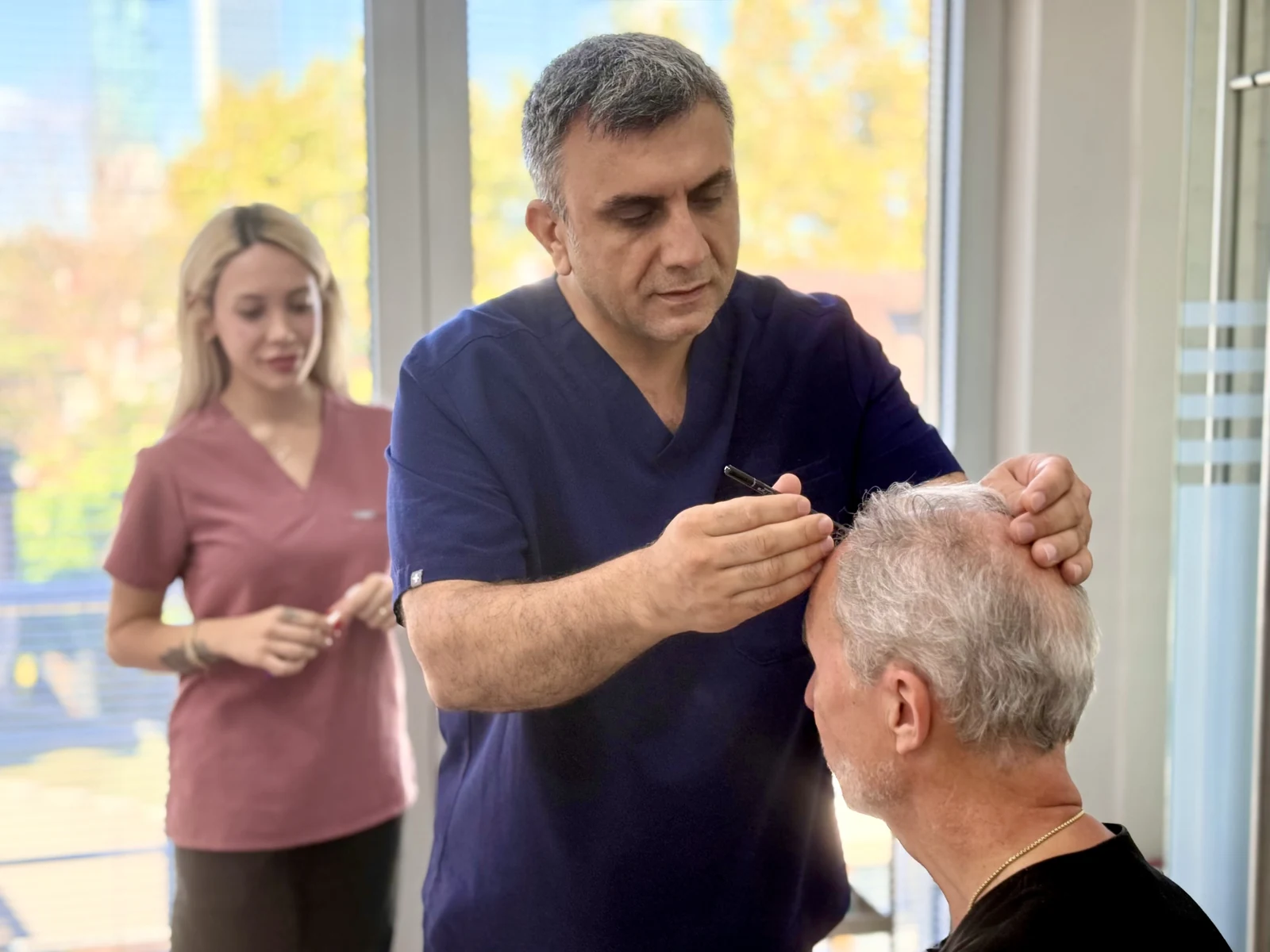
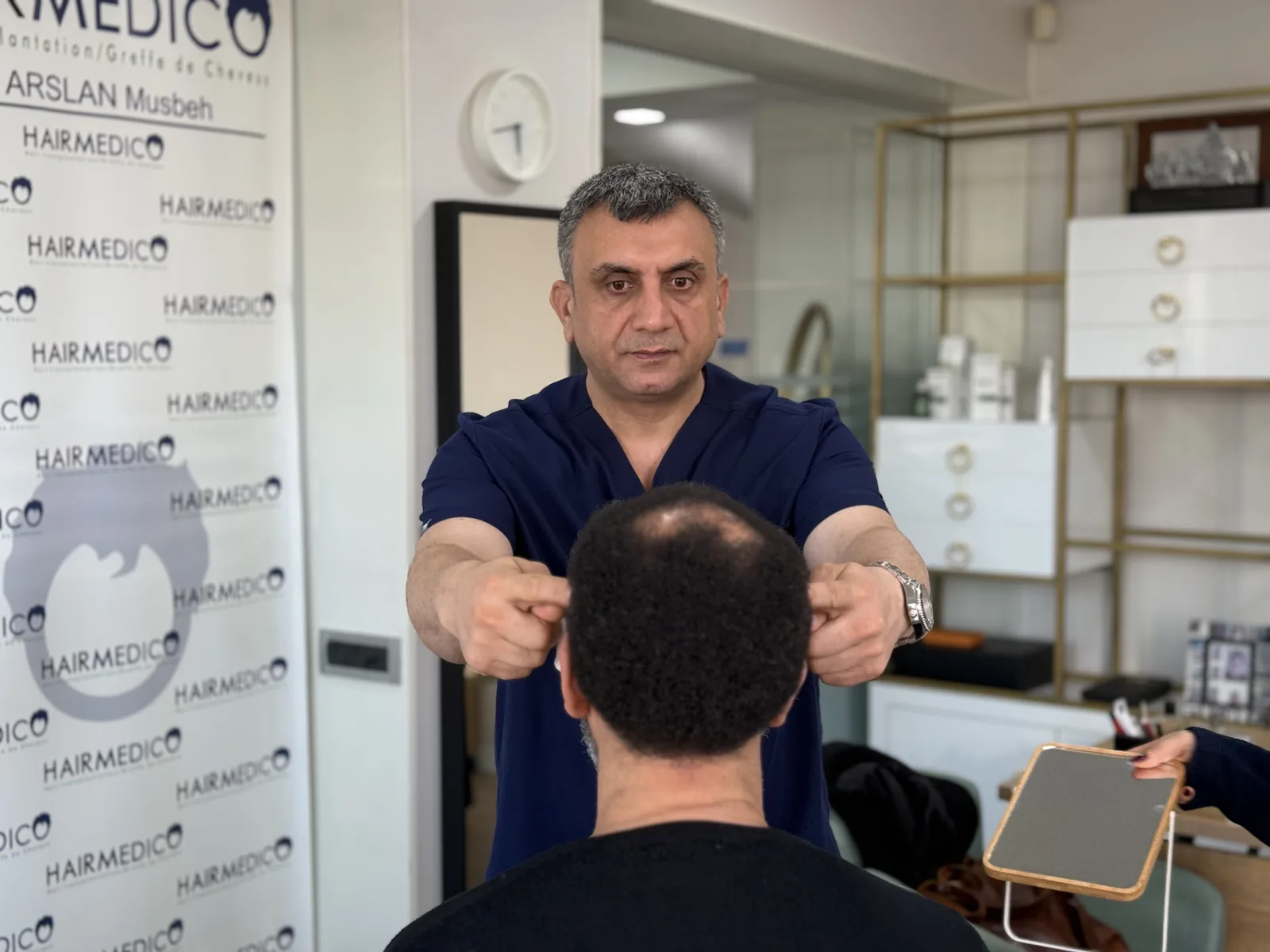
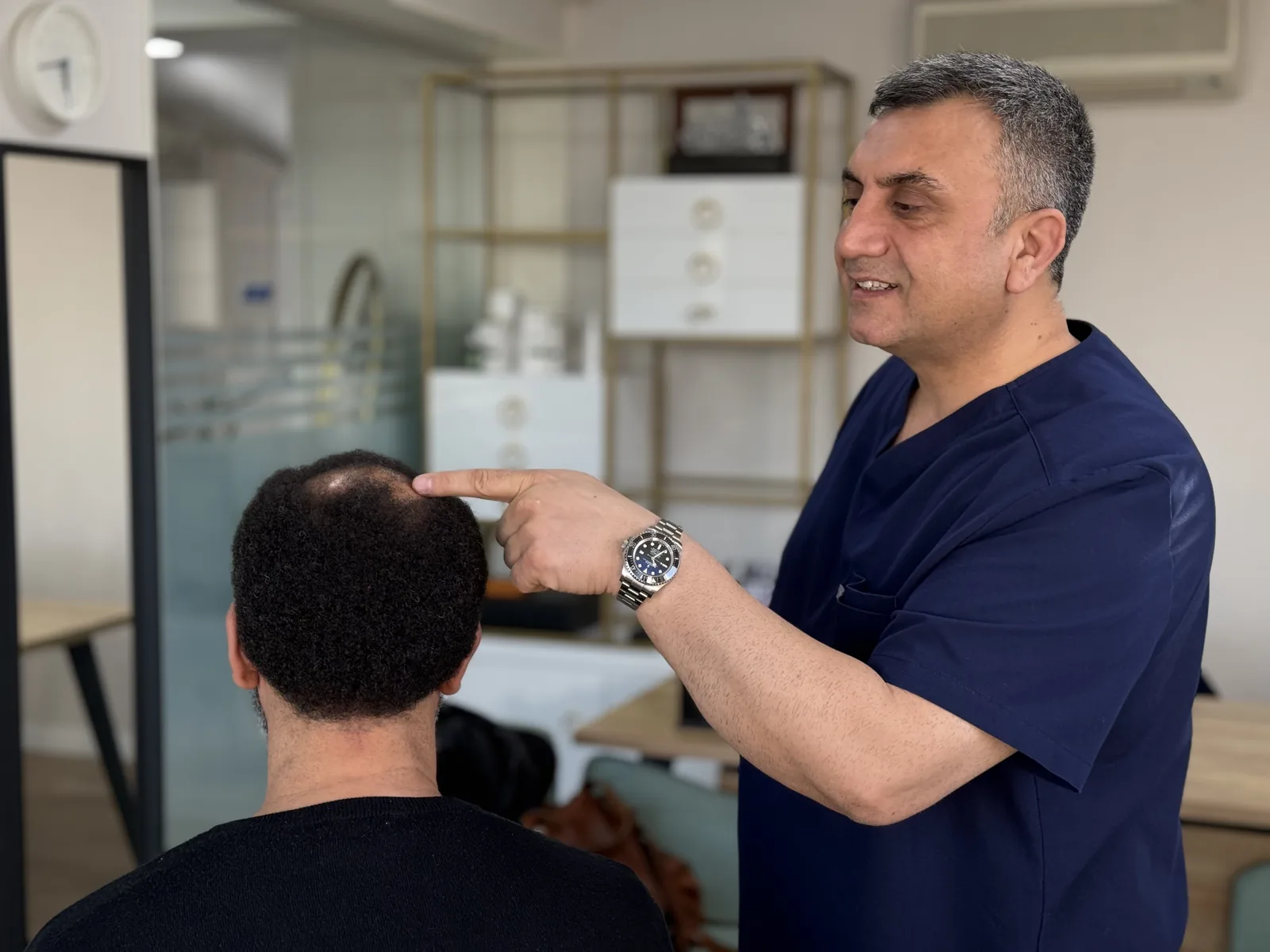
Dr. Arslan Musbeh assessing donor density and the recipient area in person — the same evaluation precedes every FUE and DHI case.
The Implantation Phase — Where They Diverge
FUE implantation: The surgeon creates all recipient channels first (using steel or sapphire blades), then places grafts into those channels. Two sequential phases.
DHI implantation: Each graft is loaded into a Choi implanter pen and placed directly — simultaneously creating the channel and implanting in a single motion. No pre-made channels.
The key consequence: DHI allows the surgeon to control the angle and direction of each graft at the moment of implantation — impossible with pre-made channels that are already committed before the graft is placed.
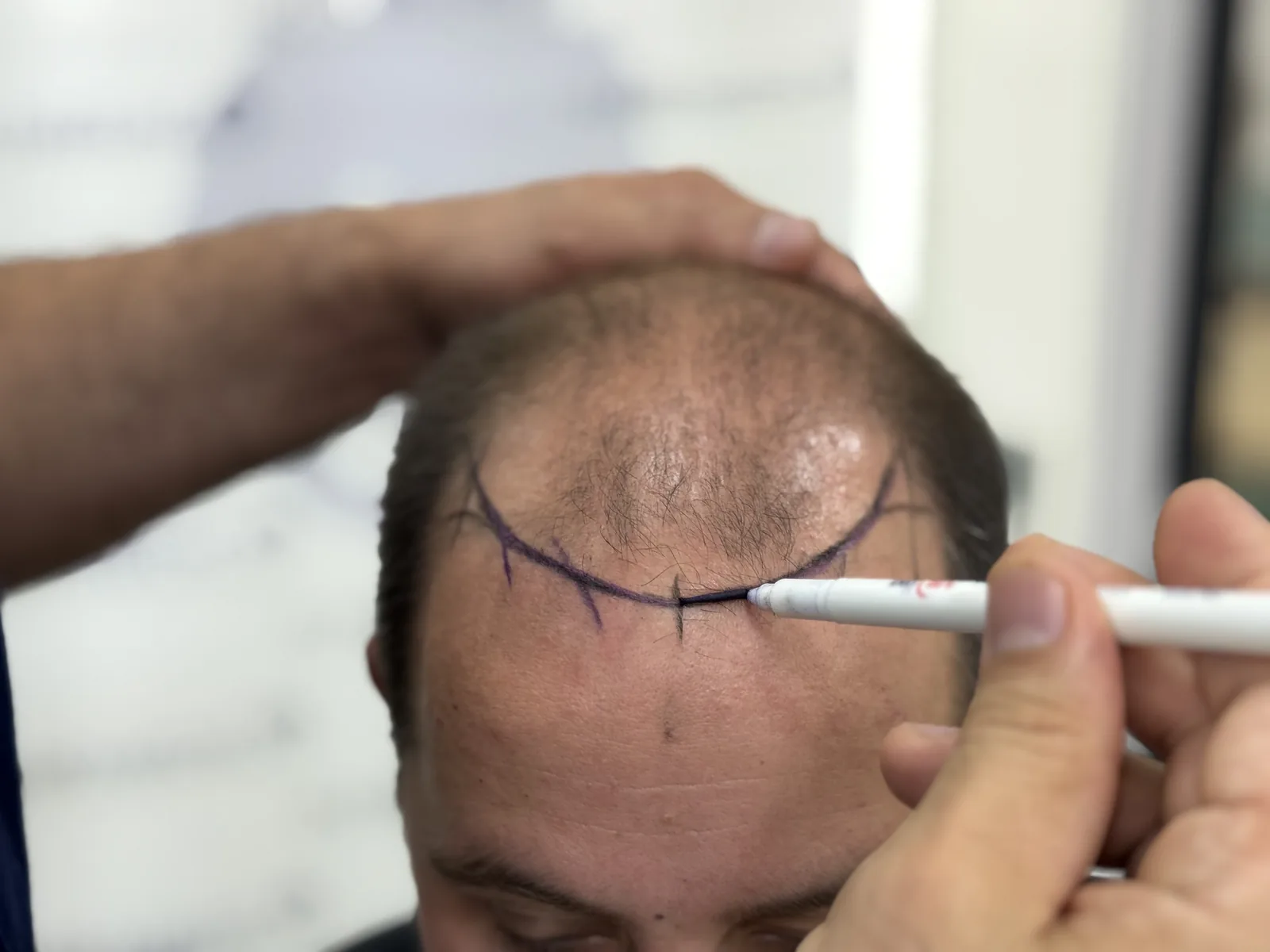
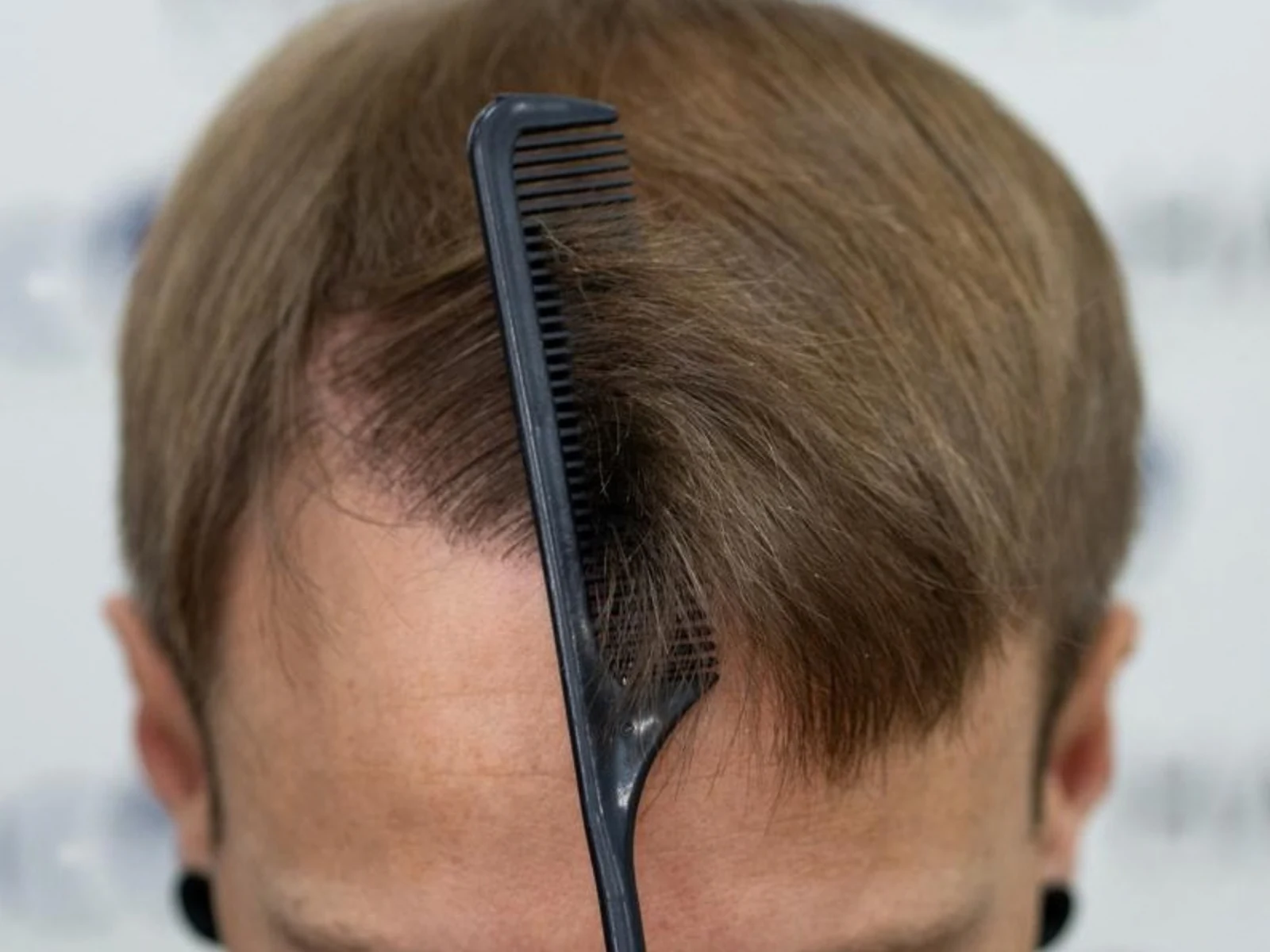
Marking the recipient zone before implantation — this is where the surgeon decides how FUE and DHI channels will be angled and packed.
When FUE is Recommended
Large sessions requiring 2,500–3,500+ grafts across broad scalp areas
Mid-scalp restoration where precise hairline detail is less critical
Cases where the total procedure time needs to be minimised
Patients with Norwood IV–VI requiring wide-area coverage
When DHI is Recommended
Hairline restoration where precise angle and direction control is paramount
Crown work requiring dense packing in a limited area
Patients with existing hair in the recipient area (no-shave DHI option)
Beard, eyebrow and temporal peak restoration
Sessions up to 4,500 grafts where maximum density is the primary goal
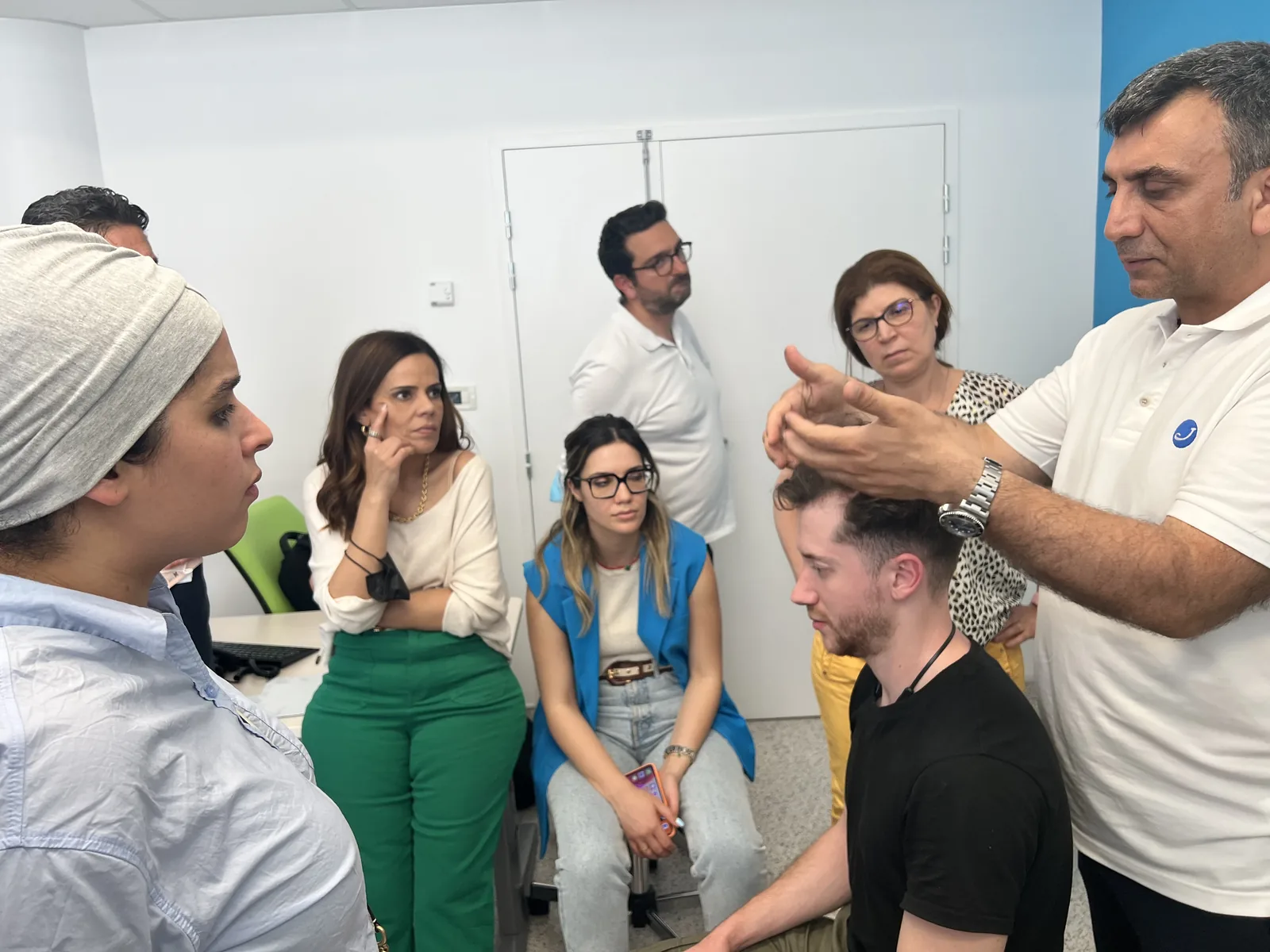
Dr. Arslan Musbeh walking the clinical team through a case — the same review process behind every FUE, DHI or combined-technique decision.
How Dr. Arslan Makes the Decision
Technique selection at Hairmedico is made by Dr. Arslan Musbeh after reviewing your photographs — not by a coordinator, and not based on which package is being sold. The decision factors are: Norwood stage, area to be restored, donor density, existing hair in the recipient zone, and the patient's long-term loss trajectory.
In many cases, Dr. Arslan uses a combined approach — DHI for the hairline and FUE for the mid-scalp — to achieve both precision and volume within the same session. View before and after results and explore the all-inclusive package options.
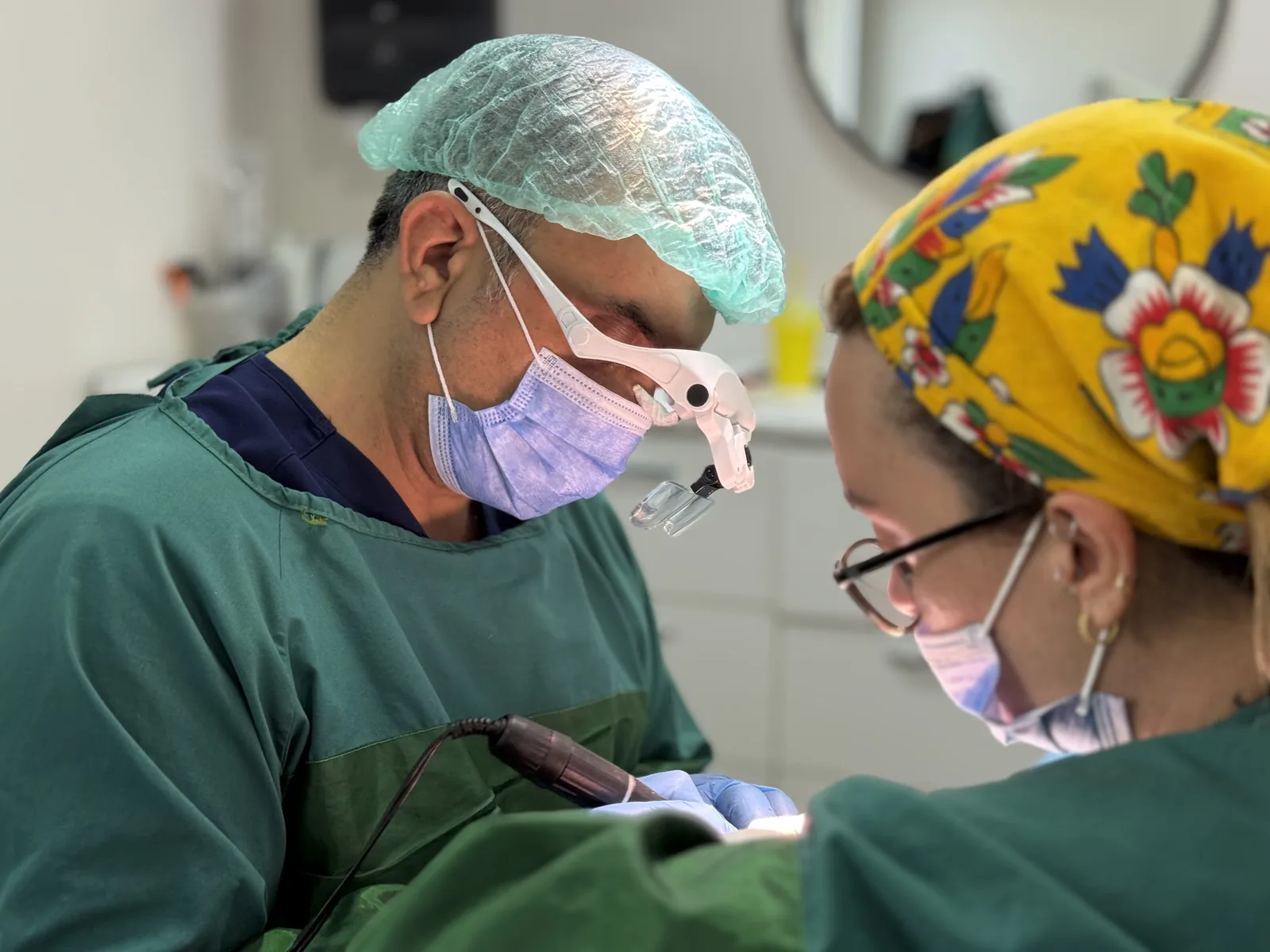
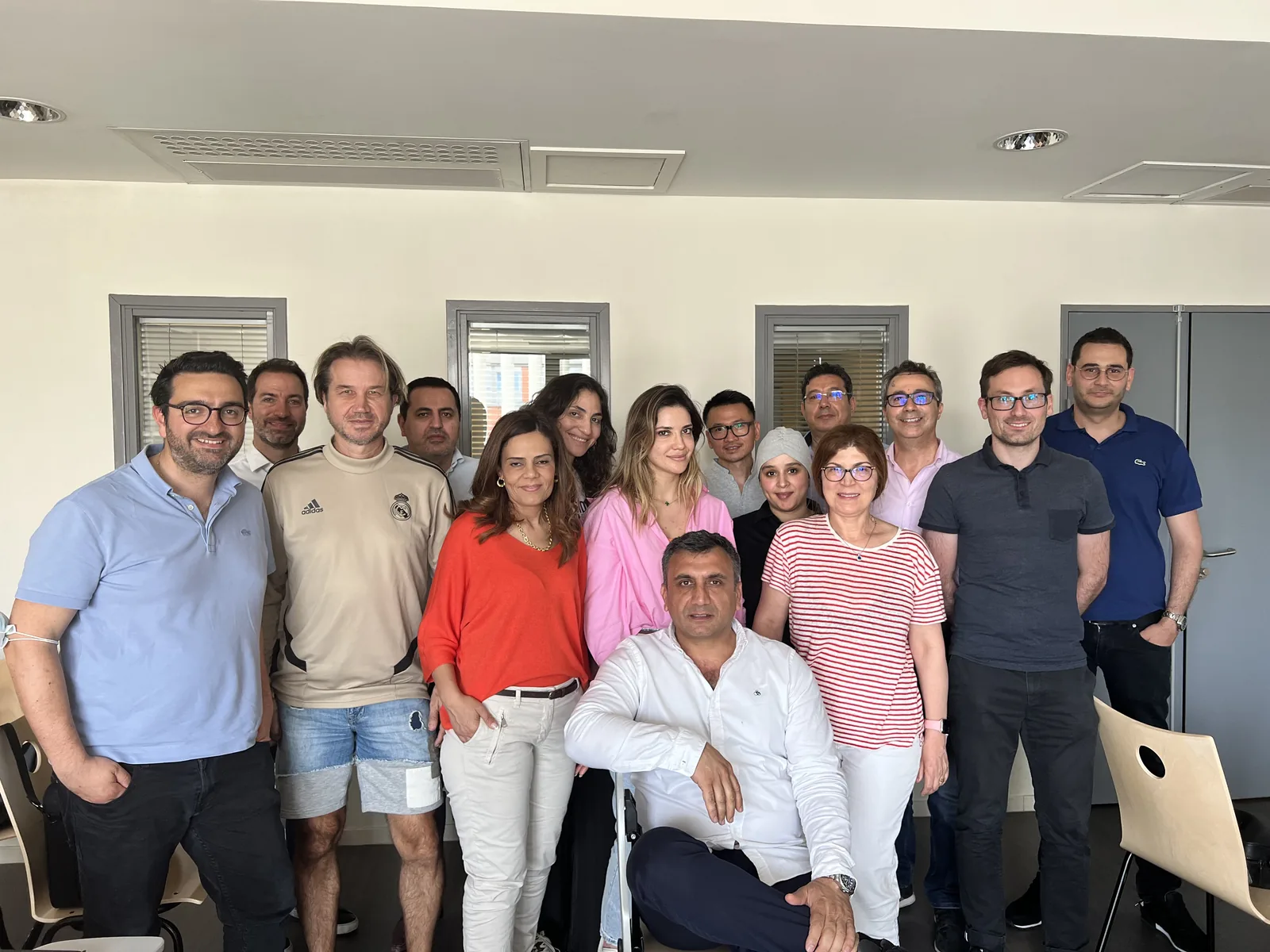
The Hairmedico team behind the technique decision — assessment, surgery day and aftercare are handled by the same group, not outsourced coordinators.
Frequently Asked Questions
Is DHI always better than FUE?
No. DHI has advantages for hairline work and dense packing, but FUE is more appropriate for large sessions and broad-area coverage. Neither technique is universally superior — the right choice depends on your specific anatomy, Norwood stage and restoration goals.
Does FUE or DHI produce more natural results?
Both techniques, when performed by an experienced surgeon, produce natural results. Naturalness is determined by the hairline design and angle precision — not the extraction method. Dr. Arslan's Algorithmic FUE™ planning methodology applies to both.
Is DHI more expensive than FUE?
At Hairmedico, FUE and DHI are covered by separate all-inclusive packages (Silver, Gold and VIP): Sapphire FUE from €2,600 and DHI from €3,200, all-inclusive; flights are not included. The tier and your graft count set the exact figure, which is confirmed in writing after a free photo assessment. Neither is positioned as a premium add-on — technique selection is based on clinical suitability, not cost.
Can FUE and DHI be combined in one session?
Yes. Dr. Arslan uses combined approaches when clinically appropriate — DHI for hairline precision, FUE for mid-scalp volume. This is determined during the photograph assessment and surgical planning phase.
Do FUE and DHI use different extraction methods?
No. Both techniques extract follicular units from the donor zone using the same precision punch tool, sized 0.7–0.9mm. Extraction is identical in FUE and DHI — the two techniques only diverge at the implantation stage.
What is a Choi implanter pen, and how does it change DHI implantation?
A Choi pen loads each graft individually and places it directly into the scalp, creating the channel and implanting the graft in a single motion. This differs from FUE, where the surgeon creates all recipient channels first and places grafts afterward as a separate step.
Is there a maximum number of grafts for a single FUE or DHI session?
FUE sessions at Hairmedico typically cover 2,500–3,500+ grafts for broad-area coverage, while DHI sessions go up to 4,500 grafts when maximum density in a smaller area is the primary goal.
Who decides whether I receive FUE, DHI, or a combined approach?
Dr. Arslan Musbeh personally reviews your photographs and selects the technique himself — it is not decided by a coordinator or based on which package is being sold. His decision is based on your Norwood stage, the area to be restored, donor density, existing hair in the recipient zone, and your long-term hair loss trajectory.
After researching countless clinics, I specifically didn't want a "hair mill." Dr. Arslan is hands-on throughout the entire process. I came from Australia and the experience was seamless.
Dr. Arslan was present throughout the surgery and personally performed the majority of key procedures. His professionalism and dedication made all the difference.
I already see good hair growth after only 17 weeks. The professionalism of the team and facilities was excellent.
Dr. Arslan was incredibly professional — he explained all procedures clearly. The clinic was spotless and the staff were super friendly.
From first contact, communication was prompt, transparent and efficient. My expectations were surpassed by the services and attention I received.
After 5 years of research I chose Hairmedico. Even on a basic package, Dr. Arslan performed the critical incision phase himself.