What to expect at every stage of hair transplant recovery — from the first clinical wash on day 2–3, through the normal shedding phase, to full density at 12–14 months.
Weeks of normal, expected shedding before new growth begins.
5–7
Days until most patients return to desk-based work.
12–14
Months until full, final density is assessed.
Day 1–3: Surgery and Immediate Post-Op
Surgery day typically ends in the afternoon. The scalp will be swollen and sensitive. Small scabs begin forming around each graft. Pain is minimal — most patients describe mild discomfort managed with standard analgesics. Hairmedico provides written and video aftercare instructions on departure.
The first post-operative wash is performed at the clinic on day 2 or 3. The clinical team demonstrates the correct technique to avoid dislodging grafts in the critical first week.
Days 4–14: Scabbing and Initial Healing
The scalp will appear red and scabbed. This is normal and expected. The grafts are not yet anchored — avoid any pressure, scratching or rubbing. Sleep elevated (2–3 pillows) to reduce swelling. Avoid sun exposure, swimming, strenuous exercise and alcohol for the first 2 weeks.
Scabs typically resolve between days 10–14 for both Sapphire FUE and standard FUE procedures. DHI patients typically see slightly faster scab resolution due to reduced recipient zone trauma.
Not every patient recovers in Istanbul. Hairmedico maintains working relationships with partner clinical facilities abroad so post-operative check-ins can happen closer to home during the healing weeks.
Weeks 2–8: The Shedding Phase
Between weeks 2 and 6, the transplanted hairs shed. This is expected and does not indicate failure — the follicle beneath the skin is intact and will produce a new hair. The shedding phase is one of the most common causes of unnecessary patient concern. At Hairmedico, Dr. Arslan's team monitors every patient through the 12-month follow-up programme.
Important: Shedding at weeks 2–6 is the normal physiological cycle of transplanted follicles. The hair is shed — the follicle is not. New growth begins at 3–4 months.
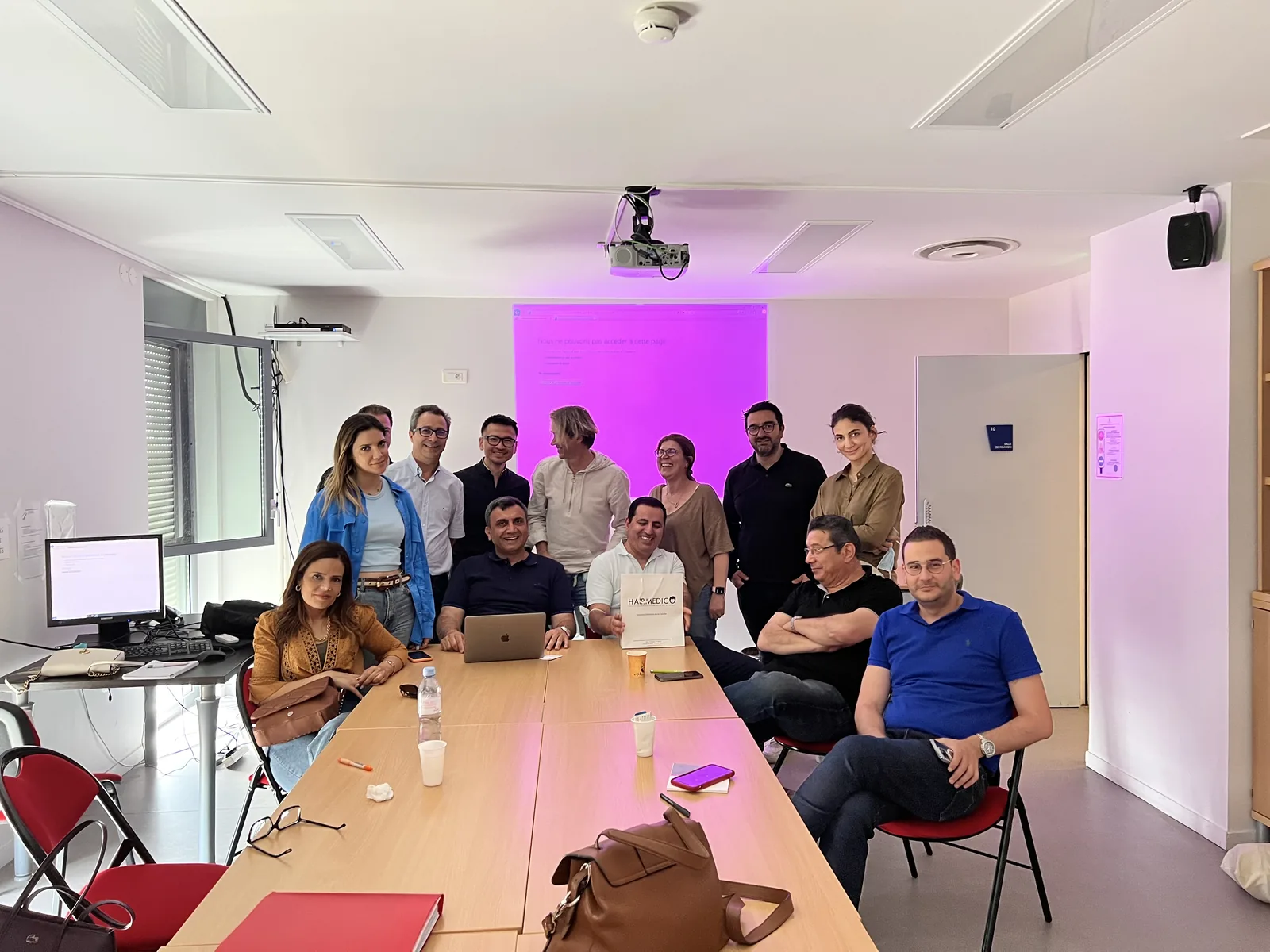
The team behind the 12-month follow-up programme — reviewing patient recovery cases and coordinating care across Hairmedico's international network.
Months 3–6: Early Growth
New hairs begin emerging at months 3–4. At month 6, approximately 40–60% of the final result is visible. The hairs may initially appear fine and slightly wavy — this normalises as they mature.
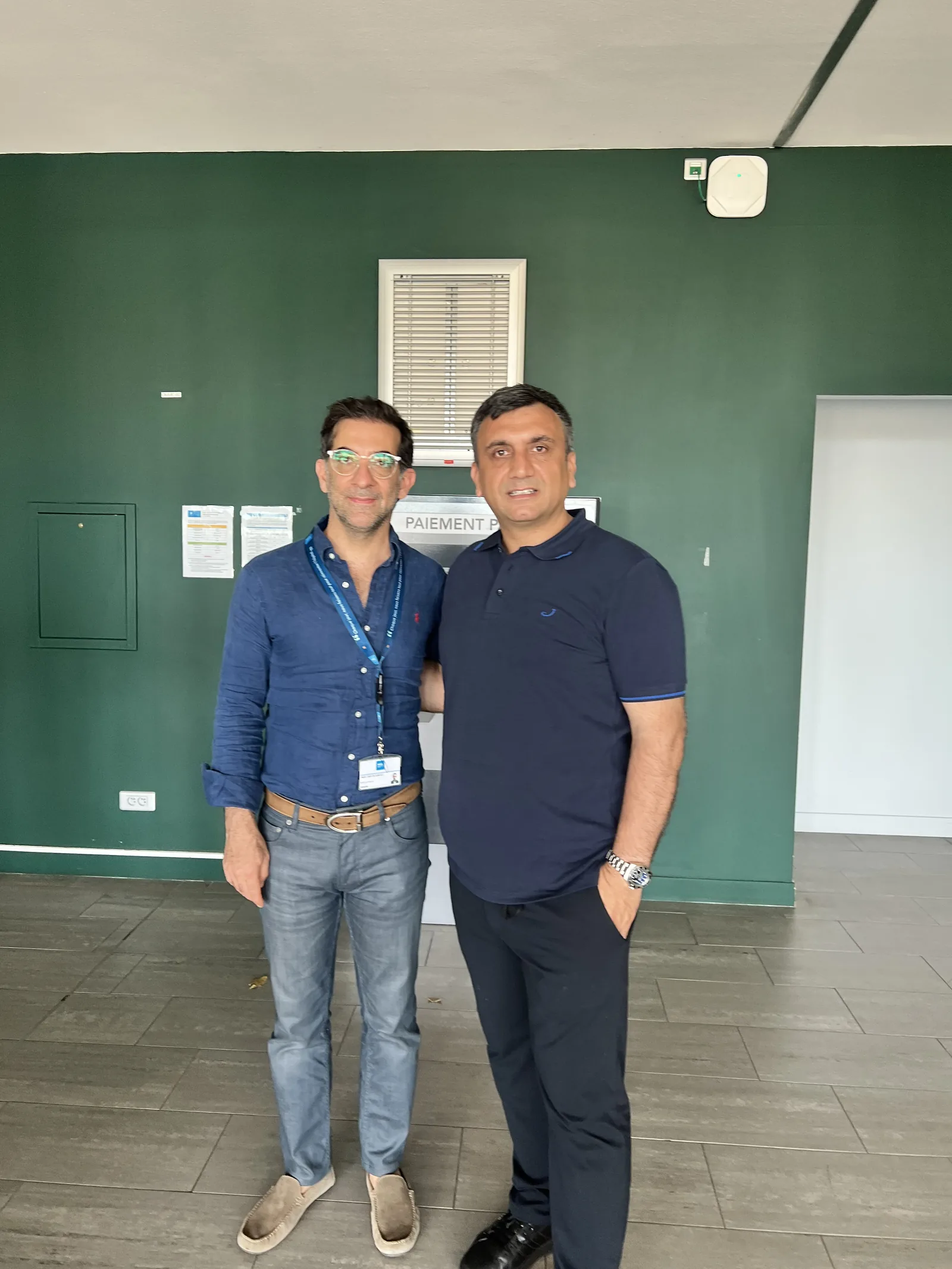
Hairmedico's care-coordination staff at a partner facility abroad — part of the support network that follows patients through the months after surgery, not only the day of it.
Months 6–12: Progressive Density
From month 6 onwards, density increases progressively. The hairline becomes increasingly defined. By month 10, most patients have 70–80% of their final result visible.
Months 12–14: Full Result
Full density and final naturalness is assessed at 12–14 months. This is when before and after photographs are taken for clinical documentation. The transplanted hair — growing from permanently DHT-resistant follicles — will continue for life. View 12+ month results from Hairmedico patients.
For detailed aftercare product guidance, the Hairmedico package includes the LOREW aftercare kit used by Dr. Arslan's patients throughout recovery.
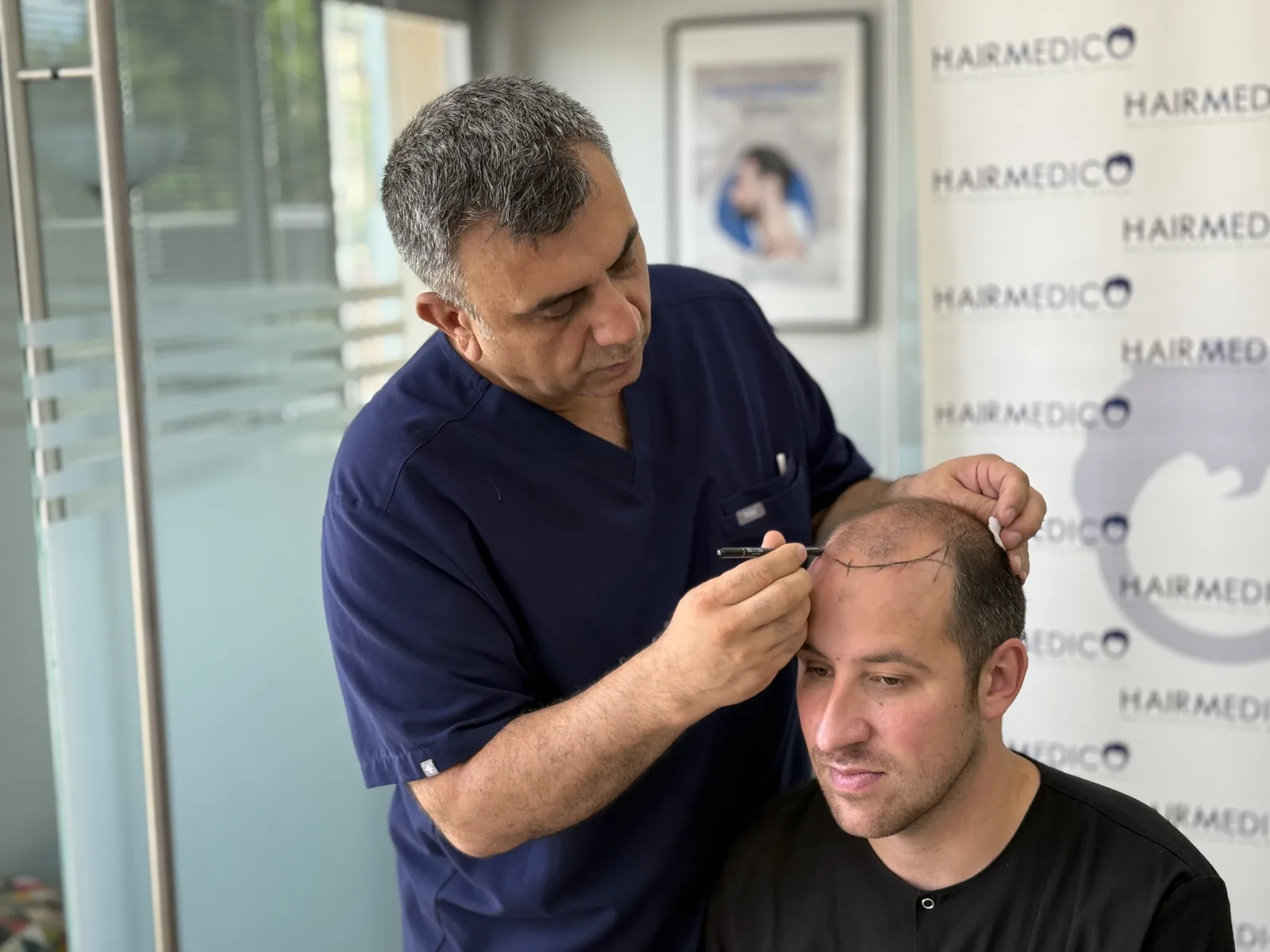
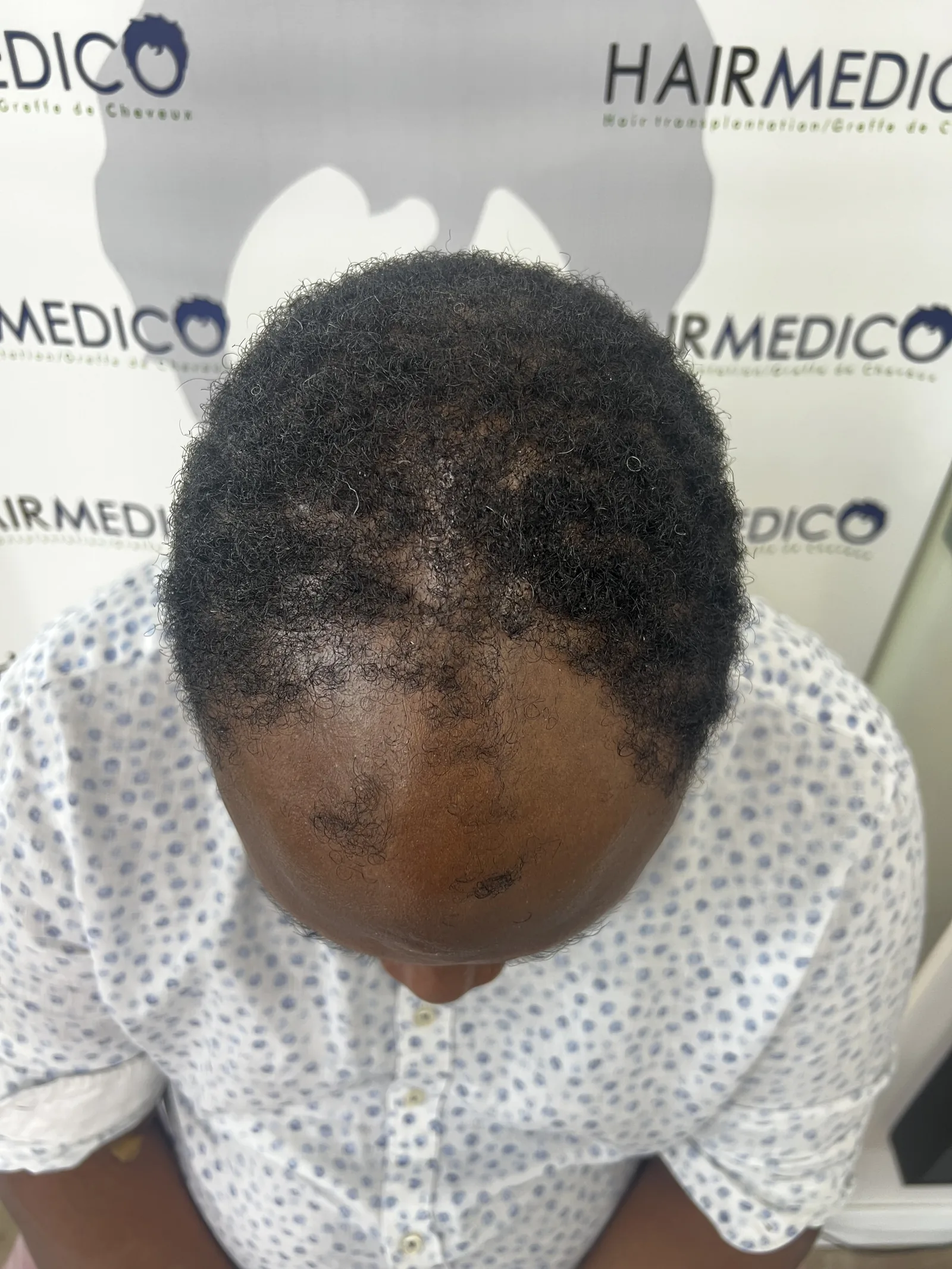
Photographic documentation like this is taken at set intervals throughout treatment — the same consistent lighting and angle used for the before-and-after comparisons referenced above.
Frequently Asked Questions
When can I return to work after a hair transplant?
Most patients return to office or desk-based work within 5–7 days. Physical labour, heavy exercise and any activity causing head sweating should be avoided for 2 weeks. The scalp appearance (redness, scabs) is typically resolved by day 12–14.
When can I exercise after a hair transplant?
Light walking is permitted from day 3. Moderate exercise (cycling, gym) can resume after 2 weeks. High-intensity training, contact sports and swimming in pools or sea should wait until week 4–6.
Is the shedding phase normal?
Yes — completely normal. Transplanted hairs shed between weeks 2–6 as the follicle enters its telogen (resting) phase. The follicle is intact beneath the skin. New growth begins at months 3–4.
When will I see the final result?
Full density is visible at 12–14 months. At 6 months, approximately 50% of the result is visible. At 9 months, approximately 70–80%. The result continues improving subtly until month 14–18 as individual hairs mature.
When is the first hair wash after a hair transplant, and where is it done?
The first wash is not done at home — it takes place at the clinic on day 2 or day 3. The clinical team demonstrates the correct washing technique so grafts are not dislodged during the critical first week.
Does recovery differ between FUE, Sapphire FUE and DHI?
Scabs typically resolve between days 10–14 for both Sapphire FUE and standard FUE. DHI patients typically see slightly faster scab resolution, due to reduced trauma to the recipient area during graft placement.
How much swelling should I expect, and how is it managed?
The scalp is swollen and sensitive immediately after surgery. Sleeping elevated on 2–3 pillows and avoiding sun exposure, swimming and alcohol for the first two weeks helps control swelling while the grafts settle.
Why does newly grown hair look thin or wavy at first?
New hairs begin emerging at months 3–4 and can initially look fine or slightly wavy. This is a normal part of the growth cycle and resolves as the hair matures over the following months.
What is the hair transplant recovery timeline?
Days 1–10: crusts and redness. Weeks 2–6: shock loss (normal). Months 3–4: new growth begins. Months 6–8: significant density visible. Month 12–14: final result assessed.
After researching countless clinics, I specifically didn't want a "hair mill." Dr. Arslan is hands-on throughout the entire process. I came from Australia and the experience was seamless.
Dr. Arslan was present throughout the surgery and personally performed the majority of key procedures. His professionalism and dedication made all the difference.
I already see good hair growth after only 17 weeks. The professionalism of the team and facilities was excellent.
Dr. Arslan was incredibly professional — he explained all procedures clearly. The clinic was spotless and the staff were super friendly.
From first contact, communication was prompt, transparent and efficient. My expectations were surpassed by the services and attention I received.
After 5 years of research I chose Hairmedico. Even on a basic package, Dr. Arslan performed the critical incision phase himself.