01 · Bespoke Assessment
Free photo review
Submit three photographs. Dr. Arslan reviews every case personally within 24 hours and tells you plainly whether surgery is the right next step.
Surgeon-led hair restoration clinic in Levent, Istanbul since 2005.
Explore all →Send 3–5 photographs. Personal response within 24 hours — no intermediaries.
Request Now →Selected for your specific hair loss pattern and aesthetic goals.
FUE vs DHI →FUE, DHI or Algorithmic FUE™ — Dr. Arslan recommends based on your photographs and Norwood stage.
Get Assessment → Try Graft Calculator →FUE Europe member. Ministry of Health accredited clinic. Levent, Istanbul — 60–80% less than UK or US.
View Package →FUE Europe member. Ministry of Health accredited. 17+ years. 3,000+ personal procedures. One patient per day.
Full Profile →One patient a day, every package surgeon-led. Every result personally accountable.
Read Philosophy →No hidden costs. Hotel, transfers, surgery and aftercare in one price.
View Pricing →Silver · Gold · VIP — 5-star hotel · Airport transfers · PRP included
View Pricing → Graft Calculator →Every case personally overseen by Dr. Arslan Musbeh, from consultation to results.
Full Gallery →Not every case needs a transplant. Medical treatments, therapies and specialist options.
Overview →Guides, tools and expert content — written by Dr. Arslan Musbeh.
All Articles →The crown is a large area with a spiral growth pattern that demands careful density distribution. Results also take longer — crown maturation often continues to 18 months.
The Process
From your first photographs to a full result at 12 months, with Dr. Arslan Musbeh involved at every stage.
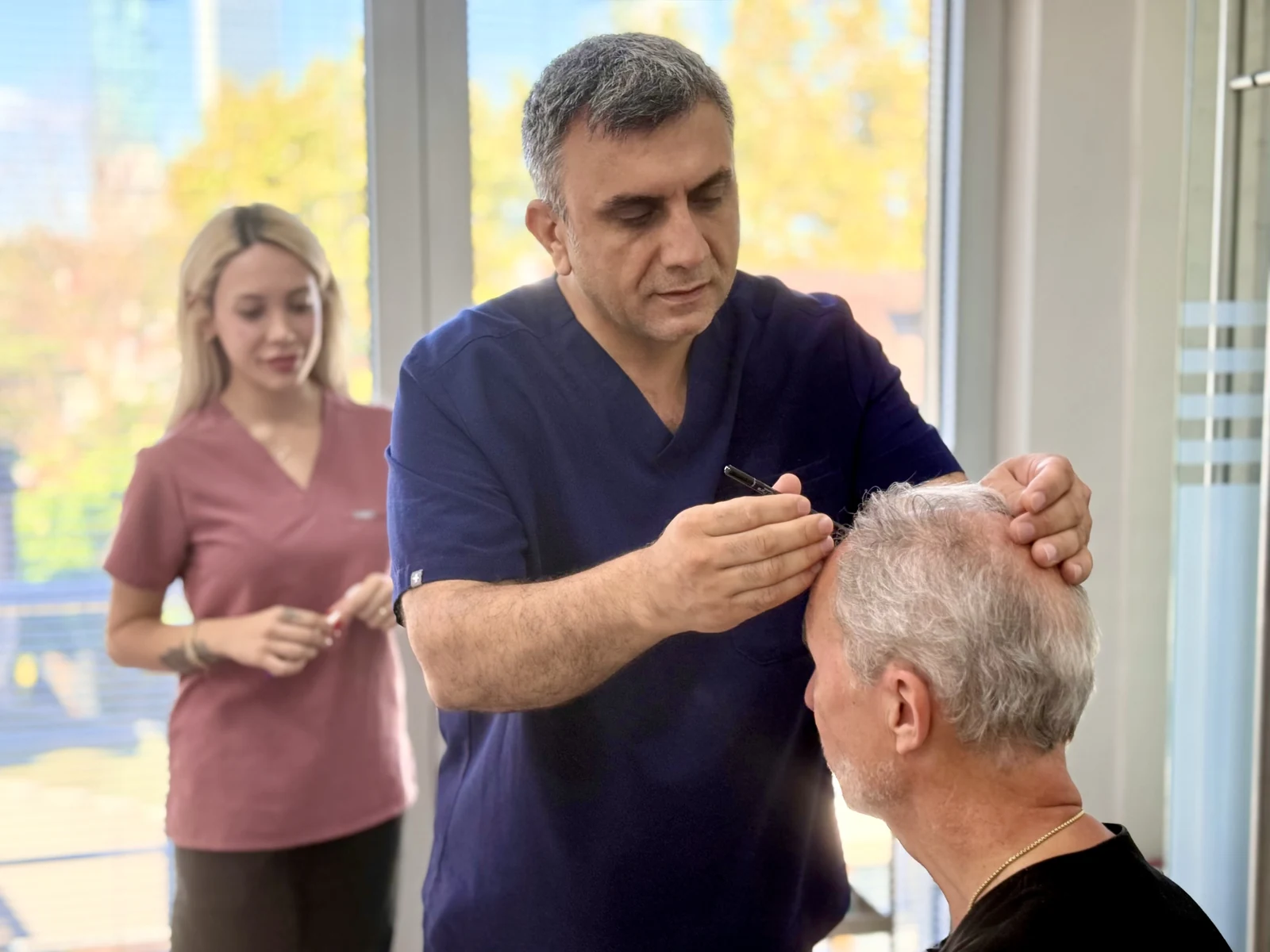
01 · Bespoke Assessment
Submit three photographs. Dr. Arslan reviews every case personally within 24 hours and tells you plainly whether surgery is the right next step.
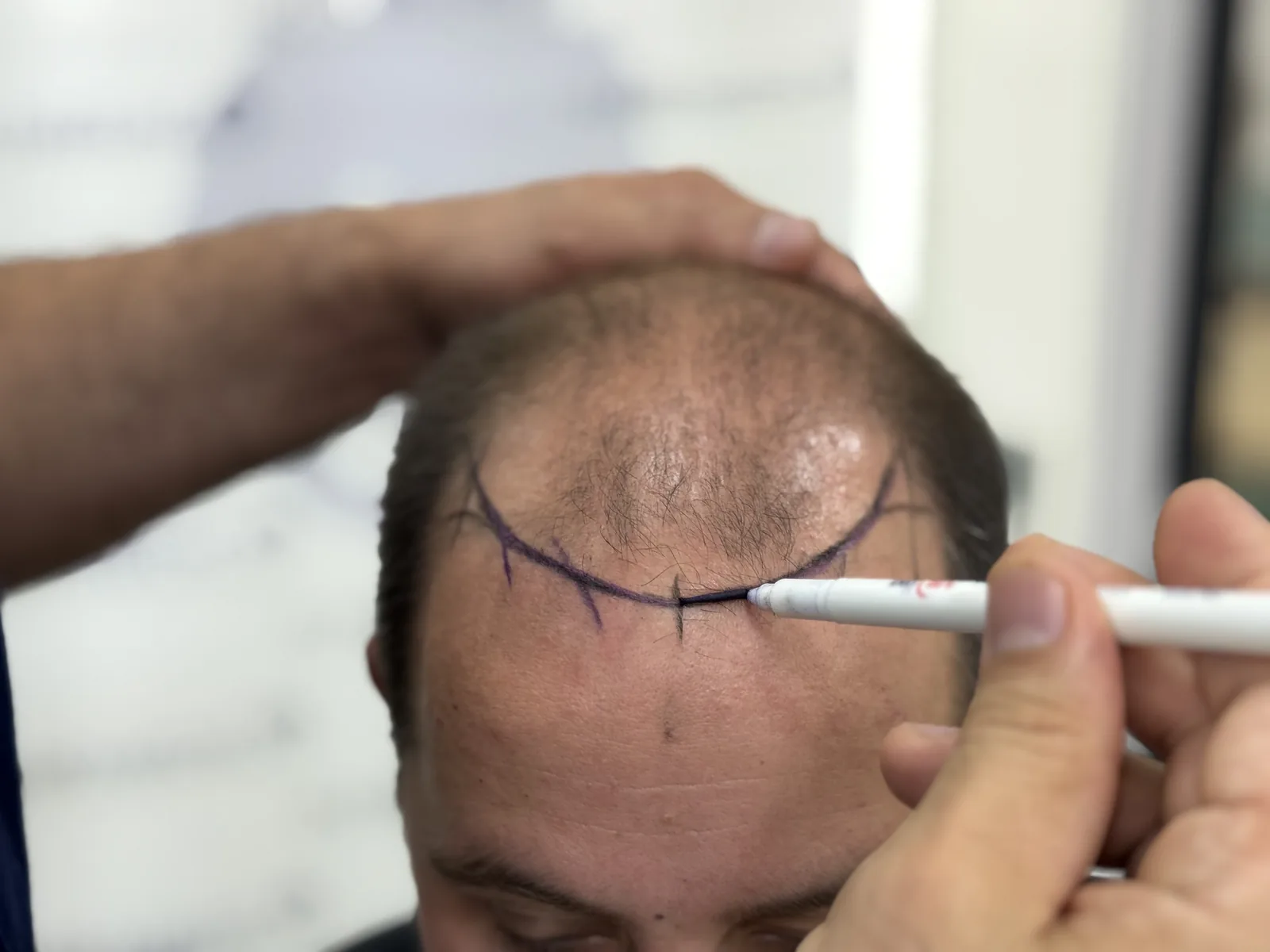
02 · Technique & Plan
FUE, DHI or Algorithmic FUE™ is confirmed by the surgeon directly, with a graft estimate and a fixed, all-inclusive price.

03 · Arrival Istanbul
A VIP transfer meets you at the airport and takes you to your 5-star hotel, followed by a pre-op consultation day at the Levent clinic.
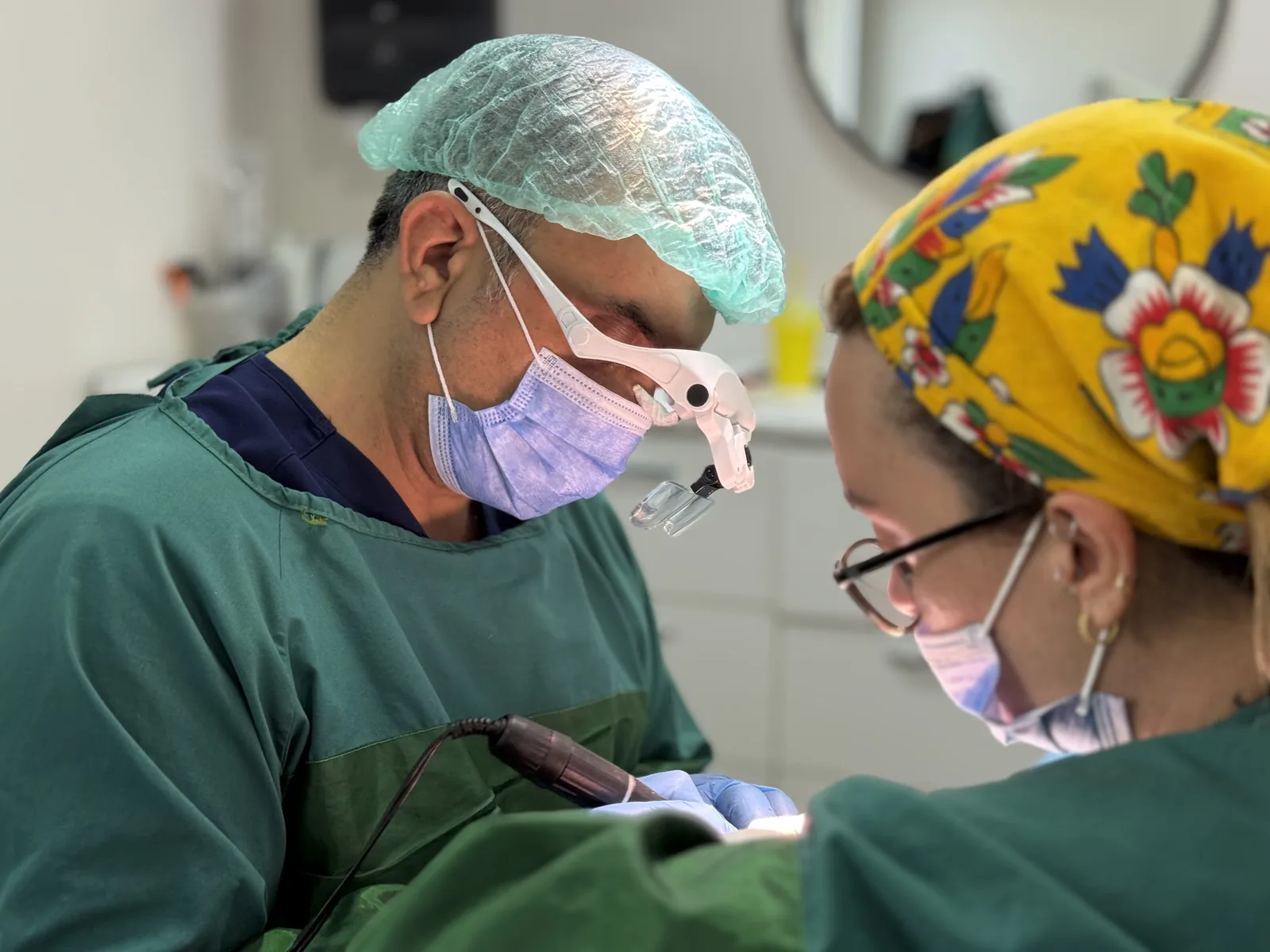
04 · Surgery Day
Dr. Arslan personally leads every package, performing the channel-opening incision himself in Gold and VIP. You are the only patient in the clinic that day.
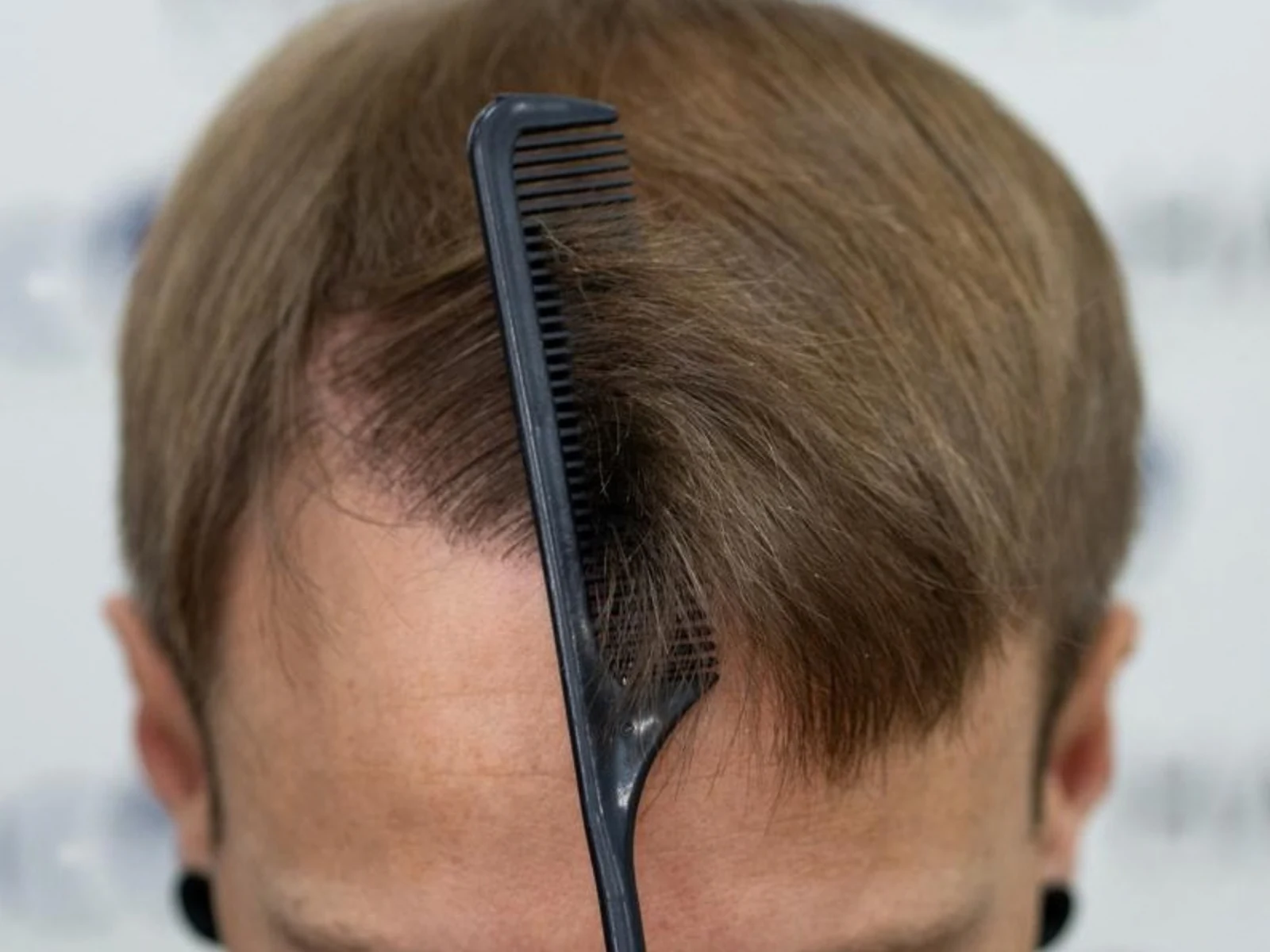
05 · Results at 12 Months
Full result visible at around 12 months. Our team supports you through 12 months of follow-up, including the first wash at the clinic.


The crown is not a flat surface, and that is what makes it harder than a hairline. Hair leaves the vertex in a spiral, so grafts have to follow a direction that changes across the area. Placed at a uniform angle they look like a patch; placed along the whorl they disappear into the existing hair.
Two further properties separate crown work from frontal work. The area is larger than it looks in a mirror, so the graft count needed for convincing density climbs quickly. And light strikes the vertex from above, which exposes scalp that the same density would hide at the front.
This is why a crown plan starts with the donor area rather than the recipient. Spending the donor on a crown at forty can leave nothing for the hairline at fifty, and the crown is usually the area that keeps expanding.
Technique follows the same logic as the whorl itself: whichever method gives the most control over channel direction across a curved, spiralling area. Sapphire FUE covers broad crown area efficiently; DHI's Choi pen adds finer angle control where the spiral tightens near the centre. Dr. Arslan combines the two within a single session when the anatomy calls for it — DHI at the whorl, FUE across the surrounding area — a decision made at your photograph assessment, not improvised on the day. See the full FUE vs DHI comparison for how the two methods differ.
| Factor | Effect on the plan |
|---|---|
| Whorl diameter | A wider spiral needs more grafts before density reads as continuous. |
| Degree of thinning | Miniaturised hair still present covers scalp; a bare vertex needs more. |
| Hair calibre | Thicker shafts cover more scalp per graft, so the same result costs fewer. |
| Curl | Curlier hair covers better than straight hair of the same calibre. |
| Donor density | Sets the ceiling — the crown cannot be given what the donor cannot spare. |
| Age and progression | A crown still enlarging argues for a conservative first session. |
A graft figure quoted before your donor area has been assessed is an estimate, not a surgical plan. The graft calculator gives a rough range; Dr. Arslan confirms it from your photographs.
Crown restoration suits patients whose hair loss has stabilised and whose donor area can support the region's higher graft requirement. A Norwood III vertex or early crown thinning is the most common starting point; a fully bald crown with an expanding perimeter needs the most donor hair and the most conservative planning.
Diffuse thinning across the crown — miniaturised hair still present but reduced in density — often responds well to a transplant combined with medical maintenance, since the existing hair partially covers the transition zone while new grafts establish. A crown that is already bald with no miniaturised hair left relies on transplanted density alone, which is one more reason donor calculation matters more here than at the hairline.
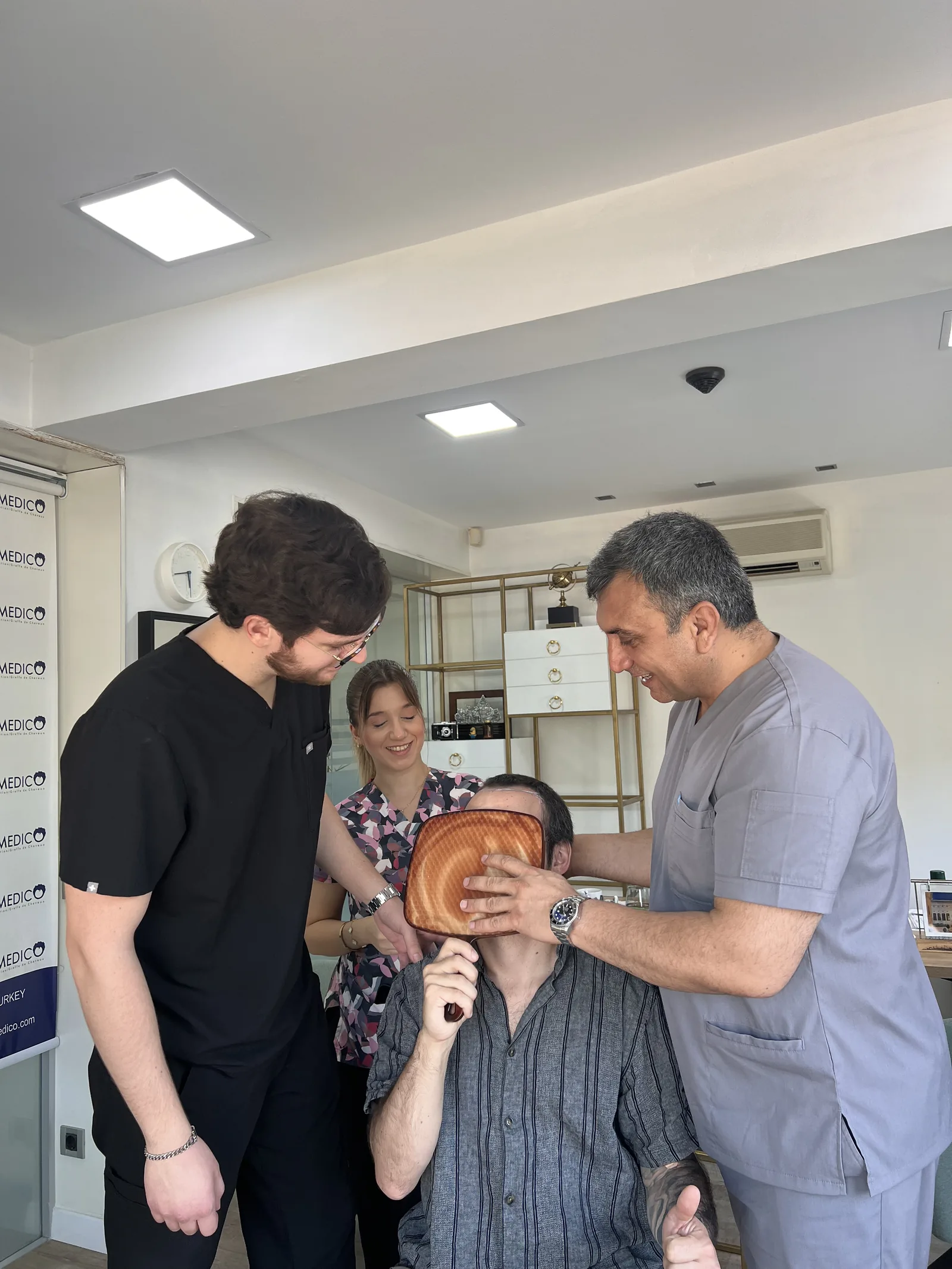
Patients whose crown loss is still actively progressing, or who are not on a maintenance treatment, are usually advised to wait or to pair surgery with medication first — operating on an unstable pattern risks a result that looks incomplete within a few years as the untreated area keeps receding. Dr. Arslan makes this call from your photographs and hair loss history, not from a fixed rule. Find your stage on the Norwood scale before your consultation.
Crown results mature later than frontal results — commonly around eighteen months rather than twelve. The sequence is the same; it simply runs slower at the vertex.
| When | What happens |
|---|---|
| Weeks 2–4 | Transplanted shafts shed. The follicle stays. |
| Months 3–4 | New growth begins, fine and lighter than final texture. |
| Month 6 | Density becomes visible, though still thinner than it will be. |
| Months 12–14 | Most of the result is present. |
| Months 15–18 | Final thickening. The crown is typically the last area to settle. |
Judging a crown at month six is the most common source of unnecessary worry. See the full recovery timeline for what each stage looks like.
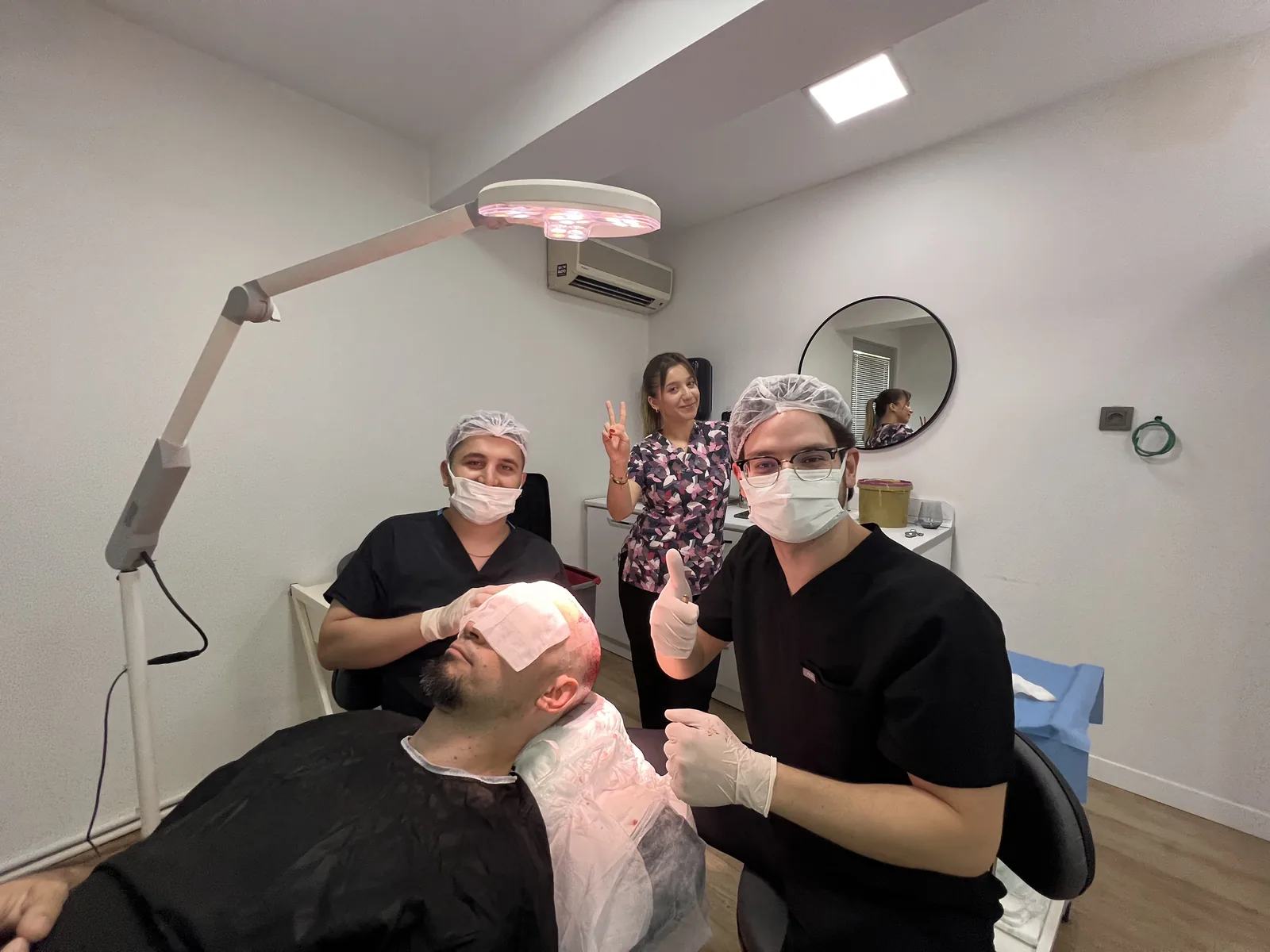
Two points of aftercare matter more at the crown than elsewhere. First, the area faces directly upward toward the sun, so SPF and a loose cap outdoors — already advised for the first three months of growth — protect the crown more than a frontal transplant needs. Second, avoid sleeping directly on the back of the head in the first week or two; side or elevated sleeping, as advised immediately after surgery, keeps pressure off the new grafts while they settle. Full aftercare guidance is in the post-operation guide.
Use the graft calculator to estimate costs, or send photos to Dr. Arslan for a free personalised assessment.
Ask Dr. ArslanSend photos of your hair via WhatsApp. Dr. Arslan will assess your hair loss, recommend the right treatment and provide your personalised all-inclusive quote within 24 hours.