Non-surgical treatment is the right first step for most patients at Norwood I–II — diffuse thinning or early temple recession where follicles are still alive but miniaturising under DHT, not yet permanently dormant. At this stage, Finasteride and Minoxidil are working on hair that can still respond. Starting early also protects your donor reserve: every native hair the medication keeps growing today is one area you will not need to reconstruct with grafts later, and the donor zone at the back of the scalp is finite.
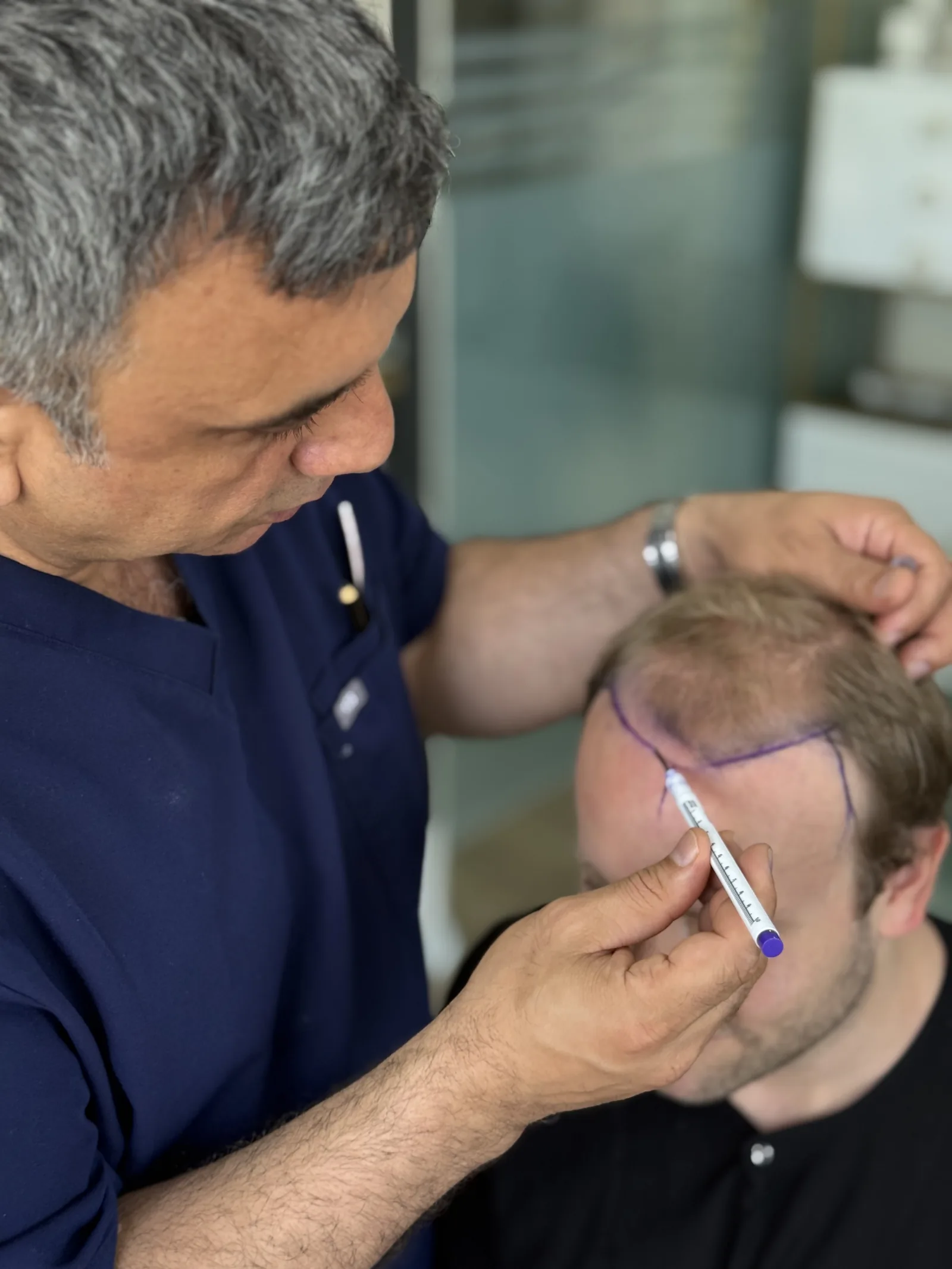
Dr. Arslan recommends a baseline blood panel before starting any hair loss protocol — not only for women, where thyroid, iron and hormone levels can drive shedding that Finasteride and Minoxidil will not touch, but for men whose loss is sudden, patchy or otherwise inconsistent with the typical androgenetic pattern. Treating the wrong cause wastes months. A short photo review during your consultation is usually enough to confirm whether your pattern is androgenetic hair loss or something that needs different investigation first.
When Non-Surgical Treatment Is Not Enough
Past Norwood III, the picture changes. Areas that are already visibly bald rather than thinning have follicles that finished miniaturising and closed down permanently — no topical or oral medication reopens a follicle that has already gone dormant. Finasteride and Minoxidil can protect what is still there; they cannot bring back what is already gone. If your hairline or crown already shows scalp rather than fine, thinning hair, check the Norwood Scale to confirm your stage, or read the hair transplant overview for how a permanent solution works once medical treatment alone is no longer enough.