01 · Bespoke Assessment
Free photo review
Submit three photographs. Dr. Arslan reviews every case personally within 24 hours and tells you plainly whether surgery is the right next step.
Surgeon-led hair restoration clinic in Levent, Istanbul since 2005.
Explore all →Send 3–5 photographs. Personal response within 24 hours — no intermediaries.
Request Now →Selected for your specific hair loss pattern and aesthetic goals.
FUE vs DHI →FUE, DHI or Algorithmic FUE™ — Dr. Arslan recommends based on your photographs and Norwood stage.
Get Assessment → Try Graft Calculator →FUE Europe member. Ministry of Health accredited clinic. Levent, Istanbul — 60–80% less than UK or US.
View Package →FUE Europe member. Ministry of Health accredited. 17+ years. 3,000+ personal procedures. One patient per day.
Full Profile →One patient a day, every package surgeon-led. Every result personally accountable.
Read Philosophy →No hidden costs. Hotel, transfers, surgery and aftercare in one price.
View Pricing →Silver · Gold · VIP — 5-star hotel · Airport transfers · PRP included
View Pricing → Graft Calculator →Every case personally overseen by Dr. Arslan Musbeh, from consultation to results.
Full Gallery →Not every case needs a transplant. Medical treatments, therapies and specialist options.
Overview →Guides, tools and expert content — written by Dr. Arslan Musbeh.
All Articles →Thinned edges and temples after years of braids, weaves and wigs, a hairline that has crept back, a crown scarred by CCCA — the patterns women with afro-textured hair bring are different from everyone else's, and so is the surgery. Dr. Arslan Musbeh plans every case around the curved follicle, the scarring history and the cause that has to stop first.
The Process
From your first photographs to a full result at 12 months, with Dr. Arslan Musbeh involved at every stage.
01 · Bespoke Assessment
Submit three photographs. Dr. Arslan reviews every case personally within 24 hours and tells you plainly whether surgery is the right next step.
02 · Technique & Plan
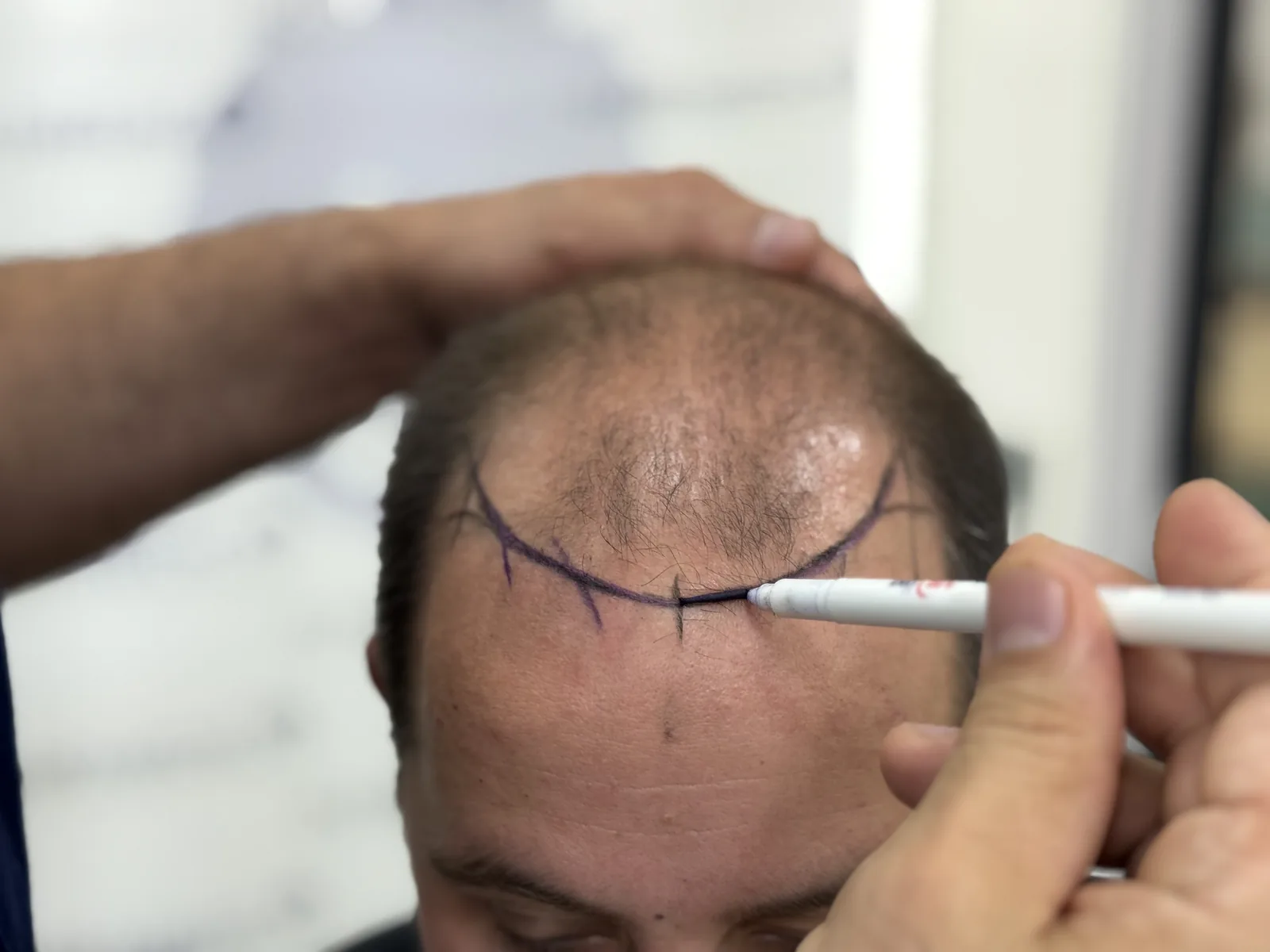
FUE, DHI or Algorithmic FUE™ is confirmed by the surgeon directly, with a graft estimate and a fixed, all-inclusive price.

03 · Arrival Istanbul
A VIP transfer meets you at the airport and takes you to your 5-star hotel, followed by a pre-op consultation day at the Levent clinic.
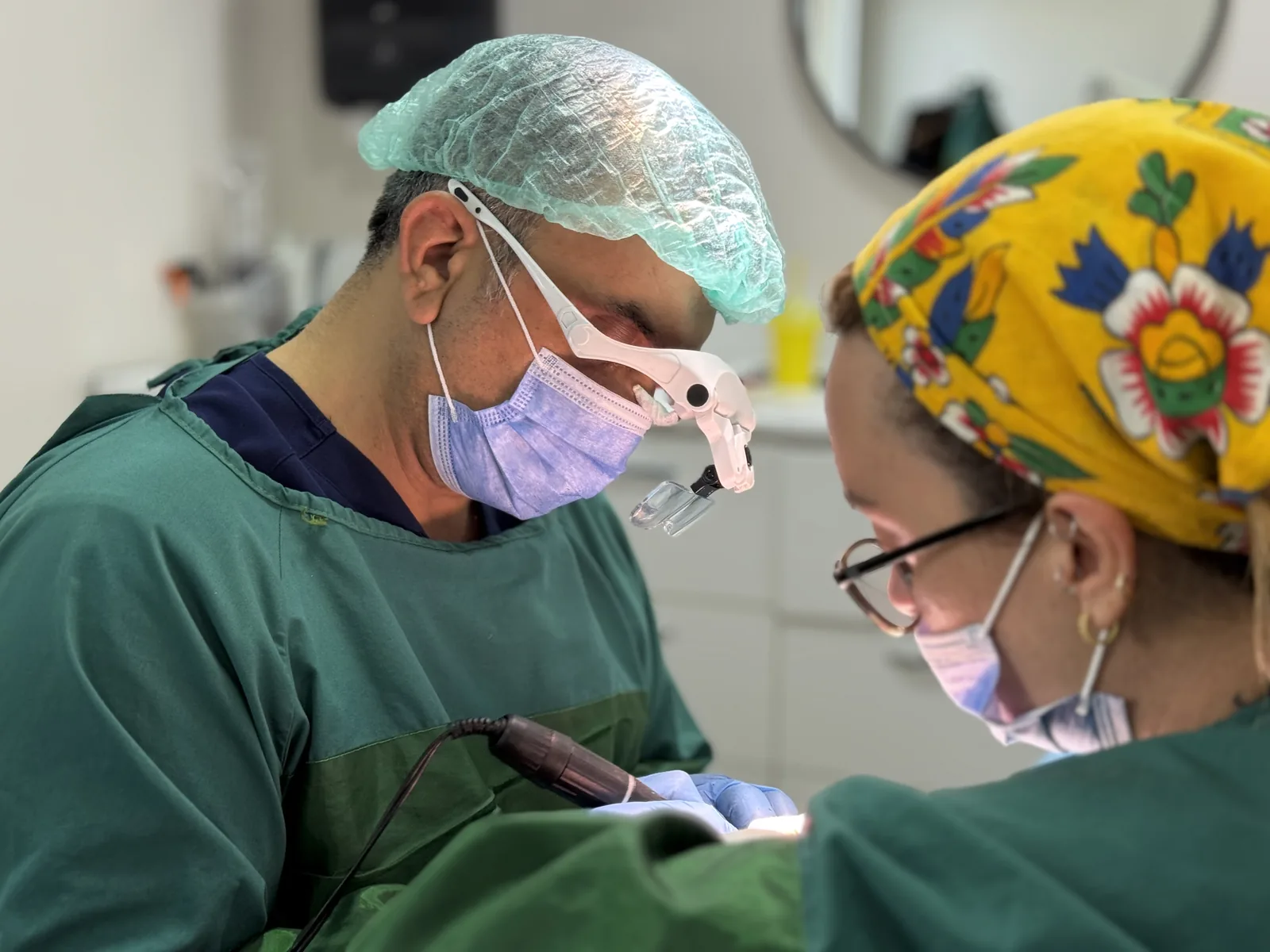
04 · Surgery Day
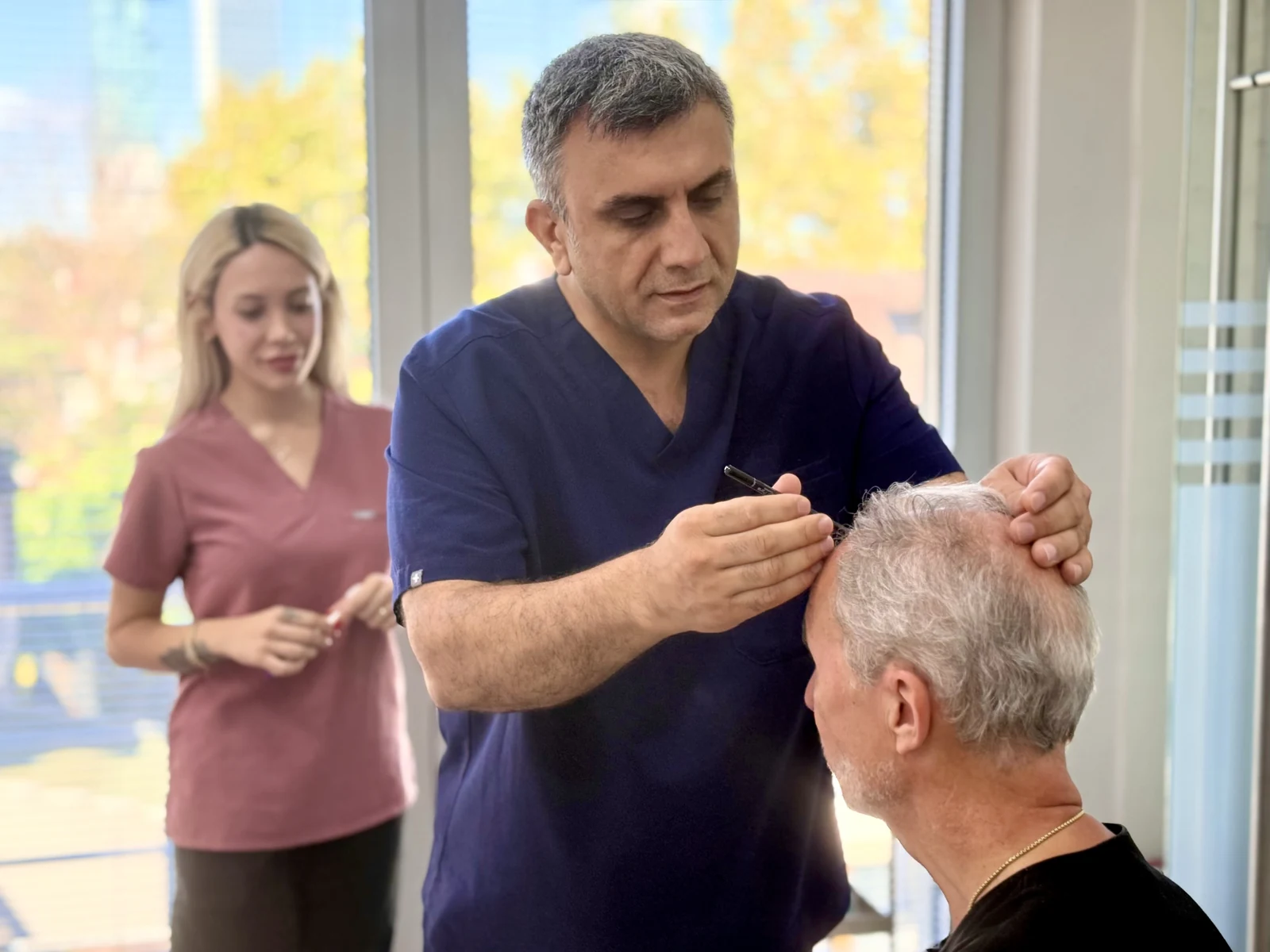
Dr. Arslan personally leads every package, performing the channel-opening incision himself in Gold and VIP. You are the only patient in the clinic that day.
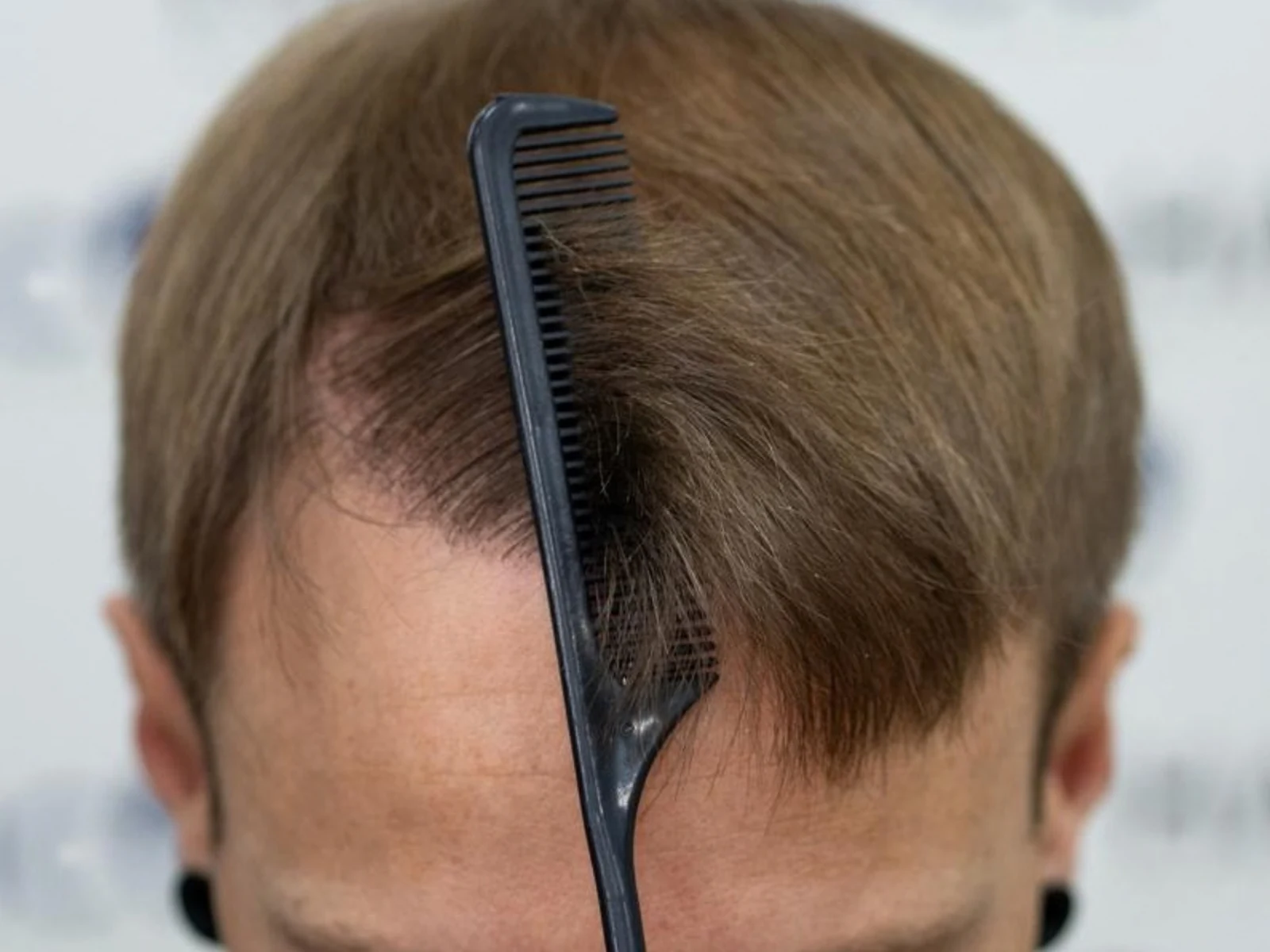
05 · Results at 12 Months
Full result visible at around 12 months. Our team supports you through 12 months of follow-up, including the first wash at the clinic.
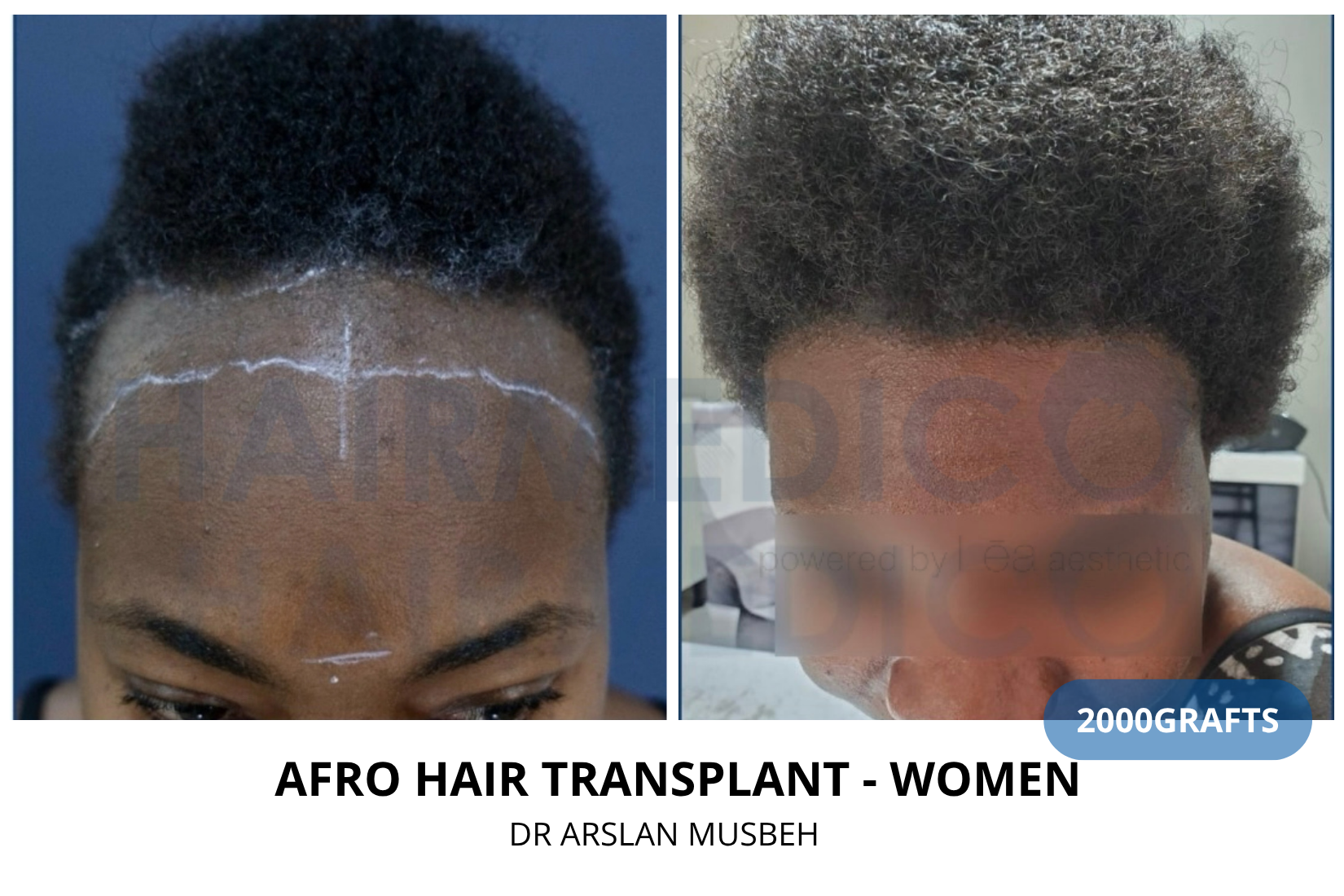
Most of the women with afro-textured hair who contact Hairmedico are not losing hair the way the Ludwig scale describes. The crown and parting are often fine. What has gone is the frontal edge and the temples — thinned, then bare, after years of braids, sew-in weaves, glued wigs, locs or a tight bun worn daily. This is traction alopecia, and it is mechanical, not hormonal: once the pulling stops, the loss stops too, which makes it one of the most predictable patterns to restore surgically.
The second group presents with a crown that is smooth, shiny and sometimes tender. That is CCCA (central centrifugal cicatricial alopecia), a scarring condition that is more common in Black women and that cannot be operated on while it is active. The third group is simpler: a naturally high or receded hairline with no disease at all, where the same hairline lowering offered to any woman is planned around a curved follicle.
Three things make these cases different from the afro hair transplant we do in men, and from the women's hair transplant we do in straight hair: the follicle curves under the skin, the scalp scars more readily, and the styling that caused the loss will come back after surgery unless it is planned for.

Afro-textured hair is not a side line at Hairmedico. Dr. Arslan Musbeh has operated on patients with afro-textured hair from West and East Africa, the Caribbean, France, the UK and the Americas for more than 17 years, and the afro hair transplant protocol used in the clinic — punch selection, test extraction, graft spacing for coiled hair — is his own. For women this matters twice over: the curved follicle has to be extracted without cutting it, and the hairline and temples have to be rebuilt in the direction the coil already grows.
Dr. Arslan Musbeh assesses women with afro-textured hair on four points, from photographs first and in person on the day:
Afro-textured hair grows from a follicle that curves beneath the skin, so a straight punch aimed along the visible hair cuts the root. In the afro hair transplant protocol used at Hairmedico the punch diameter, its angle of entry and the depth of the cut are set to the curl of each patient's follicle, checked on the first grafts of the day before the extraction continues. The transection rate — the proportion of grafts damaged on the way out — is what separates a good result on afro hair from a disappointing one.
For women, the second decision is how the grafts go in:
Whichever technique is chosen, who performs the critical steps is set by the package, not left to chance. In the Silver package the clinic's doctors operate under Dr. Arslan's protocol; in Gold, Dr. Arslan carries out the consultation and opens every recipient channel himself, which fixes the angle and direction of each graft; in VIP he performs every step. The package page sets this out in full.
Women do not need a full shave. The donor band at the back is clipped short and the hair above it covers it the same day; afro-textured hair hides a trimmed band better than most hair types. The hairline and temples are prepared without touching the rest of the head.
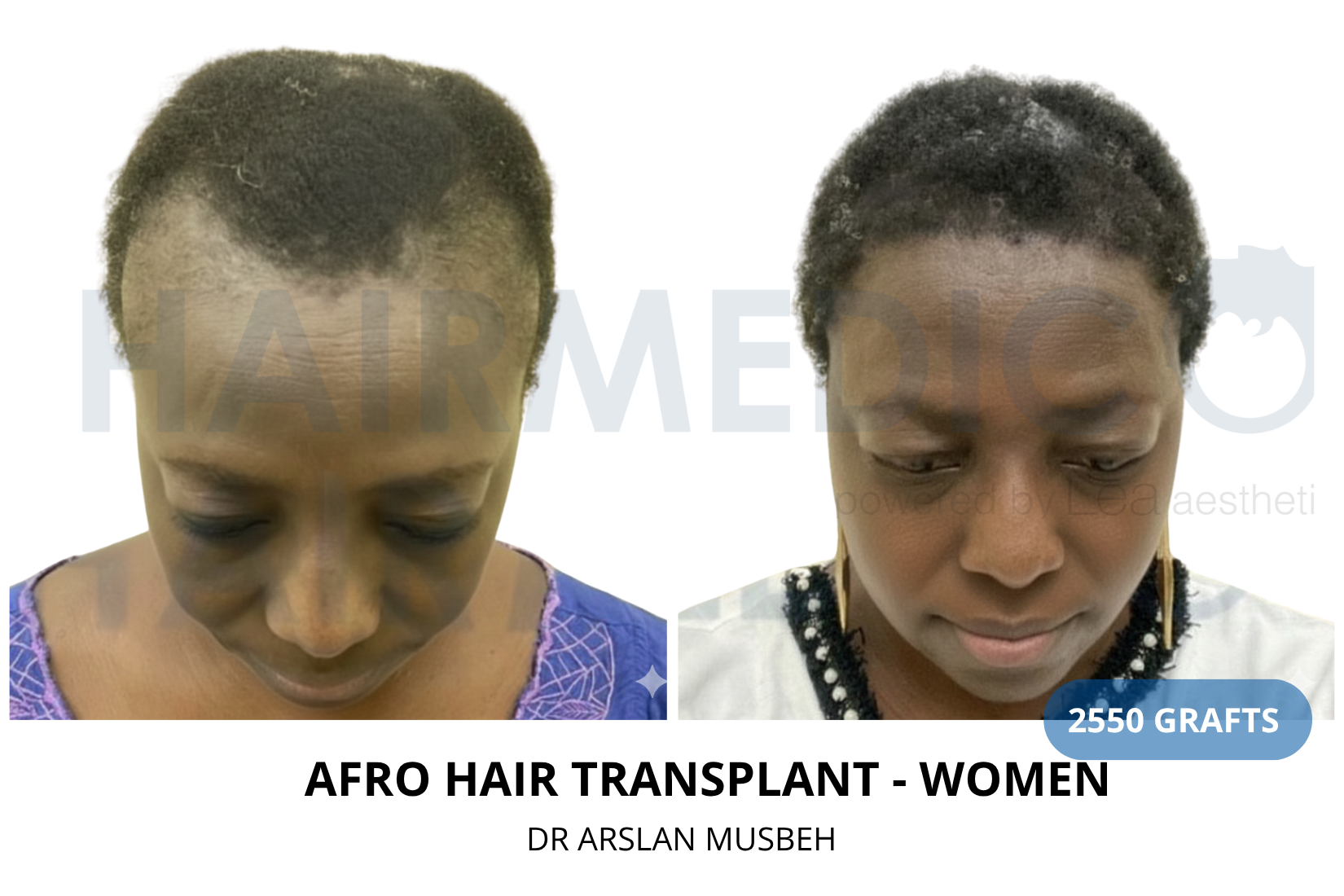
Both cases below are Hairmedico patients operated on by Dr. Arslan Musbeh in Istanbul, photographed before surgery and at follow-up. Tap a photo to enlarge it.
More afro-textured and women's cases are in the full before-and-after gallery.
Central centrifugal cicatricial alopecia starts at the crown and spreads outward, replacing follicles with scar. It is the most common scarring alopecia in Black women and it is often found at the same consultation as traction loss. The rule is simple and strict: no grafts into active CCCA. Placed into inflamed scalp they are lost, and the money and donor hair with them.
What "quiet" means in practice: at least a year without spread, usually under a dermatologist's treatment, and where there is any doubt a scalp biopsy to confirm the inflammation has stopped. Once CCCA has burnt out, transplanting the crown and parting is possible and often works well, with the blood supply of the scarred skin assessed on the day and the graft count sometimes split over two sessions. The CCCA guide covers the diagnosis, the treatment and the timing in detail.
The first fortnight is the same as for any women's hair transplant: careful washing from day two, no tension on the scalp, hair worn loose. What is specific to afro-textured hair and darker skin comes after that.
Growth starts around month three or four and the result is judged at twelve months, when the coil has formed and the density reads as it will stay. The post-op scalp care guide and the protective-styles timeline go week by week.
Afro-textured grafts cover more surface each than straight-hair grafts, so the numbers below are lower than a straight-hair clinic would quote for the same area — and a quote built on straight-hair graft counts is a sign the clinic does not do this often.
Pricing at Hairmedico is per package, not per graft, so a 1,200-graft and a 2,000-graft case cost the same within the same tier. Sapphire FUE is €2,600 (Silver), €3,900 (Gold) or €5,500 (VIP); DHI — the technique most women's afro cases use — is €3,200, €4,300 or €5,800. The full package breakdown is here. A written quote follows the free photo review, before you book anything.
Short films from the Hairmedico YouTube channel: afro-textured patients in the clinic, their results, and Dr. Arslan at work. Videos load from YouTube only when you press play.
Answered by Dr. Arslan Musbeh.
Yes. Women with afro-textured hair are good candidates when the cause of the loss has stopped, the scalp is not actively inflamed and the donor area at the back has enough density. Traction alopecia at the edges and temples is the most common and one of the most reliable patterns to restore.
Sometimes. Early traction loss, where the follicles are thinned rather than gone, can recover over 6–12 months once the tension stops. Where the hairline has been bare and smooth for more than a year or two, the follicles have usually been replaced by scar tissue and only a transplant brings hair back.
No. The donor band at the back is clipped short and the hair above it covers the area immediately. The recipient hairline and temples are prepared without shaving the rest of the head. Afro-textured hair hides a trimmed donor band better than most hair types.
Central centrifugal cicatricial alopecia is a scarring hair loss that starts at the crown and spreads outward, and it is more common in Black women. While it is active, grafts placed into it are lost. Once it has been quiet for at least a year under dermatological treatment, confirmed where necessary by biopsy, the burnt-out area can be transplanted.
Usually, yes. A keloid or hypertrophic tendency is asked about before surgery — how old cuts, piercings or vaccination sites healed — and it changes the punch size, the donor spacing and the aftercare, not the decision to operate. A patient with large keloids on the scalp itself is the exception and is assessed individually.
Edges, temples and hairline work in women is usually DHI, because the implanter places the curved graft at the exact angle and the recipient area is not shaved. Sapphire FUE is chosen when a larger area, such as a burnt-out CCCA crown, needs more grafts in one session. In both, the extraction punch is adapted to the curved follicle.
Edges and temples alone are typically 800–1,500 grafts. A receded hairline with the temples is 1,200–2,000. A burnt-out CCCA crown is 1,500–2,500. The number is set from photographs of the front, the top and the donor area, and afro-textured grafts cover more surface each than straight-hair grafts, so the figure is lower than you may have been quoted elsewhere.
Packages are priced per tier, not per graft. Sapphire FUE is €2,600 (Silver), €3,900 (Gold) or €5,500 (VIP); DHI is €3,200, €4,300 or €5,800. A written quote with the recommended technique follows the free photo review.
Hair is worn loose and untouched for the first two weeks. Low-tension braids and sew-ins are usually cleared from the third month, once the grafts are anchored; glued units and lace fronts along the new hairline wait until the first follow-up confirms the scalp is settled. The tension that caused the loss must not come back at the same level.
Yes. The grafts come from your own donor area, so the coil pattern, colour and texture are identical. During the first months the new hairs can grow in slightly looser before the full coil forms; by month twelve they match the surrounding hair and are styled, relaxed or dyed with it.
Locs and braids on the top and sides can stay if they are away from the recipient area and the donor band; they are tied back on the day. Anything that crosses the donor band at the back has to be taken down for the extraction, and tight styles should already have been loosened for several weeks before surgery.
Dr. Arslan does not operate on patients under 18, and for traction alopecia the more important question is time: the edges must have been free of tension for at least six months, so that what is still going to recover on its own has recovered before grafts are planned.
No. Surgery is postponed until after breastfeeding, both because of the local anaesthetic and the medication used afterwards, and because postpartum shedding can make a diffuse loss look worse than it is. The assessment itself can be done at any time.
Yes, once the scalp has fully settled, which Dr. Arslan confirms at follow-up — usually from the third month for colour and heat and later for chemical relaxers along the new hairline. Transplanted hair takes a relaxer or dye exactly as the hair next to it does.
The transplanted follicles come from the back of the head, where hair is not affected by traction or by androgenetic loss, and they keep that resistance where they are placed. What can change is the hair around them if the original cause returns, which is why the aftercare plan deals with styling tension and not only with the grafts.
The procedure is performed under local anaesthesia with sedation available, and most patients describe the day as long rather than painful. The scalp is numb throughout; mild tightness at the donor area for a few days afterwards is controlled with the medication you are given.
Three nights is the usual stay: arrival and consultation, surgery day, first wash and check the next day. Every package includes the surgery, hotel, VIP airport and clinic transfers, medication, aftercare products, PRP and twelve months of follow-up by photograph. Flights are not included.
Most traction cases are completed in one session. A second, smaller session is planned in advance only when a burnt-out CCCA crown or a large scar needs more grafts than the skin's blood supply can safely take at once; it is scheduled no earlier than twelve months after the first.
You send three photographs — front, top and the back of the head — through the form or WhatsApp. Dr. Arslan reviews them personally and replies within 24 hours with whether you are a candidate, the technique he would use, an estimated graft count and the written package price. Nothing is booked until you have that in writing.
After researching countless clinics, I specifically didn't want a "hair mill." Dr. Arslan is hands-on throughout the entire process. I came from Australia and the experience was seamless.
Dr. Arslan was present throughout the surgery and personally performed the majority of key procedures. His professionalism and dedication made all the difference.
I already see good hair growth after only 17 weeks. The professionalism of the team and facilities was excellent.
Dr. Arslan was incredibly professional — he explained all procedures clearly. The clinic was spotless and the staff were super friendly.
From first contact, communication was prompt, transparent and efficient. My expectations were surpassed by the services and attention I received.
After 5 years of research I chose Hairmedico. Even on a basic package, Dr. Arslan performed the critical incision phase himself.