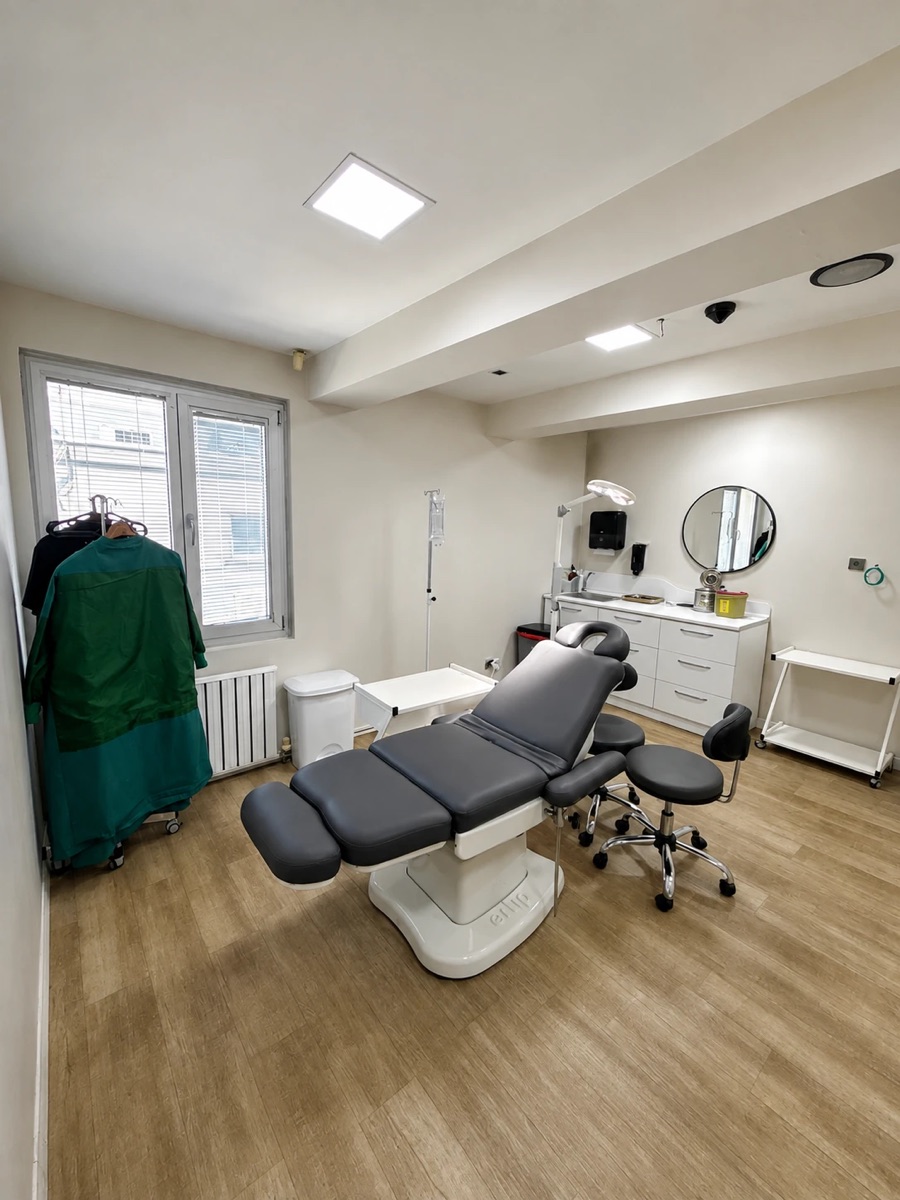
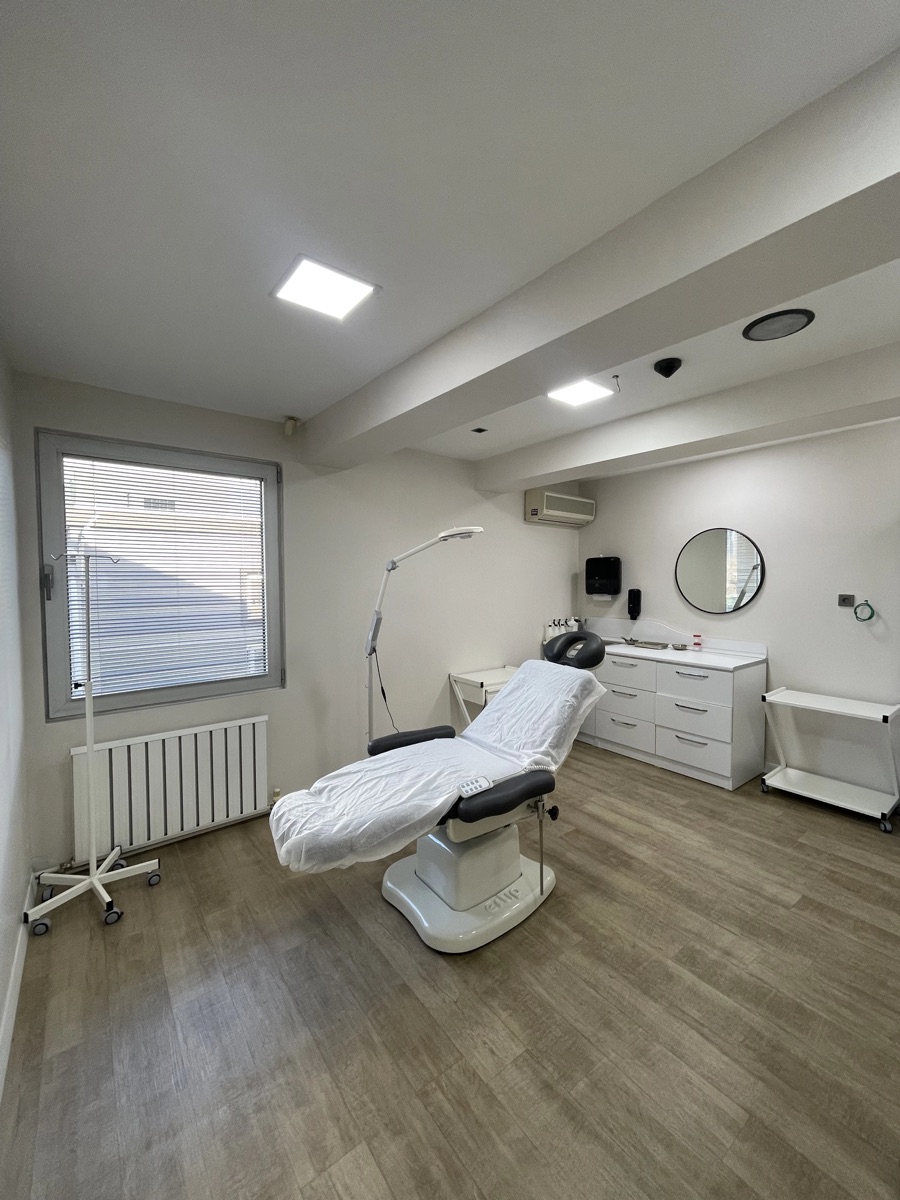
What is FUE Hair Transplant?
FUE — Follicular Unit Extraction — is the gold standard method for hair transplant surgery. Unlike the older FUT (strip) method, FUE extracts individual follicular units directly from the donor zone using a precision punch tool, leaving no linear scar and allowing a full recovery within days rather than weeks.
Each extracted follicle is a naturally occurring group of 1–4 hairs. These units are preserved in a holding solution while the surgeon creates recipient channels in the area being restored, then implants each graft at a precisely controlled angle and direction to replicate the natural growth pattern.
In the VIP package, every step of this process — extraction, channel creation and implantation — is performed personally by Dr. Arslan Musbeh. Graft placement follows the package, surgeon-led throughout.
Sapphire FUE vs Classic FUE
Both methods use the same extraction technique. The difference is in the blade used to create recipient channels for implantation.
Classic FUE uses steel blades. Reliable and proven across millions of procedures worldwide. Suitable for standard density work and most scalp areas.
Sapphire FUE uses gem-tipped blades with a harder, smoother edge. The sapphire blade creates finer, V-shaped channels that cause less tissue trauma. The result: reduced post-operative swelling, faster epithelialisation, denser graft packing and a slightly shorter healing phase. Read our full guide on Sapphire FUE technique.
Dr. Arslan uses sapphire blades as standard for most FUE procedures — particularly in the hairline and temporal zones where precision matters most.
FUE vs DHI — Which is Right for You?
FUE and DHI (Direct Hair Implantation) both extract grafts using the same follicular unit method. The difference is in how they are implanted.
- FUE: Channels are created first, then grafts are placed. More suited to larger sessions and wide scalp areas. Up to 3,000 grafts in a single session.
- DHI: Grafts are loaded into a Choi implanter pen and placed without pre-made channels. Greater angle and direction control. Preferred for the hairline and crown. Up to 4,500 grafts.
Dr. Arslan recommends the technique based on your specific anatomy, Norwood stage, donor density and the area being restored — not based on package upselling. See our complete FUE vs DHI comparison guide for a detailed breakdown.
The FUE Procedure — Step by Step
A full FUE session at Hairmedico follows this sequence:
Day Before — Pre-op Consultation
Dr. Arslan meets the patient in person, confirms the surgical plan agreed during the photograph assessment, designs the hairline, and answers any final questions. Blood tests are taken if required.
Surgery Day — Morning
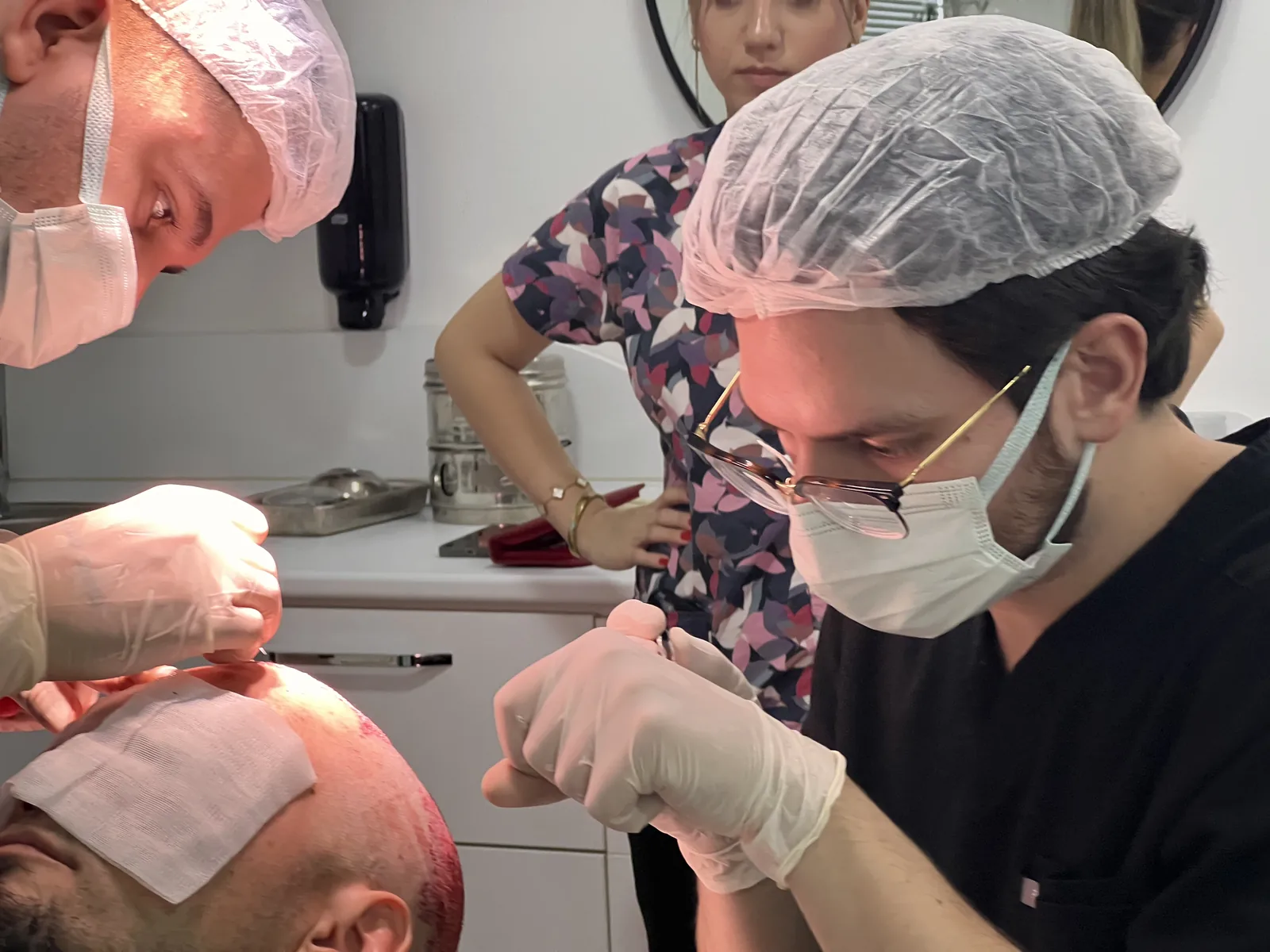
The donor zone is shaved and local anaesthetic applied using the needle-free technique — significantly reducing the discomfort of the injection phase. Extraction then begins, working systematically across the donor zone according to the Algorithmic FUE™ sequencing plan.
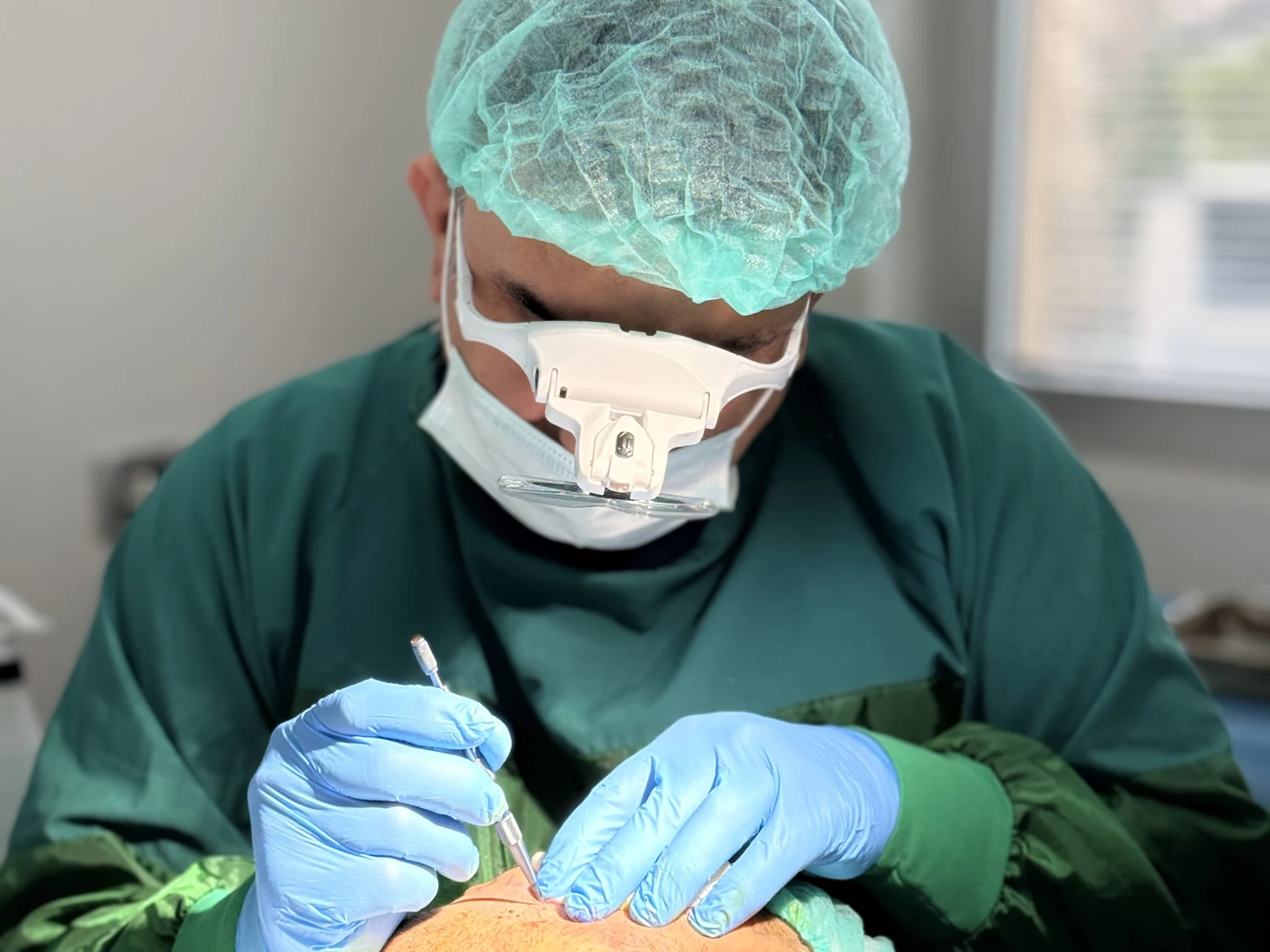
Surgery Day — Midday
Grafts are held in a preservation solution. Recipient channels are created — the most artistically demanding step, determining angle, direction and distribution of the restored hair; Dr. Arslan performs this personally in the Gold and VIP tiers.
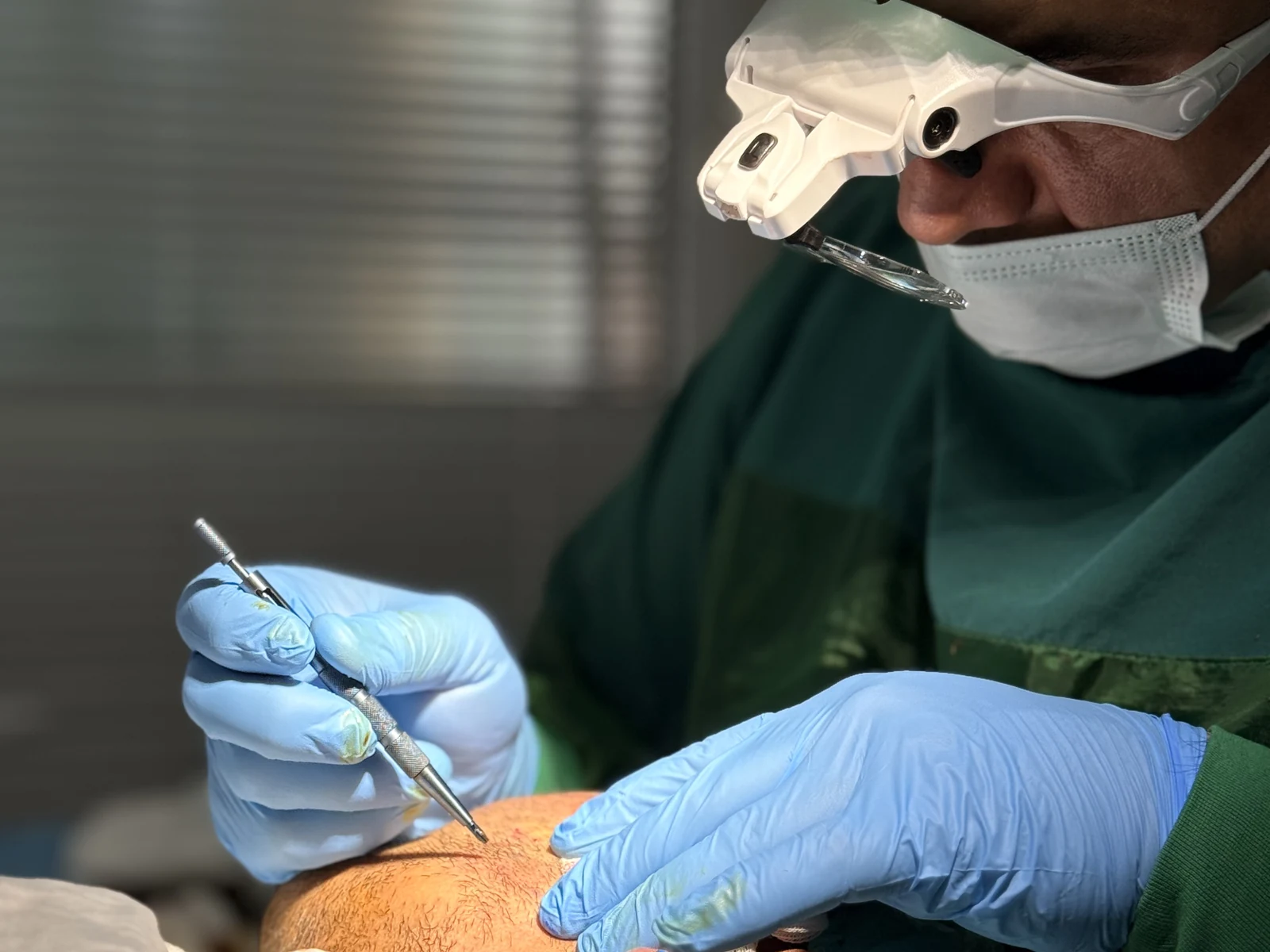
Surgery Day — Afternoon
Implantation. Each graft is placed into its channel individually, to the depth, angle and density Dr. Arslan has planned. He places every graft himself in the VIP tier; in Silver and Gold, the clinic's medical team implants. Session ends typically between 4–7 hours after commencement.
Day After — First Wash
Clinical team guides the patient through the first post-operative wash protocol. The patient departs for home the following day with full written and video aftercare instructions, and LOREW aftercare products.
Who Is a Good Candidate for FUE?
FUE suits a broad range of patients. Dr. Arslan assesses candidacy based on four factors: Norwood stage, donor density, hair calibre and expected future loss. The following gives a general guide — individual assessment always takes precedence.
FUE Results — What to Expect
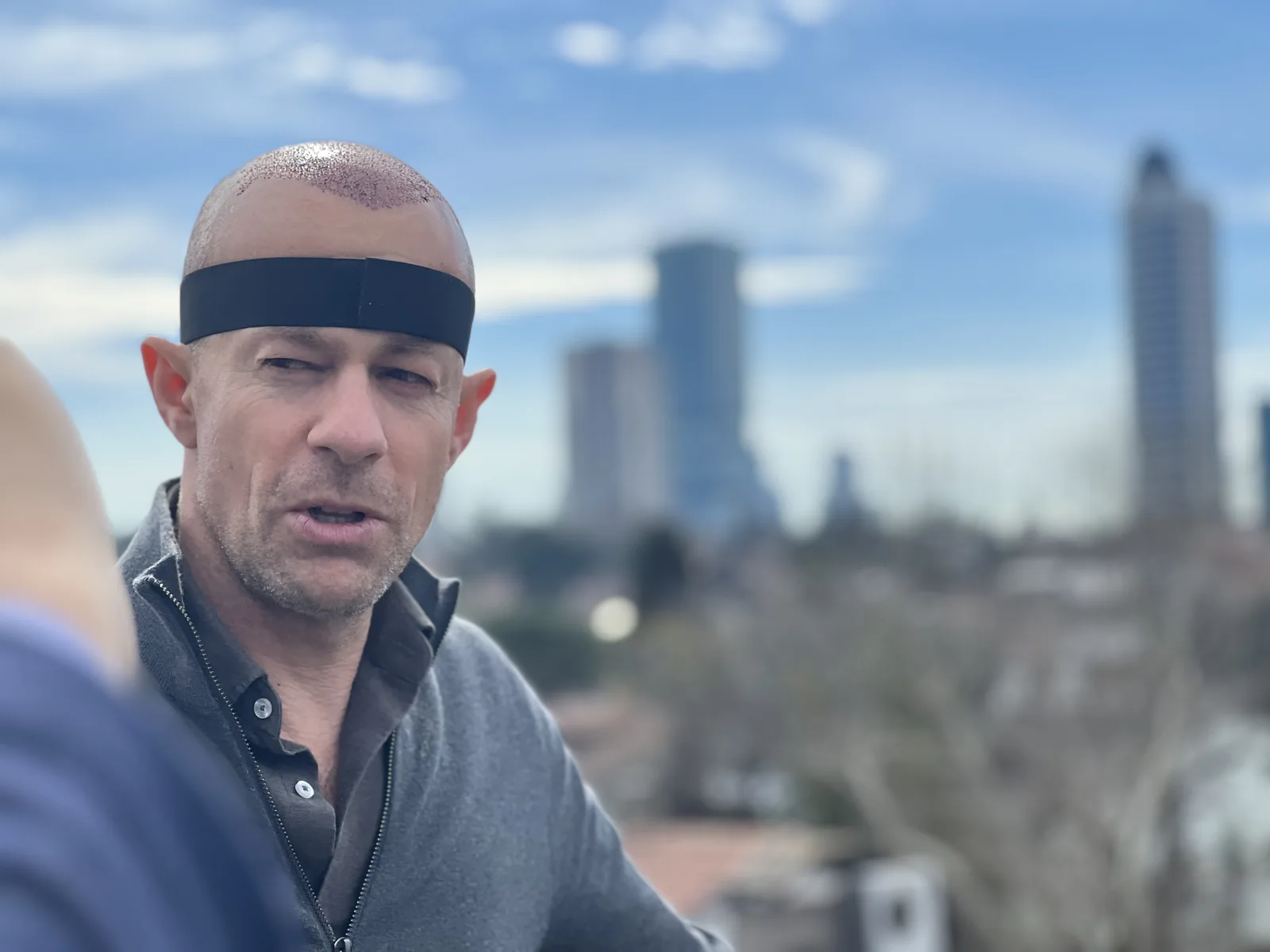
Transplanted grafts shed at weeks 2–4 after surgery. This is expected and does not indicate failure — the follicle remains intact beneath the skin. New growth begins at 3–4 months. At 6 months, approximately 50% of the final result is visible. Full density is typically reached at 12–14 months.
View real FUE results from Hairmedico patients — filtered by technique, graft count and Norwood stage.
The all-inclusive FUE package at Hairmedico includes surgery, 5-star hotel (2 nights), VIP transfers, LOREW aftercare kit, PRP and 12-month follow-up.