Technician vs surgeon in hair transplant: what the difference means for your result, how to tell which model a clinic uses, and why it matters.
The most consequential difference between hair transplant clinics has nothing to do with their website, their before/after gallery, or their price. It is a single operational distinction: does a licensed surgeon perform the surgery, or do unlicensed technical staff? This distinction determines graft survival, aesthetic quality, naturalness of result, and the permanence of the outcome. Understanding it before booking is the single most important piece of pre-decision research a patient can do.
Defining the Terms
Surgeon-Led Hair Transplant
A licensed physician — typically a surgeon with specialist training in hair restoration — personally performs all critical steps of the procedure: follicle extraction, recipient channel creation, and graft implantation. The surgeon makes every individual extraction decision, every channel angle judgment, and every implantation placement choice.
Technician-Led Hair Transplant
The extraction, channel creation and implantation steps are performed by trained non-physician technical staff. The supervising physician may be present in the building, may perform the hairline design, and may be available for consultation — but does not personally operate on the patient.
Both models exist in Istanbul. Both exist in London, Paris and New York. The model is not determined by country or city — it is determined by the specific clinic's operational structure. Understanding what hair transplant surgery involves is the context for understanding why the operator matters.
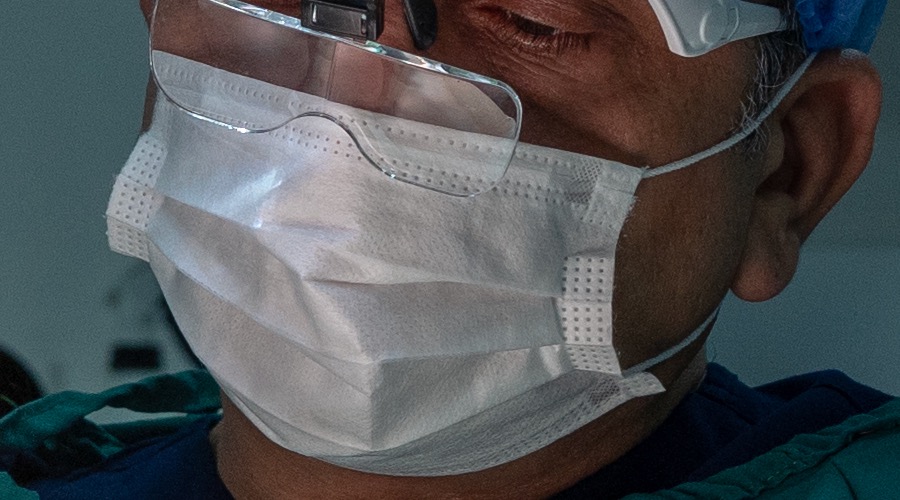
Clinical Differences — What the Data Shows
| Quality metric | Surgeon-led | Technician-led |
|---|---|---|
| Follicular transection rate | 2–5% | 10–30% |
| Graft survival rate | 88–96% | 58–78% |
| Hairline naturalness | Surgeon aesthetic judgment — individual | Template-based or delegated design |
| Channel angle precision | Surgeon-controlled, anatomically adaptive | Mechanical, protocol-driven |
| Complication recognition | Real-time surgical adaptation | Limited — no physician training |
| Long-term result predictability | High — documented across case history | Variable — dependent on technician skill |
The Transection Rate Reality
Follicular transection is the permanent destruction of a graft during extraction — the punch cuts through the follicle shaft rather than around it. Once transected, the graft is permanently lost: it will not grow regardless of how carefully it is subsequently handled.
Transection rate is where the quality gap between surgeon-led and technician-led procedures is most stark and most measurable. An experienced surgeon, reading the follicle angle variations across the donor zone through tactile feedback and visual assessment developed over thousands of cases, achieves 2–5% transection. Technical staff performing the same mechanical operation without this anatomical pattern recognition achieve 10–30% in documented clinical studies.
The practical consequence: in a 3,000-graft session, the difference between 3% and 20% transection is 510 permanently destroyed grafts. That is 510 follicular units that were counted in the extraction total, stored, transported and implanted — but will never produce hair. The patient has received 2,490 effective grafts despite being told they received 3,000.
Channel Creation: The Artistry Gap
Recipient channel creation is the step that determines whether the final result looks natural or artificial. Channels must be placed at the exact angle and direction that will produce hair growth matching the surrounding native hair pattern. This requires:
- Understanding of the natural hair flow pattern across different scalp zones
- Aesthetic judgment about appropriate angles for the ethnic hairline type
- The ability to create subtle irregularity in the leading hairline edge rather than mechanical uniformity
- Real-time adaptation to the individual patient's follicle grouping patterns and scalp anatomy
These are not mechanical skills that can be taught in a training course. They are developed through medical training, aesthetic education, and thousands of personally performed procedures. A technician performing channel creation can execute a protocol; they cannot exercise the judgment that protocol cannot capture.
Dr. Arslan's full background and surgical philosophy at Hairmedico About Us.

How to Identify the Model Before You Book
The information you need is rarely volunteered. Ask these questions explicitly:
Q: "Will Dr. [name] personally perform the extraction — or does a technician perform this step?"
Accept only: "Dr. [name] personally performs all extraction." Not "our team is highly trained" or "Dr. [name] supervises."
Q: "Will Dr. [name] personally create the recipient channels?"
This is the most aesthetically critical step. Must be surgeon-performed.
Q: "How many patients does Dr. [name] operate on per day?"
Personal performance of all steps for multiple simultaneous patients is physically impossible. "One patient per day" is the answer that makes all other claims credible.
View Hairmedico's all-inclusive packages at hairmedico.com/price.