Can AI predict your hair transplant result?
AI simulation tools that promise to show you "exactly what you'll look like after your hair transplant" are proliferating across social media and clinic websites. They are impressive looking. They are increasingly sophisticated. And they are — at their best — useful planning aids. But whether they can genuinely predict your hair transplant result is a more complex question, with a more nuanced answer than either enthusiasts or sceptics typically acknowledge.
What AI Prediction Tools Can Actually Do
Modern AI hairline simulation tools use a combination of facial recognition, image processing, and overlay technology to generate a visualisation of what a proposed hairline would look like on a patient's photograph. The better implementations also incorporate facial proportion analysis and ethnic norm databases to suggest age-appropriate positions.
Genuine capabilities of current AI prediction tools:
- Hairline position visualisation: Show what different hairline heights and shapes look like on your specific face — useful for communicating aesthetic preferences to your surgeon
- Proportion assessment: Evaluate how a proposed hairline relates to your facial thirds and width proportions
- Before/after simulation: Overlay proposed density on a current photograph to give a rough impression of coverage at 12 months
- Design comparison: Compare multiple hairline options side-by-side before committing to a specific design at the physical consultation
These are real capabilities that add genuine value to the planning process. For patients considering a hair transplant procedure, using a simulation tool before the consultation can help clarify your aesthetic goals and communicate them more effectively to your surgeon.

What AI Cannot Predict — The Critical Limitations
The limitations of AI prediction tools are not technical failures — they are structural limitations of what the technology is being asked to do. Understanding them prevents over-reliance on simulation outputs as reliable result predictions.
Graft Survival Rate
The density visible in an AI simulation assumes a specific graft survival rate — typically the optimistic average used by the tool's developer. In reality, graft survival varies from 60% to 97% depending on the surgeon's technique, graft handling protocols, and patient biology. A simulation based on 95% survival from a surgeon-led clinic looks dramatically different from the actual result of a 65% survival rate at a technician-run clinic. The AI tool cannot know which you will receive.
Hair Calibre and Texture
The density impression created by transplanted hair depends critically on hair calibre — shaft thickness. Coarse hair provides significantly more visual coverage per follicle than fine hair. Most AI simulation tools use standardised hair calibre in their overlays rather than accurately modelling the patient's specific hair thickness. A fine-haired patient looking at a simulation built on average-calibre hair will see a more optimistic density than they will actually achieve.
Growth Phase Variation
The simulation shows a static result. The actual growth process involves months of dormancy, gradual emergence, and progressive thickening. The simulation cannot show what the result looks like at month 3 (when many patients panic), month 6 (partial result), or the subtle maturation between months 9 and 14. The "12-month result" depicted in a simulation is a single data point without the journey context patients need.
Future Hair Loss
The simulation shows a result at one moment in time. It cannot show how the transplanted result will interact with native hair loss that continues in the surrounding zones over the next 5–20 years. A simulation-based decision made at 30 may look accurate at 32 and increasingly incongruous at 45 as the native hair recedes around the transplanted zone.
| AI Simulation Predicts | AI Simulation Cannot Predict |
|---|---|
| Proposed hairline position and shape | Actual graft survival rate |
| Visual density at assumed survival rate | Real density based on your biology |
| Facial proportion relationship | Hair texture/calibre accuracy |
| Design option comparison | Future native hair loss interaction |
| Aesthetic goal communication | Surgeon's execution quality |
| Rough 12-month impression | Month-by-month growth journey |
How AI Tools Fit Into the Planning Process
The most effective use of AI simulation tools is as a communication bridge — not as an outcome prediction. Used in this way, they are genuinely valuable:
Before the consultation: Use a simulation to identify the range of hairline positions that interest you, and which feel too low or too high for your comfort. Bring this preference to your consultation.
During the consultation: Use the simulation as a starting point for the hairline design discussion with your surgeon. "Something like this position but slightly more conservative" is a much more productive conversation than "I want to look exactly like this simulation."
After the design session: The physical hairline drawn by your surgeon with surgical marker will look different from any simulation — and will be more accurate, because it accounts for your specific scalp anatomy, hair direction, and the surgeon's aesthetic judgment about what will look natural in 3D.
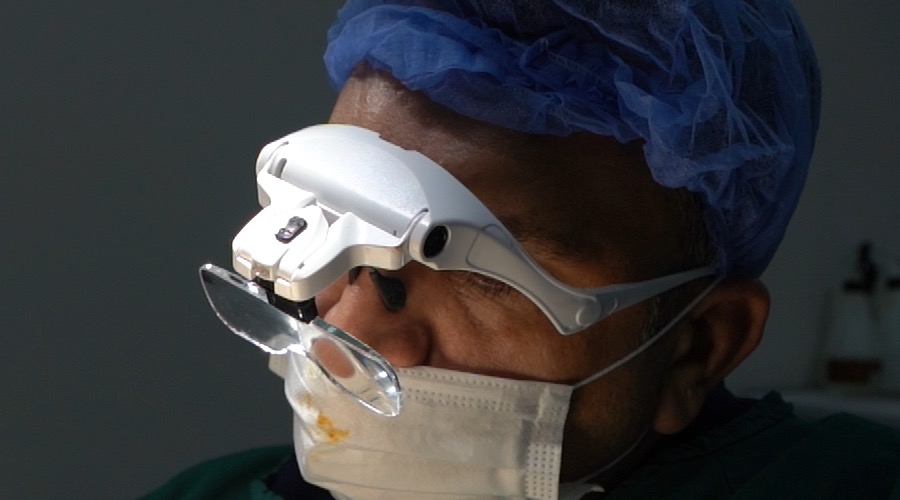
Dr. Arslan's professional background and case portfolio are available at Hairmedico about us.
The Most Reliable Prediction Available
The most reliable prediction of your hair transplant result at 12 months is not an AI simulation. It is the combination of three things that no algorithm can fully replace:
1. A surgeon with documented outcomes for comparable cases: Before/after photographs of patients with similar hair type, loss pattern and graft count, taken at confirmed 12-month timepoints. This is empirical evidence, not simulation.
2. An accurate graft survival rate from that specific surgeon: Knowing that Dr. Arslan achieves 95%+ survival at Hairmedico, you can calculate the actual delivered density rather than assuming a simulation's optimistic figure.
3. A consultation that includes explicit density planning: A target density per zone, a graft count planned to achieve it, and a distribution plan across the recipient area gives you a number you can evaluate against comparable patient outcomes.
For Hairmedico's all-inclusive package pricing and consultation booking, see hairmedico.com/price.