01 · Bespoke Assessment
Free photo review
Submit three photographs. Dr. Arslan reviews every case personally within 24 hours and tells you plainly whether surgery is the right next step.
Surgeon-led hair restoration clinic in Levent, Istanbul since 2005.
Explore all →Send 3–5 photographs. Personal response within 24 hours — no intermediaries.
Request Now →Selected for your specific hair loss pattern and aesthetic goals.
FUE vs DHI →FUE, DHI or Algorithmic FUE™ — Dr. Arslan recommends based on your photographs and Norwood stage.
Get Assessment → Try Graft Calculator →FUE Europe member. Ministry of Health accredited clinic. Levent, Istanbul — 60–80% less than UK or US.
View Package →FUE Europe member. Ministry of Health accredited. 17+ years. 3,000+ personal procedures. One patient per day.
Full Profile →One patient a day, every package surgeon-led. Every result personally accountable.
Read Philosophy →No hidden costs. Hotel, transfers, surgery and aftercare in one price.
View Pricing →Silver · Gold · VIP — 5-star hotel · Airport transfers · PRP included
View Pricing → Graft Calculator →Every case personally overseen by Dr. Arslan Musbeh, from consultation to results.
Full Gallery →Not every case needs a transplant. Medical treatments, therapies and specialist options.
Overview →Guides, tools and expert content — written by Dr. Arslan Musbeh.
All Articles →Receding temples are often the first visible sign of male pattern hair loss. Temple restoration restores the natural frame of the face, often with surprisingly few grafts.
The Process
From your first photographs to a full result at 12 months, with Dr. Arslan Musbeh involved at every stage.
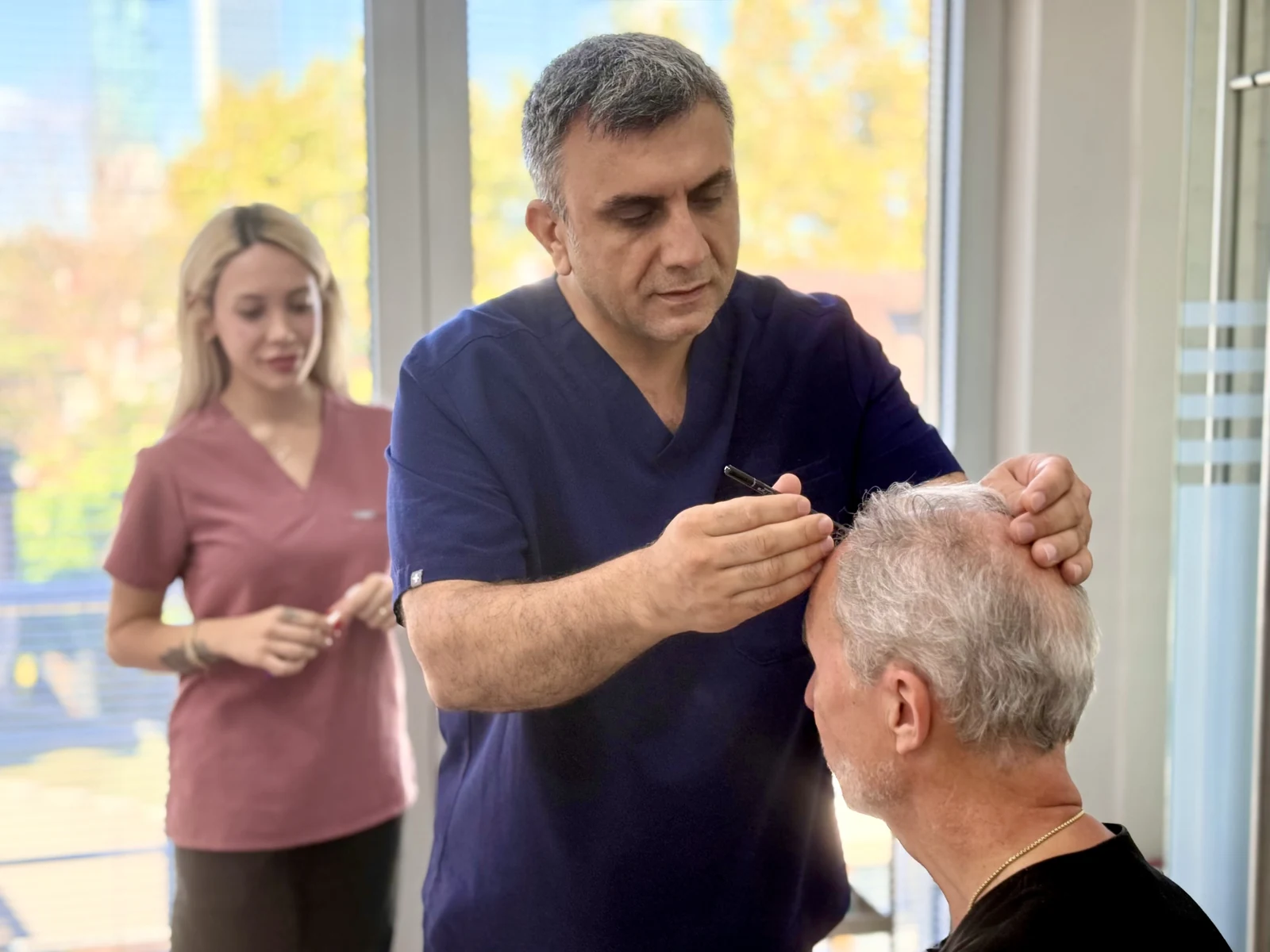
01 · Bespoke Assessment
Submit three photographs. Dr. Arslan reviews every case personally within 24 hours and tells you plainly whether surgery is the right next step.
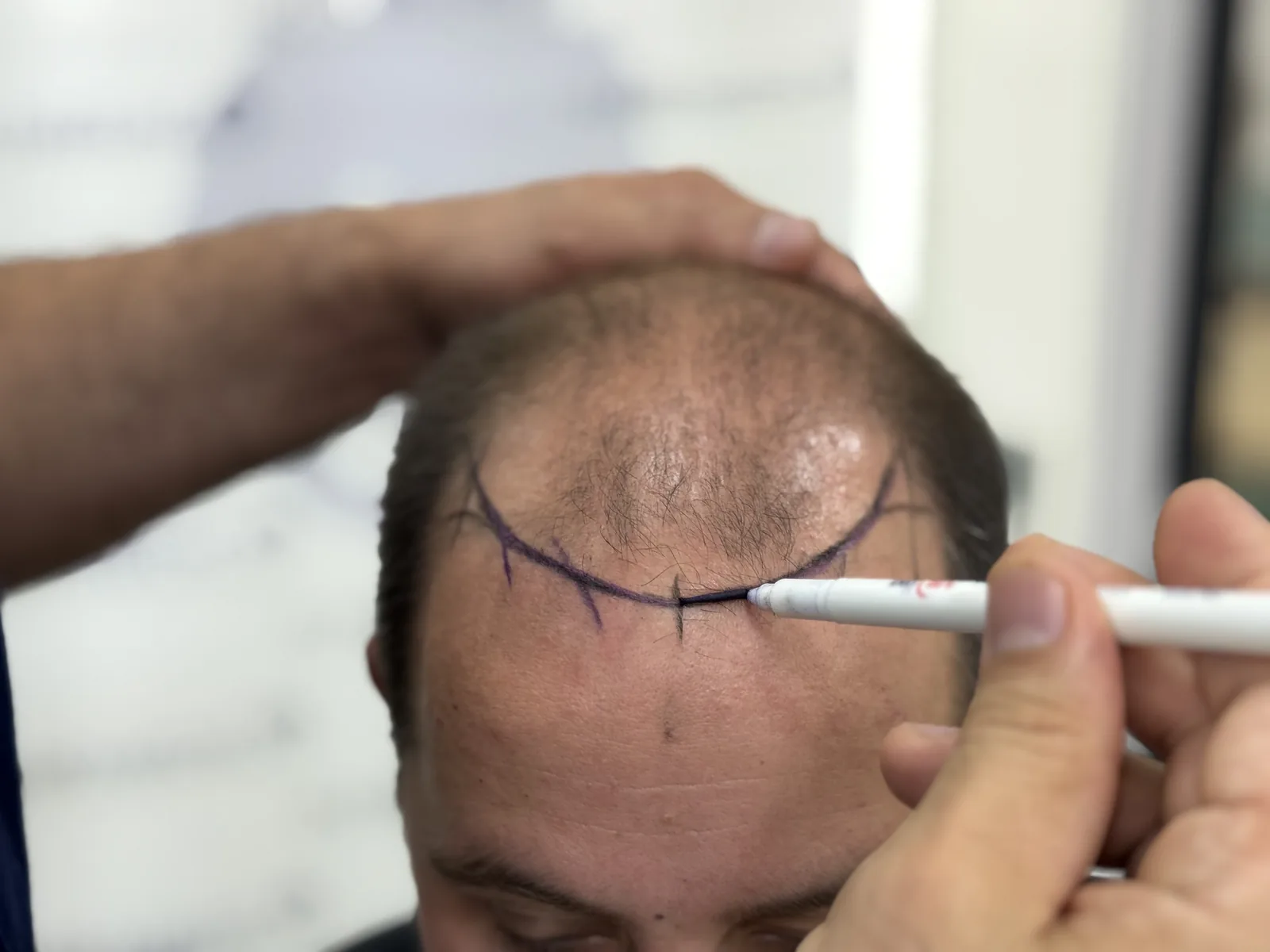
02 · Technique & Plan
FUE, DHI or Algorithmic FUE™ is confirmed by the surgeon directly, with a graft estimate and a fixed, all-inclusive price.

03 · Arrival Istanbul
A VIP transfer meets you at the airport and takes you to your 5-star hotel, followed by a pre-op consultation day at the Levent clinic.
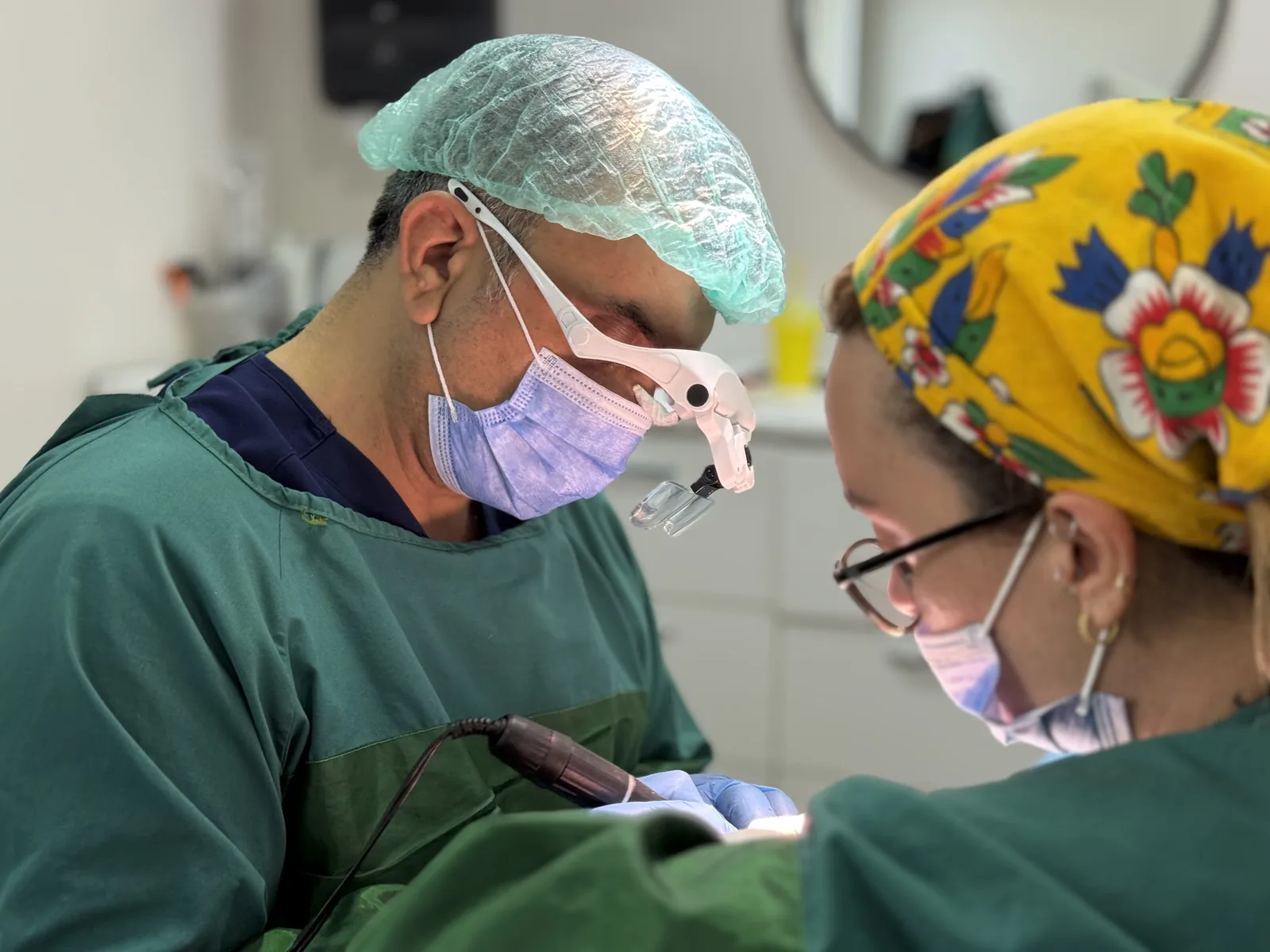
04 · Surgery Day
Dr. Arslan personally leads every package, performing the channel-opening incision himself in Gold and VIP. You are the only patient in the clinic that day.
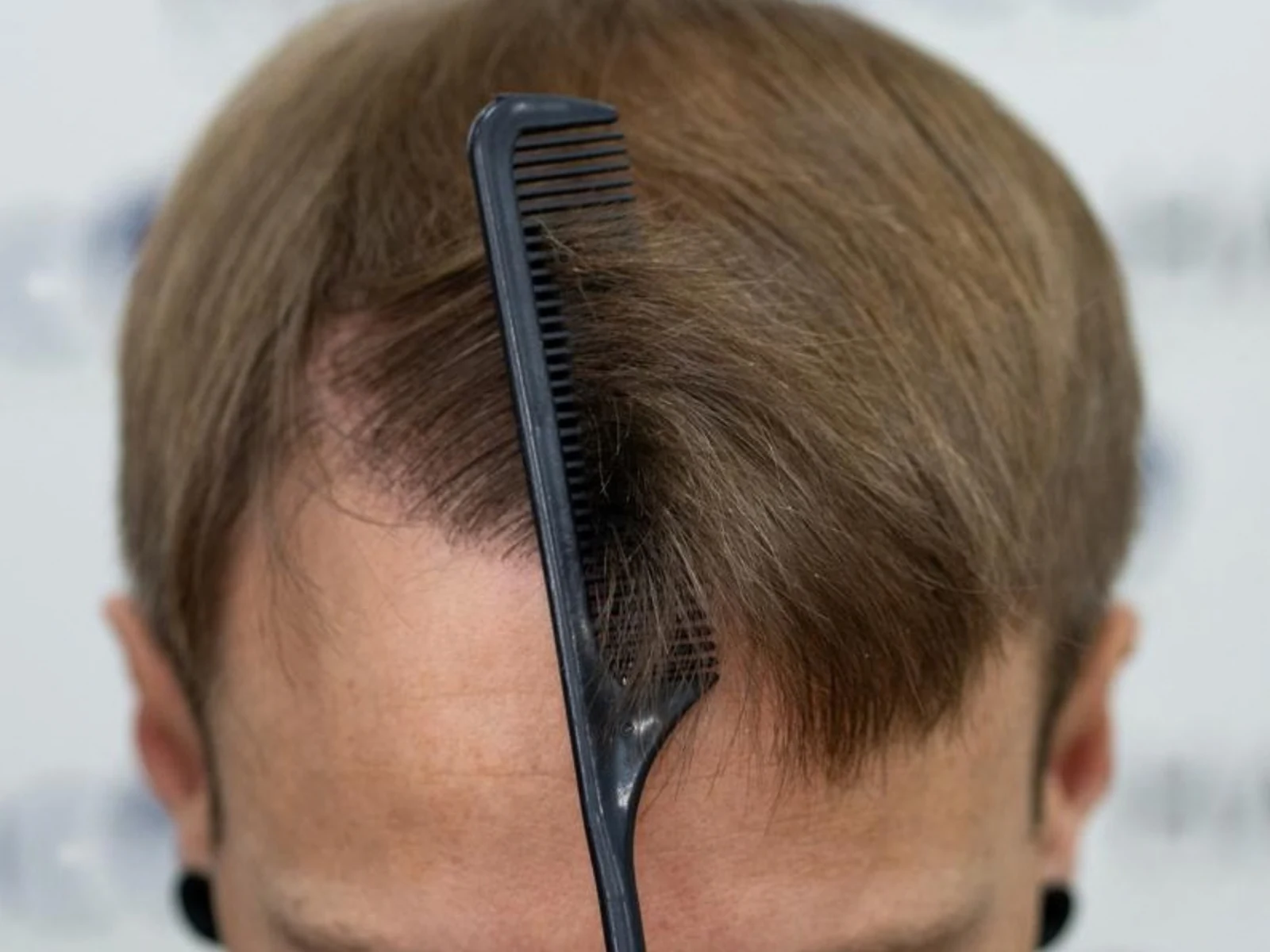
05 · Results at 12 Months
Full result visible at around 12 months. Our team supports you through 12 months of follow-up, including the first wash at the clinic.


Temple hair is finer than the hair around it and grows at a much flatter angle — close to the scalp and swept backwards. Grafts placed at the angle used elsewhere on the head stand up, and the result reads as artificial from the side even when density is correct.
The temporal points also frame the face. Restoring them changes the perceived shape of the forehead more than the graft count suggests, which is why a modest number of grafts placed well can matter more here than a large number placed generically.
Selecting the right grafts matters as much as placing them. The temples need the finest single-hair grafts available in the donor area; coarser grafts, however well angled, look wrong in a zone where the surrounding hair is fine.
This is why DHI's Choi pen is the technique most often used at the temples: it lets the surgeon set the angle, depth and direction of each single-hair graft individually, then implant it in the same motion, rather than placing a graft into a channel cut earlier at a fixed angle. Flat, backward-swept temple hair calls for that level of control more than the crown or mid-scalp does. Sapphire FUE remains suitable for more straightforward cases — the full FUE vs DHI comparison and the DHI technique guide cover how the two differ.
| Factor | Why it matters at the temples |
|---|---|
| Graft calibre | Only the finest single-hair grafts suit the zone. |
| Angle | Flat and swept back — steeper placement is immediately visible. |
| Symmetry | The two sides are compared directly by anyone looking at you. |
| Recession pattern | Temporal recession often continues; the design allows for it. |
| Interaction with the hairline | Temples and hairline are designed together, not separately. |
Temple work is frequently combined with hairline restoration, because the two zones meet and a mismatch between them is more noticeable than either area alone.
A graft figure quoted before your donor area has been assessed is an estimate, not a surgical plan — donor density, hair calibre and the extent of recession all shift the number. The graft calculator gives a rough range for planning purposes; Dr. Arslan confirms the exact count from your photographs during the free assessment.
Temple recession is usually one of the earliest visible signs of male pattern hair loss, often appearing in a patient's twenties or thirties — well before the crown or vertex thins. Most candidates present with mild to moderate temporal recession and donor hair elsewhere on the scalp that has not yet been drawn on for other procedures. Age alone does not disqualify a patient; the age guide and the Norwood Scale cover this in more detail.
A good candidate has donor density sufficient to supply 500–1,200 fine, single-hair grafts per side without visibly thinning the back or sides of the scalp, and temporal recession that has been stable — or is being managed with medical therapy — for at least 12 months. Patients whose recession is still actively progressing are usually advised to wait, or to combine surgery with a maintenance plan, because grafts placed ahead of ongoing native loss can leave an uneven transition later.
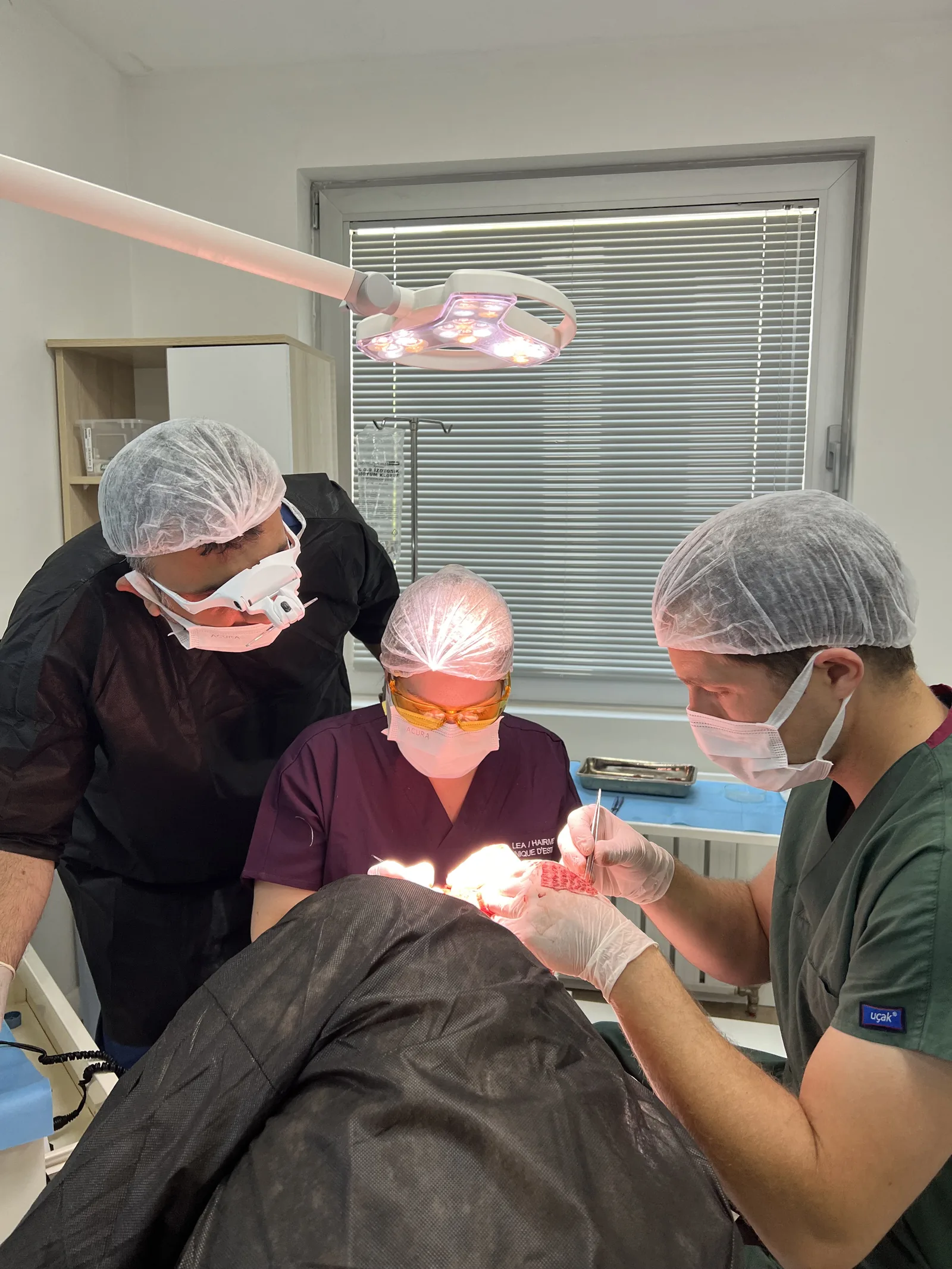
Stable temporal recession for 12+ months. Adequate donor density for fine, single-hair grafts. Realistic expectations of a subtle, natural frame rather than a dramatically lowered hairline.
Recession still actively progressing without medical therapy. Donor supply already committed to crown or hairline work. Under 25 with a pattern that has not yet stabilised.
Temple grafts sit at the edge of the hairline and grow at a flat, swept-back angle, so the early healing phase is briefly more visible here than at the crown — and more exposed to sun and wind on the side of the face. None of this changes the underlying biology: the temples follow the same graft-survival timeline as any other FUE or DHI recipient area.
| Timeline | What to expect at the temples |
|---|---|
| Days 1–4 | Mild swelling can extend toward the temple and upper cheek, more common here than at the crown given the proximity to the eyes. Resolves without intervention. |
| Days 7–10 | Scabs at the extraction and recipient sites shed. Most patients return to office work in this window. |
| Weeks 2–4 | Transplanted temple hairs shed — expected, not failure. Because the temples frame the face, this phase is briefly more noticeable than shedding elsewhere. |
| Months 3–4 | New growth begins. |
| Month 6 | Roughly half the final density is visible. |
| Months 12–14 | Full result. The mature angle and direction of the new temple hair are only judged once growth is complete. |
Because temple grafts are placed at a shallow, flat angle, gentle handling in the first week matters more here than in steeper-angled zones. The clinical team provides temple-specific washing guidance as part of the standard post-operative care protocol.
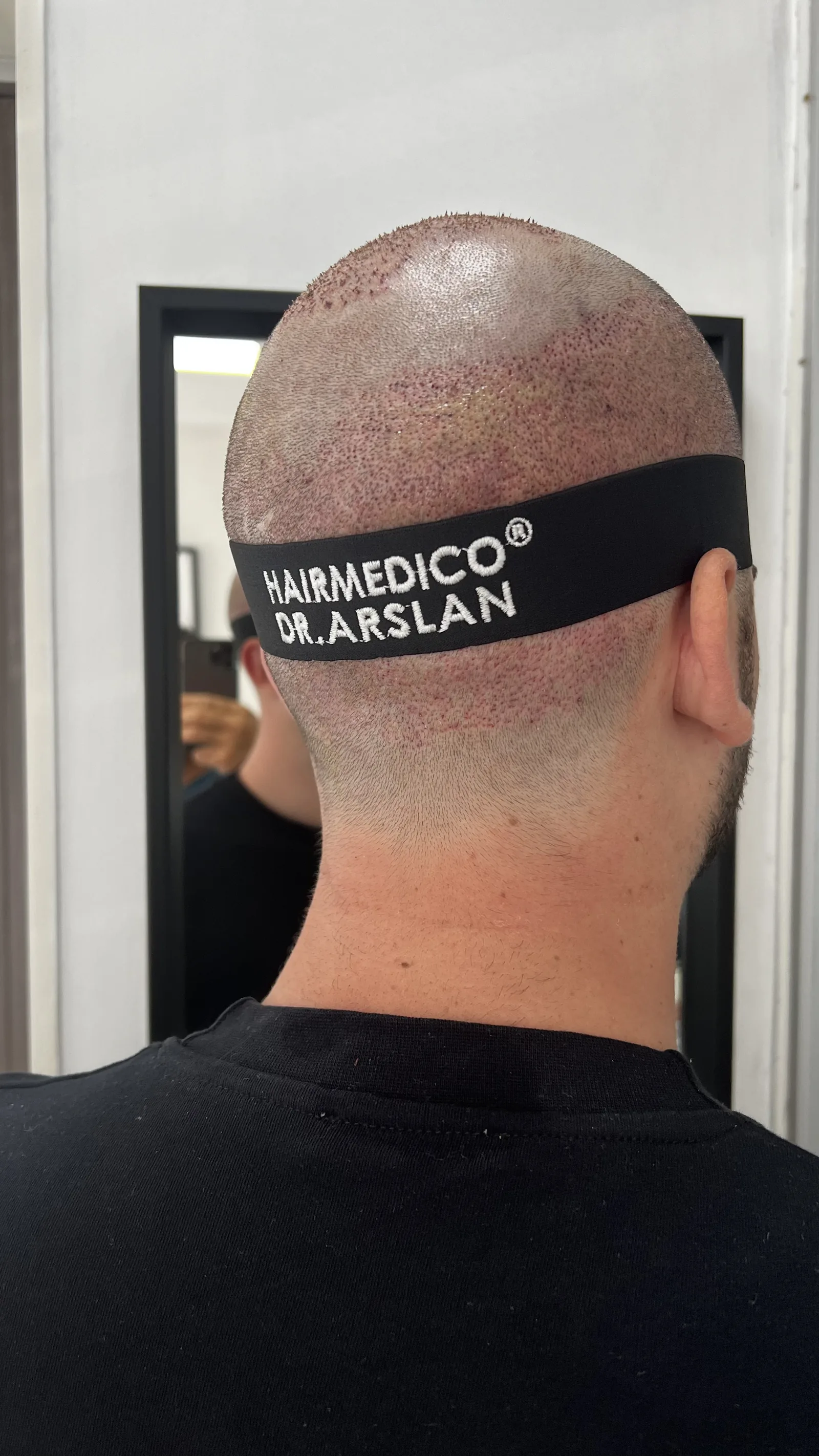
Glasses wearers face one consideration that does not apply elsewhere on the scalp: the arms of a frame rest directly on the temporal point, exactly where the new grafts sit. Switching to contact lenses, or using a lightweight frame positioned slightly forward, keeps pressure and friction off the healing area during the early weeks. Mention this at your pre-operative consultation if it applies to you.
Use the graft calculator to estimate costs, or send photos to Dr. Arslan for a free personalised assessment.
Ask Dr. ArslanSend photos of your hair via WhatsApp. Dr. Arslan will assess your hair loss, recommend the right treatment and provide your personalised all-inclusive quote within 24 hours.