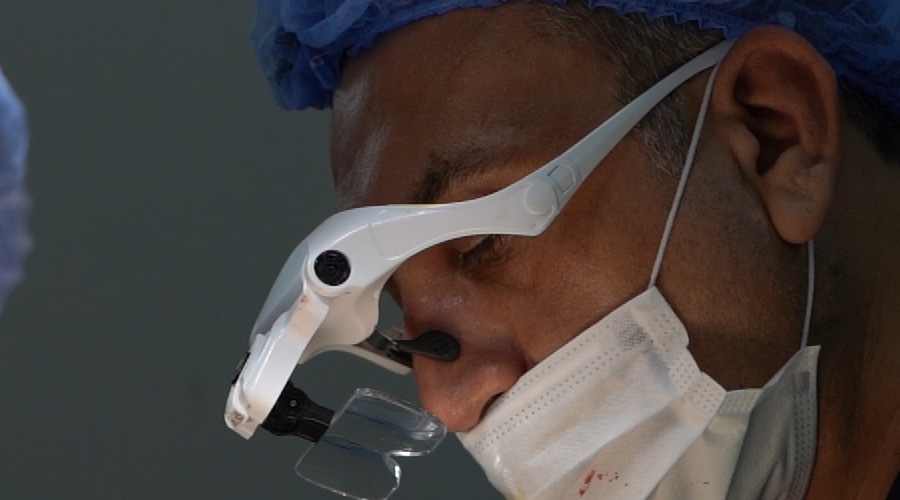
What is Sapphire FUE? How sapphire blades deliver finer channels and why Istanbul adopted this technique as standard before Western markets. Hairmedico 2026.
The material science of sapphire blades
Sapphire is crystalline aluminium oxide — Mohs hardness 9, second only to diamond. Applied to surgical blades for hair transplant channel creation, sapphire provides three properties that surgical steel cannot match: extreme initial sharpness; maintenance of that sharpness across thousands of incisions without degradation; and an ultra-smooth cutting surface that minimises tissue fraying at the channel edge.
The clinical result: channels created by sapphire blades are finer, more consistent and cause less surrounding tissue trauma. The practical outcomes are less post-operative swelling, marginally faster healing and the ability to place grafts at slightly higher density.

Why Turkey adopted Sapphire FUE as standard first
Istanbul adopted sapphire blade technology as standard earlier and more comprehensively than most Western markets for a structural reason: volume. A clinic performing 600+ procedures per year sees the cumulative improvement in outcomes from a marginal-improvement technology more clearly and sooner than a clinic performing 150–200. This dynamic made Istanbul the global leader in sapphire FUE adoption and refinement.
The economics also apply to consumable investment: sapphire blades cost more per unit than steel. At high volume, the per-procedure overhead increase is negligible. At lower Western-market volumes, clinics are slower to make the switch.
Sapphire FUE at Hairmedico — the precision detail
Dr. Arslan uses sapphire blades as standard for all FUE channel creation. The precision detail: blade width is selected to match the specific graft diameter from that patient's trichoscopy — not a universal blade applied to all cases. This matching minimises the gap between channel wall and graft, reducing graft movement during the critical revascularisation period and improving early anchoring stability.