What I Tell My Patients Before Hair Transplant —
Dr. Arslan Musbeh
Dr. Arslan Musbeh shares what he tells every patient before surgery — the honest guidance that produces the best outcomes.
Reviewed by Dr. Arslan Musbeh · Last updated 2026-04-17
Dr. Arslan Musbeh shares what he tells every patient before surgery — the honest guidance that produces the best outcomes. Hairmedico Istanbul.
"This is a one-way decision"
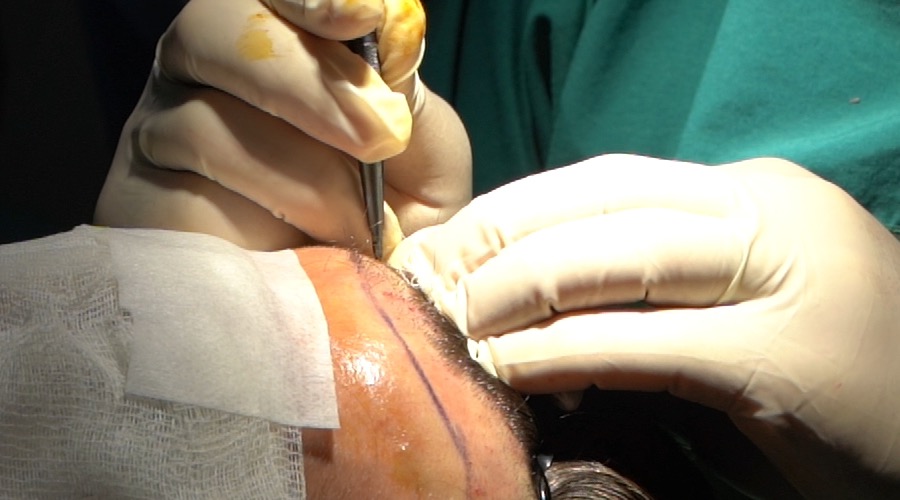
Before every procedure, I have the same conversation. I tell every patient: "This is a one-way decision — which means it deserves permanent-level deliberation. I ask: what does this hairline need to look like when you are 50? We design for that answer, not for the vanity of today's maximum."
I also tell them: "Your donor supply is finite and cannot be restored. Every graft we use today is a graft we cannot use in the future. I will never take more than the clinical situation requires, even when a patient requests the maximum. Preserving your supply for the version of you at 45 is part of my job."
Setting expectations honestly
"Month 3 will be your worst moment emotionally." I tell every patient this explicitly. At month 3, shock loss is complete, transplanted hair has not yet grown, and it looks worse than before surgery. This is normal. It is temporary. If you expect this, you navigate it. If you don't, you call me in panic unnecessarily.
"The transplanted hair is permanent; your native hair is not." Finasteride, where appropriate, is part of the long-term plan — not an optional extra.
My commitment to every patient
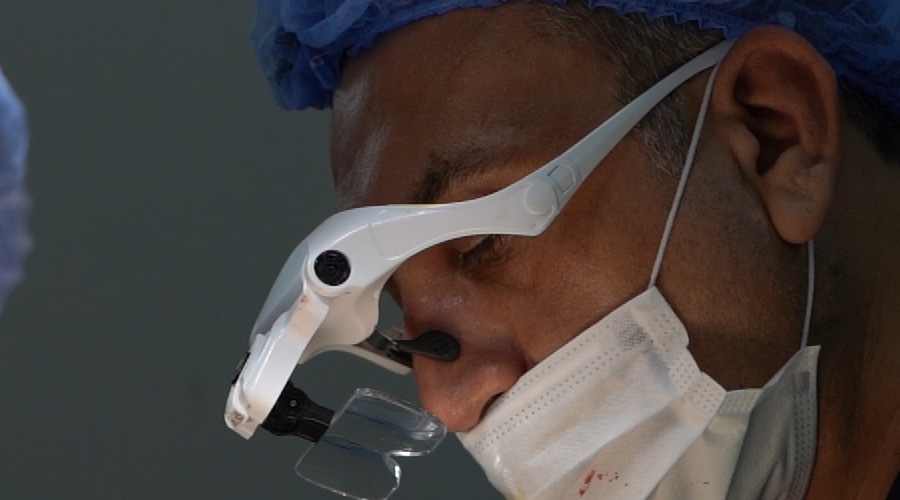
"I will be present for your entire procedure. I will not leave this room during your surgery. You have one surgeon, one day, and my complete attention." This is a commitment I have maintained across 4,500 cases. It is why I structured Hairmedico around the one-patient-per-day model from the beginning — because it is the only model in which I can meet this commitment.

Common questions
How much does a hair transplant cost in Turkey?
Hairmedico all-inclusive: price on request for 2,000–3,500 grafts including surgery, 5-star hotel, transfers, PRP and 12-month follow-up.
Is hair transplant permanent?
Yes. Transplanted follicles are DHT-resistant and grow permanently for the patient's lifetime.
What is the recovery time?
Desk work: 5–7 days. Scabs shed by Day 10–14. New growth from months 3–5. Final result months 12–14.
Who performs surgery at Hairmedico?
Dr. Arslan Musbeh personally performs every extraction and canal-opening. In VIP he also places every graft himself; in Silver and Gold, his trained team places the grafts under his direct supervision. One patient per day.
Is Turkey safe for hair transplant?
Yes, with an accredited surgeon-led clinic. Verify FUE Europe membership, Ministry of Health registration, and confirm the surgeon personally operates.
References & sources
- International Society of Hair Restoration Surgery. Practice census — global hair restoration statistics. 2022. https://www.fue-europe.com/professionals/resources/practice-census/
- Onda M et al. Follicular unit extraction: a systematic review. J Plastic & Aesthetic Surgery. 2020. https://doi.org/10.1016/j.bjps.2019.11.006
- NHS. Hair loss — overview and treatment. National Health Service UK. 2023. https://www.nhs.uk/conditions/hair-loss/
- MedlinePlus NIH. Hair transplantation — clinical overview. U.S. National Library of Medicine. 2024. https://medlineplus.gov/hairtransplantation.html
- Bernstein RM. Follicular unit transplantation. Dermatologic Clinics. 2013. https://doi.org/10.1016/j.det.2013.06.002
All references are peer-reviewed medical literature or official health authority publications. No commercial sources included.
Send three photographs.
Front hairline, crown and both sides. Dr. Arslan Musbeh reviews every submission personally and replies within 24 hours with a Norwood assessment, a technique recommendation and a graft estimate. Free, no obligation.
Request a Bespoke Assessment