Natural Hairline Design —
Medical vs Artificial Results
What makes a hair transplant hairline look natural vs artificial — the principles behind undetectable results.
Reviewed by Dr. Arslan Musbeh · Last updated 2026-04-17
What makes a hair transplant hairline look natural vs artificial — the principles behind undetectable results. Dr. Arslan Musbeh, Hairmedico Istanbul 2026.
What natural actually looks like
No natural hairline is a straight, dense, sharp edge. Natural hairlines share universal characteristics: a soft, irregular border with fine single-hair units at the periphery; gradual density transition from forehead skin to hair; slight asymmetry; a position proportionally related to facial thirds; and an angle that allows hair to lie flat rather than stand outward.
Artificial-looking hairlines typically fail in one or more of these: too low, too straight, too dense at the border, wrong angle, or wrong position relative to the face.

The medical principles of natural design
Macro-design: Height (7–9cm above glabella), central peak position, temporal recession angle, determined by individual facial anatomy and ethnic phenotype. Cannot be templated.
Micro-design: Single-hair grafts at leading edge. Two-hair grafts in transition zone. Three-hair for density behind. Irregular distribution (not evenly spaced). Varying angle at temples. Made graft by graft during surgery.
Long-term design: Conservative position survives surrounding hair loss gracefully. Aggressively low positions become isolated at 50.
Hairline design at Hairmedico
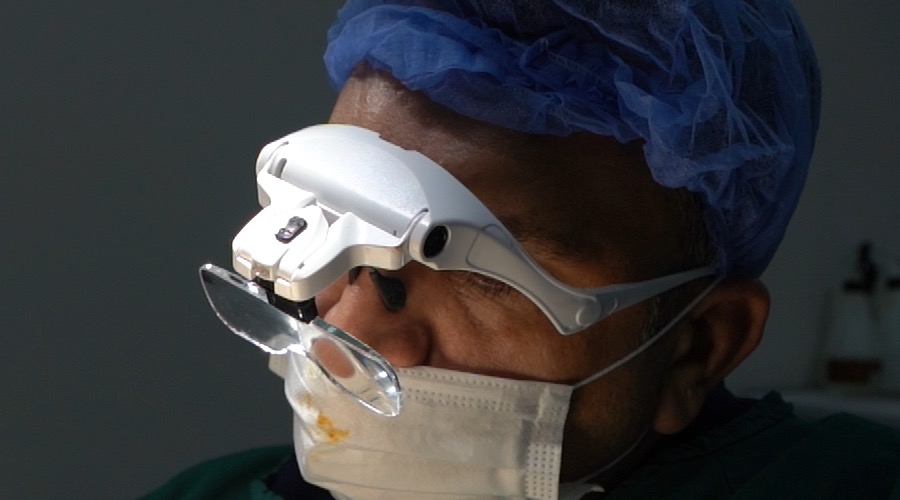
Every hairline is designed by Dr. Arslan with the patient present and upright, using surgical marker on dry skin, with patient approval before any anaesthetic is administered. The design session takes 20–30 minutes — the architectural planning phase that determines everything that follows.

Common questions
How much does a hair transplant cost in Turkey?
Hairmedico all-inclusive: price on request for 2,000–3,500 grafts including surgery, 5-star hotel, transfers, PRP and 12-month follow-up.
Is hair transplant permanent?
Yes. Transplanted follicles are DHT-resistant and grow permanently for the patient's lifetime.
What is the recovery time?
Desk work: 5–7 days. Scabs shed by Day 10–14. New growth from months 3–5. Final result months 12–14.
Who performs surgery at Hairmedico?
Dr. Arslan Musbeh personally performs every extraction and canal-opening. In VIP he also places every graft himself; in Silver and Gold, his trained team places the grafts under his direct supervision. One patient per day.
Is Turkey safe for hair transplant?
Yes, with an accredited surgeon-led clinic. Verify FUE Europe membership, Ministry of Health registration, and confirm the surgeon personally operates.
References & sources
- International Society of Hair Restoration Surgery. Practice census — global hair restoration statistics. 2022. https://www.fue-europe.com/professionals/resources/practice-census/
- Onda M et al. Follicular unit extraction: a systematic review. J Plastic & Aesthetic Surgery. 2020. https://doi.org/10.1016/j.bjps.2019.11.006
- NHS. Hair loss — overview and treatment. National Health Service UK. 2023. https://www.nhs.uk/conditions/hair-loss/
- MedlinePlus NIH. Hair transplantation — clinical overview. U.S. National Library of Medicine. 2024. https://medlineplus.gov/hairtransplantation.html
- Bernstein RM. Follicular unit transplantation. Dermatologic Clinics. 2013. https://doi.org/10.1016/j.det.2013.06.002
All references are peer-reviewed medical literature or official health authority publications. No commercial sources included.
Send three photographs.
Front hairline, crown and both sides. Dr. Arslan Musbeh reviews every submission personally and replies within 24 hours with a Norwood assessment, a technique recommendation and a graft estimate. Free, no obligation.
Request a Bespoke Assessment