Overview
Hair
Transplant
Turkey

Surgeon-led hair restoration clinic in Levent, Istanbul since 2007.

Explore all →
Lorew Paris
Premium hair care by Hairmedico
Discover →
Confidential · Free
Bespoke Assessment by Dr. Arslan

Send 3–5 photographs. Personal response within 24 hours — no intermediaries.

Request Now →
17+
Years
1
Patient/day
Surgery
Techniques
& Procedures

Selected for your specific hair loss pattern and aesthetic goals.

FUE vs DHI →
Interactive Tool
Which Technique Is Right for You?

FUE, DHI or Algorithmic FUE™ — Dr. Arslan recommends based on your photographs and Norwood stage.

Get Assessment →
Try Graft Calculator →
Why Turkey
World-class
surgery.
Local price.

FUE Europe member. Ministry of Health accredited clinic. Levent, Istanbul — 60–80% less than UK or US.

View Package →
The Surgeon
Dr. Arslan
Musbeh

FUE Europe member. Ministry of Health accredited. 17+ years. 4,500+ personal procedures. One patient per day.

Full Profile →
Dr. Arslan · Istanbul
"One patient. One day. No exceptions."

Every graft personally placed. Every result personally accountable.

Read Philosophy →
17+
Years
4,500+
Cases
FUE
Europe
Pricing
All-Inclusive
Packages

No hidden costs. Hotel, transfers, surgery and aftercare in one price.

View Pricing →
Most Chosen
VIP — FUE–DHI

Silver · Gold · VIP — 5-star hotel · Airport transfers · PRP included

View Pricing →
Graft Calculator →
Results
Real
Before
& After

Every case personally performed by Dr. Arslan Musbeh.

Full Gallery →
Non-Surgical
Beyond
Surgery

Not every case needs a transplant. Medical treatments, therapies and specialist options.

Overview →
Medical Education
Learn
before
you decide.

Guides, tools and expert content — written by Dr. Arslan Musbeh.

All Articles →
Bespoke Assessment WhatsApp
Hair Transplant
Hair Transplant Turkey
Techniques
Techniques
Procedures
Why Turkey
Country Comparisons
Non-Surgical
Medical Treatments
Learn
Guides & Tools
Clinic Dr. Arslan Musbeh Pricing & Packages Before & After About Hairmedico Contact
MoH Accredited
1 Patient / Day
Reviews
Hairmedico Blog Recovery Hair Transplant Swelling
Recovery

Hair Transplant Swelling —
How Long Does It Last?

Dr. Arslan Musbeh Hairmedico Istanbul Updated August 2026

Why Hair Transplant Swelling Happens

Swelling (oedema) after a hair transplant is a normal, expected part of healing — not a complication. It has two sources. First, the local anaesthetic and tumescent fluid injected into the scalp before extraction and implantation temporarily expand the tissue. Second, the body's inflammatory response to thousands of micro-punctures increases blood flow and fluid retention in the treated area. Both resolve naturally as the tissue heals.

Post-operative recovery protocol at Hairmedico Istanbul
Hairmedico Istanbul — Post-operative scalp care and recovery protocol

Why Swelling Moves to the Forehead and Eyes

This is the detail that alarms patients most, and the one nobody warns them about clearly enough. The scalp and forehead sit on a layer of loose connective tissue with no rigid barrier between them. Fluid follows gravity: over the 2–4 days after surgery, it gradually migrates downward from the recipient area, through the forehead, and can settle around the eyes as periorbital puffiness or mild bruising.

This is called dependent oedema and it is a mechanical, gravity-driven process — not a sign that anything has gone wrong. It typically affects the forehead more than the crown, and DHI procedures (which use more implantation fluid) tend to produce slightly more forehead swelling than FUE.

Hair Transplant Swelling Timeline — Day by Day

TimeframeWhat to Expect
Day 0 (surgery day)Minimal swelling visible. Scalp feels tight from anaesthesia and tumescent fluid.
Day 1–2Mild forehead swelling begins. Recipient area may feel firm.
Day 3–4Peak swelling. Fluid has migrated to the forehead and, in some patients, around the eyes. This is the most visible day for most patients.
Day 5–7Swelling recedes rapidly. Any periorbital puffiness or bruising fades. Most patients are close to normal by Day 7.
Week 2Swelling fully resolved in the vast majority of patients. Mild residual tightness may remain.
Week 3+No visible swelling. Focus shifts to redness fading and the shock loss phase.

Roughly 1 in 10 patients experience little to no visible swelling at all — the degree varies by individual healing response, graft count, technique and how closely aftercare instructions are followed in the first 72 hours.
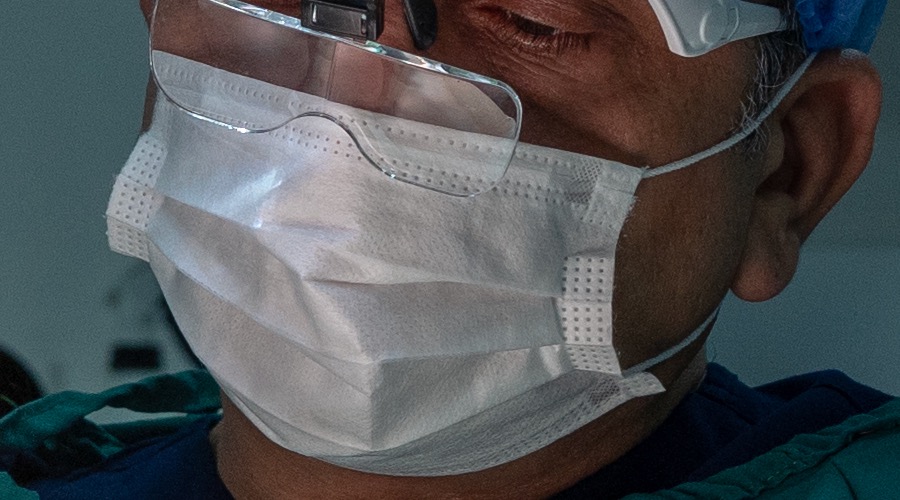
Hair transplant surgical procedure at Hairmedico Istanbul
Hairmedico Istanbul — Hair transplant surgical procedure at Hairmedico Istanbul

How to Reduce Swelling

None of the following steps eliminate swelling completely — the process is a normal healing response — but they meaningfully reduce its severity and duration:

When Swelling Is Not Normal

Mild asymmetry is common — most patients sleep favouring one side, and swelling often reflects this. Contact the clinic promptly if you notice: sudden, severe one-sided swelling with significant pain, swelling accompanied by spreading heat and redness, fever above 38°C, or swelling that continues worsening past Day 5 instead of receding. These can indicate infection or, rarely, a haematoma (a pocket of blood beneath the skin) requiring assessment. At Hairmedico, the 12-month WhatsApp follow-up means any concern receives a specialist response within 24 hours — not a call centre.

→ Internal links: Hair Transplant Istanbul | Dr. Arslan Musbeh | Packages & Pricing

Free Hair Analysis — Hairmedico Istanbul

Send 3 photos for a personal assessment by Dr. Arslan Musbeh. Response within 24 hours with graft estimate.

WhatsApp Dr. Arslan →
Dr. Arslan Musbeh
Dr. Arslan Musbeh
Hair Transplant Surgeon · Founder, Hairmedico
FUE Europe Member · Ministry of Health Accredited · 17+ Years · 4,500+ Personal Cases
FUE Europe — Full Member 17+ Years · 4,500+ Cases
August 2026 Published August 19, 2026 Last updated Dr. Arslan Musbeh Medical review ~8 min Reading time
📚 Related: Recovery Guide

Frequently Asked Questions

Does everyone get swelling after a hair transplant?

Most patients experience some degree of swelling, but severity varies widely. Patients having FUE with limited graft counts often notice only mild forehead puffiness. Larger sessions (3,000+ grafts) and DHI procedures, which use more fluid during implantation, tend to produce more noticeable swelling. A minority of patients — roughly 1 in 10 — experience little to no visible swelling at all.

Why does hair transplant swelling move to the eyes?

Gravity. The fluid used during anaesthesia and the inflammatory fluid produced by the healing process sit in the loose connective tissue of the forehead. Because this tissue has no bony barrier down to the eyelids, fluid gradually migrates downward over 48–96 hours, causing periorbital (around-the-eye) puffiness or bruising that looks alarming but is entirely normal and temporary.

How can I reduce hair transplant swelling fast?

Sleep with the head elevated at 30–45° for the first 5–7 nights, apply a cold compress to the forehead (never directly on the grafted area) during the first 48 hours, avoid bending forward or lying flat, limit salt intake for a few days, and avoid strenuous activity. These steps reduce fluid pooling but do not eliminate swelling entirely — some degree is expected regardless of precautions.

Is one-sided or severe swelling normal?

Mild asymmetry is common and normal, since patients often sleep favouring one side. However, sudden severe one-sided swelling, swelling accompanied by significant pain, spreading heat and redness, or fever should be reported to the clinic promptly, as these can indicate infection or, rarely, a haematoma requiring assessment.

References & Sources
  1. Onda M et al. Follicular unit extraction: A systematic review of the literature. Journal of Plastic, Reconstructive & Aesthetic Surgery. 2020. https://doi.org/10.1016/j.bjps.2019.11.006
  2. Bernstein RM, Rassman WR. Follicular unit transplantation: 2005. Dermatologic Clinics. 2005. https://doi.org/10.1016/j.det.2005.01.007
  3. Avram MR, Rogers NE. Contemporary hair transplantation. Dermatologic Surgery. 2009. https://doi.org/10.1111/j.1524-4725.2009.01338.x
  4. Epstein J. Postoperative care in hair transplantation. Facial Plastic Surgery. 2008. https://doi.org/10.1055/s-2008-1079223
  5. American Academy of Dermatology Association. Hair loss: diagnosis, treatment and outcome. AAD Guidelines. 2023. https://www.aad.org/public/diseases/hair-loss/treatment
  6. NHS. Hair loss — overview and treatment options. National Health Service (UK). 2023. https://www.nhs.uk/conditions/hair-loss/

All references are peer-reviewed medical literature or official health authority publications. No commercial sources included.