Can Women Get Hair Transplants? —
Female Hair Restoration Guide
Can women get hair transplants? Who qualifies, which techniques work best for women, and what results look like.
Reviewed by Dr. Arslan Musbeh · Last updated 2026-04-17
Can women get hair transplants? Who qualifies, which techniques work best for women, and what results look like. Dr. Arslan Musbeh, Hairmedico Istanbul 2026.
Which women are good candidates?
Female hair transplant candidacy is assessed differently from male candidacy for one key reason: female hair loss patterns are more diffuse. In men, pattern baldness typically creates clearly defined bald zones with a dense donor. In women, the donor zone may be less dense if female androgenetic alopecia is diffuse.
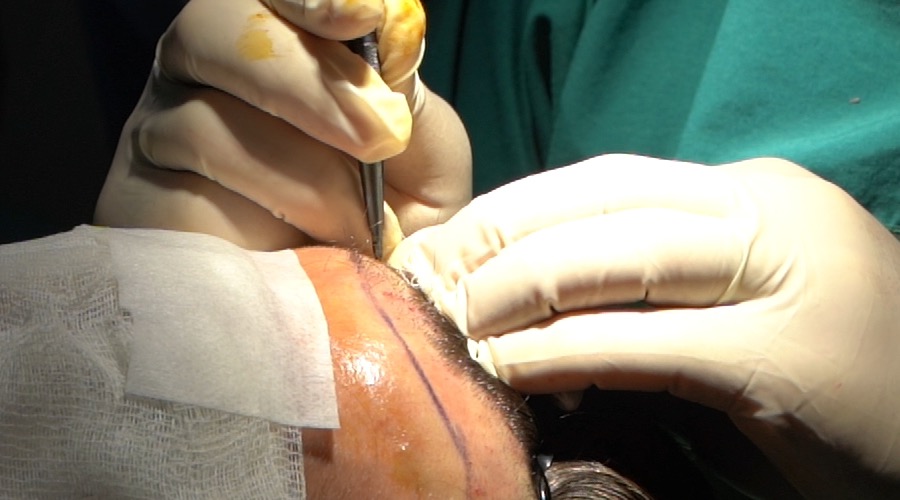
Good female candidates have: stable hair loss over 12 months, preserved donor density at the back and sides of the scalp, a defined area of loss (not diffuse loss over the entire scalp), and realistic expectations about achievable density.
Women are not good candidates if: loss is diffuse across the entire scalp including the donor zone, the underlying cause is active autoimmune alopecia, or hair loss is active and accelerating. In these cases, medical management must precede surgery.
Why DHI is the preferred technique for most women
Most women seeking hair transplant have existing hair throughout the recipient zone — whether diffuse thinning or partial hairline loss. DHI (Direct Hair Implantation) is specifically designed for this scenario: the Choi implanter pen places grafts without pre-creating channels, eliminating the risk of damaging adjacent existing follicles.
DHI also enables unshaved procedures for most female cases — the existing hair is gently moved aside rather than cut. This allows women to maintain their hairstyle throughout the recovery period, with the transplanted hair growing in gradually and invisibly integrating with the existing hair.
Unshaved DHI at Hairmedico — complete discretion
For female patients who cannot tolerate any visible sign of surgery during recovery, unshaved DHI provides complete discretion. The procedure leaves no cut hair, no shaved zones visible, and no obvious sign that a procedure has taken place. The transplanted hair sheds at weeks 2–5 (shock loss) and regrows from month 3–4 — all while existing surrounding hair remains at its natural length.


Common questions
Can women get hair transplants?
Yes. Women are excellent candidates for hair transplant when their hair loss meets candidacy criteria: stable pattern, adequate donor density, and appropriate underlying cause (genetic, traction, or post-inflammatory). DHI technique is often preferred for women as it works between existing hairs without requiring full recipient zone shaving.
What causes hair loss in women that hair transplant can treat?
The main treatable causes are: female androgenetic alopecia (Ludwig pattern thinning), traction alopecia from tight hairstyles, and post-inflammatory hair loss (after inactive scarring alopecia). Diffuse telogen effluvium and active autoimmune alopecia are not treated surgically.
Will a hair transplant show in women with long hair?
DHI technique can be performed without shaving the recipient zone in most female cases — grafts are placed between existing hairs. During recovery, shock loss is less visible because existing surrounding hair is uncut. The result integrates naturally with existing hair over 10–12 months.
References & sources
- Olsen EA et al. Female pattern hair loss: a practical guide. JAAD. 2004. https://doi.org/10.1016/j.jaad.2004.01.009
- Vujovic S, Ivkovic-Jovanovic M. Alopecia in women — aetiology and treatment. Srpski arhiv. 2011. https://pubmed.ncbi.nlm.nih.gov/22217982/
- Onda M et al. Follicular unit extraction: a systematic review of the literature. J Plastic, Reconstructive & Aesthetic Surgery. 2020. https://doi.org/10.1016/j.bjps.2019.11.006
- Bernstein RM, Rassman WR. Follicular unit transplantation: 2005. Dermatologic Clinics. 2005. https://doi.org/10.1016/j.det.2005.01.007
- Avram MR, Rogers NE. Contemporary hair transplantation. Dermatologic Surgery. 2009. https://doi.org/10.1111/j.1524-4725.2009.01338.x
All references are peer-reviewed medical literature or official health authority publications. No commercial sources included.
Send three photographs.
Front hairline, crown and both sides. Dr. Arslan Musbeh reviews every submission personally and replies within 24 hours with a Norwood assessment, a technique recommendation and a graft estimate. Free, no obligation.
Request a Bespoke Assessment