DHI vs FUE for Black Women —
Which Technique Preserves Your Natural Curl?
DHI vs FUE hair transplant for Black women: which technique preserves curl pattern, avoids shaving and protects existing hair.
Reviewed by Dr. Arslan Musbeh · Last updated 2026-04-17
DHI vs FUE hair transplant for Black women: which technique preserves curl pattern, avoids shaving and protects existing hair.
The fundamental difference for women with existing hair
Most Black women seeking hair transplant have existing hair in the recipient zone — whether diffuse thinning, partial edge loss or a partially bald crown. This distinguishes their surgical situation from a fully bald Norwood VI male patient, where the entire recipient zone can be treated freely.

When existing hair is present in the recipient zone, the technique must be able to place grafts between existing follicles without damaging them. This is where DHI has a clear clinical advantage over FUE for most Black female patients.
FUE vs DHI — the critical difference for women
| Factor | FUE | DHI (preferred for Afro women) |
|---|---|---|
| Channel creation | Pre-made channels with blade, then graft insertion | Choi pen creates channel and places graft simultaneously |
| Risk to existing hair | Higher — channels risk damaging adjacent follicles | Lower — single-step placement minimises trauma |
| Unshaved option | Not standard for larger sessions | Possible for most female cases |
| Angle precision | Good | Superior — pen control over angle, direction, depth |
| Curl pattern recovery | Standard | Identical — curl is preserved by the follicle itself |
| Best for | Fully bald zones, larger volumes | Thinning areas with existing hair, edges, DHT thinning |
Unshaved DHI — complete discretion during recovery
For many Black female patients, complete discretion during the recovery period is a priority. DHI at Hairmedico can be performed without shaving the recipient zone in most female cases — the existing hair is gently pushed aside during graft placement rather than being cut. The patient leaves the clinic looking no different from before surgery.
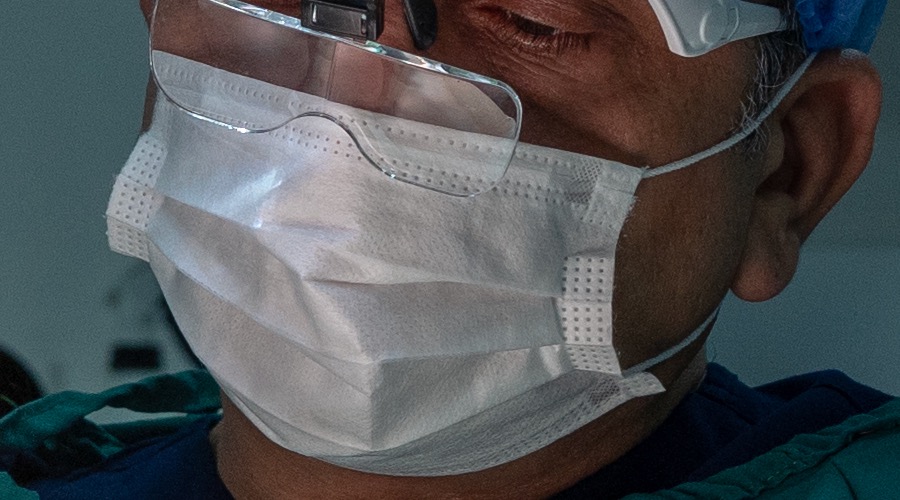
During the recovery period, the transplanted hair sheds at weeks 2–5 (shock loss) and regrows from month 3–4. Because the surrounding existing hair is unshaved and uncut, the transition through the shock loss phase is significantly less visible than in a shaved procedure.

Common questions
How much does a hair transplant cost in Turkey?
Hairmedico all-inclusive: price on request for 2,000–3,500 grafts including surgery, 5-star hotel, transfers, PRP and 12-month follow-up.
Is hair transplant permanent?
Yes. Transplanted follicles are DHT-resistant and grow permanently for the patient's lifetime.
What is the recovery time?
Desk work: 5–7 days. Scabs shed by Day 10–14. New growth from months 3–5. Final result months 12–14.
Who performs surgery at Hairmedico?
Dr. Arslan Musbeh personally performs every extraction and canal-opening. In VIP he also places every graft himself; in Silver and Gold, his trained team places the grafts under his direct supervision. One patient per day.
Is Turkey safe for hair transplant?
Yes, with an accredited surgeon-led clinic. Verify FUE Europe membership, Ministry of Health registration, and confirm the surgeon personally operates.
References & sources
- Umar S. FUE in patients of African descent: skin-responsive technique. PMC / NCBI. 2023. https://pmc.ncbi.nlm.nih.gov/articles/PMC10521773/
- Callender VD et al. Hair transplantation as second-line treatment for traction and centrifugal cicatricial alopecia in Black women. Dermatology Times. 2020. https://dermatologytimes.com/view/alopecia-option-black-women
- Bernstein RM. Follicular unit transplantation in patients of African descent. Dermatologic Clinics. 2013. https://doi.org/10.1016/j.det.2013.06.002
- International Society of Hair Restoration Surgery. Practice census — international survey on hair restoration. 2022. https://www.fue-europe.com/professionals/resources/practice-census/
- Kyei A et al. Hair transplantation in CCCA in African American women. PubMed. 2014. https://pubmed.ncbi.nlm.nih.gov/25207763/
All references are peer-reviewed medical literature or official health authority publications. No commercial sources included.
Send three photographs.
Front hairline, crown and both sides. Dr. Arslan Musbeh reviews every submission personally and replies within 24 hours with a Norwood assessment, a technique recommendation and a graft estimate. Free, no obligation.
Request a Bespoke Assessment