FUE vs DHI hair transplant in Turkey: exactly how each technique works, which is better for your case, and when Dr. Arslan Musbeh recommends each.
How FUE and DHI actually work — step by step
FUE (Follicular Unit Extraction)
- Donor zone shaved, follicles extracted individually with micro-punch
- Recipient zone: channels created with blade at precise angles
- Grafts inserted into pre-created channels
- Result: slightly faster for large sessions, excellent for fully bald zones
DHI (Direct Hair Implantation)
- Donor zone shaved, follicles extracted identically to FUE
- Recipient zone: no pre-created channels — Choi implanter pen creates channel and places graft simultaneously
- One-step placement gives surgeon superior control over angle, direction and depth
- Result: better for zones with existing hair, unshaved procedures, high-precision hairlines
No-shave DHI — who is it for?
One of the most clinically significant advantages of DHI is the ability to perform the procedure without shaving the recipient area. The Choi pen can navigate between existing follicles without requiring shaved access. This makes no-shave DHI the technique of choice for professionals who cannot take time off with a visibly shaved head, women who need to return to work within days, and patients having a small touch-up or density improvement around an existing transplant. The tradeoff: no-shave procedures are more time-consuming, technically demanding and typically limited to smaller graft counts (1,000–2,500 grafts).
When Dr. Arslan recommends FUE vs DHI
| Scenario | Recommended technique |
|---|---|
| Large session (3,500+ grafts) | FUE — faster per graft at scale |
| Fully bald recipient zone | Either technique equally suitable |
| Thinning area with existing hair | DHI — avoids pre-channel damage to adjacent follicles |
| Unshaved / no-shave procedure | DHI — designed for this use case |
| High-density hairline | DHI — superior angle control at the hairline edge |
| Women with diffuse thinning | DHI — recipient zone retains existing hair |
| Combined approach (hairline DHI + crown FUE) | Hybrid — optimal technique per zone |
The hybrid approach
For many patients — particularly those at Norwood IV with significant frontal and crown loss — the optimal plan combines both techniques. FUE is used for the main coverage zone where density across a large area is the priority. DHI is then used for the frontal hairline where follicle angle precision and density are paramount. At Hairmedico, both techniques are available in the same session; Dr. Arslan recommends the combination after reviewing photographs and trichoscopic assessment — neither is a default package selection.
The density question
DHI consistently allows higher graft density in a given area. Because there are no pre-made channels competing for space, grafts can be positioned more closely without the channels encroaching on each other — a meaningful advantage for hairlines and crown patches where the visual goal is maximum density. FUE is not a low-density technique; it remains well-suited to standard density requirements across large areas. The density advantage of DHI is most relevant when the goal is maximum packing in a specific zone.
Recovery comparison
| Phase | FUE | DHI |
|---|---|---|
| Return to work | 7–10 days | 5–7 days |
| Scabs | 10–14 days | 10–14 days |
| Exercise | 4 weeks | 3–4 weeks |
| Final result | 12–14 months | 12–14 months |
Recovery is broadly similar between the two techniques. DHI produces slightly less post-operative redness and swelling in the recipient area since there are no open channels bleeding simultaneously — but the difference is marginal in practice.
What about Sapphire FUE?
Sapphire FUE is a variant of standard FUE where channels are created with a sapphire-tipped blade instead of a steel blade. Sapphire blades are harder and sharper, producing finer, more consistent channels with less tissue trauma — leading to slightly faster healing and reduced post-operative swelling compared to steel.

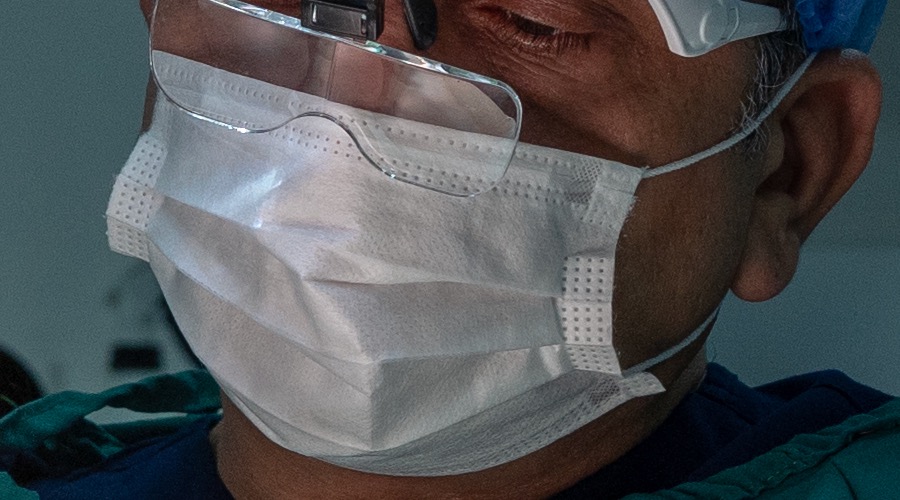
At Hairmedico, Dr. Arslan uses sapphire blades for all FUE procedures. The choice between FUE and DHI remains the primary technique decision — sapphire is the standard tool within FUE sessions.