Complete guide to beard transplant by FUE. Candidates, graft counts, recovery timeline, cost and results. Dr. Arslan Musbeh, Istanbul.
What is a beard transplant?
A beard transplant is a surgical procedure that permanently restores or creates beard density using FUE (Follicular Unit Extraction). Individual follicles are harvested from the scalp donor zone — typically the occipital and parietal areas — and implanted into the beard region at the correct angle and direction to produce natural-looking growth.
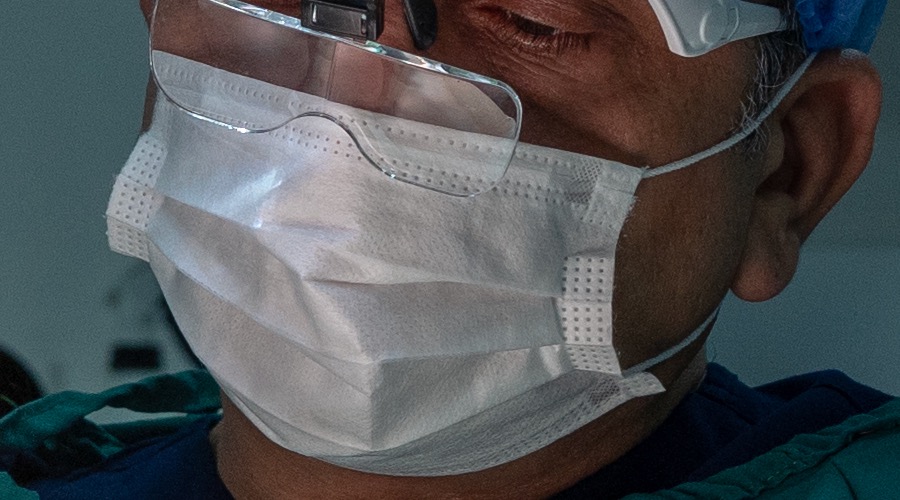
Transplanted beard follicles are genetically DHT-resistant. They grow permanently in their new location and behave identically to natural beard hair — they can be shaved, trimmed and styled normally from month 9–12 onwards.
Who is a candidate?
The most common candidates for beard transplant:
- Patchy beards: Genetic patchiness in the cheeks, chin or neck — the most frequent indication. FUE fills sparse zones to create a uniform, full beard.
- Post-surgical or traumatic scarring: Burns, accidents or surgery that left permanent bald patches in the beard area. FUE can restore growth in scarred tissue in many cases.
- Men unable to grow a beard: Low follicle density in the beard area due to genetics. Transplant is the permanent solution.
- Goatee or moustache definition: Small, targeted procedures to define a sharper outline, fill a gap or create a defined neckline.
Candidacy requires adequate scalp donor supply and no active skin condition in the recipient area. Dr. Arslan assesses every case personally before confirming candidacy.
How many grafts?
| Area | Grafts | Duration |
|---|---|---|
| Full beard (cheeks + chin + neck) | 2,000–3,500 | 6–8 hours |
| Patchy fill-in only | 500–1,500 | 3–5 hours |
| Goatee only | 400–800 | 2–3 hours |
| Moustache definition | 200–500 | 2 hours |
| Sideburns | 200–600 | 2 hours |
These are estimates — exact counts depend on your existing beard density, target coverage and hair characteristics.

Why angle is critical
Beard hair grows at very specific, shallow angles — typically 20–30 degrees — and in a precise direction that varies across different beard zones. An incorrectly angled graft will produce a beard that looks artificial regardless of density.
At Hairmedico, Dr. Arslan personally maps the natural growth pattern of the patient's existing beard before surgery. Every implanted graft is placed at the anatomically correct angle and direction for that specific zone. This is why surgeon skill — not just technique — determines whether a beard transplant looks natural or artificial.
I spent two hours mapping the beard zone before a single extraction begins. The angle is everything. A beard grown at the wrong angle looks like a doll's beard — symmetrically dense and completely unnatural. — Dr. Arslan Musbeh
Donor grafts for beard transplant
Donor grafts are typically taken from the scalp — the occipital and parietal zones where DHT-resistant follicles are concentrated. In some cases, particularly when scalp donor supply is limited or when coarser texture is desired for a full beard, body hair (chest, back) can supplement scalp grafts.
For beard transplant, single-hair grafts are preferentially selected — natural beard hair typically grows as singles or loose doubles, so single follicular units produce the most natural-looking result in the beard area.
Recovery timeline
Days 1–3: Mild redness and small scabs in the recipient area. Scalp donor area has tiny puncture marks, typically invisible at normal hair length.
Days 4–10: Scabs loosen and fall naturally during gentle washing. Do not pick.
Weeks 2–4: Shock loss — transplanted hairs shed. The follicle roots remain intact beneath the skin.
Months 3–4: New beard growth begins. Fine, soft hairs initially.
Month 6: Significant growth visible — 60–70% of final result.
Months 9–12: Full result. Indistinguishable from natural beard hair. Permanent.
What results look like
Beard transplant results, when properly planned and executed, are indistinguishable from natural beard growth. The transplanted follicles grow hair with the same texture, rate and behaviour as the surrounding native beard.
Density expectations vary by hair type. Coarse, dark beard hair achieves the most visually dense result. Fine, light hair produces a natural but less dramatic improvement from the same graft count.
View beard transplant results →
Cost of beard transplant in Istanbul
Beard transplant at Hairmedico is included in the same all-inclusive package structure as scalp procedures. The total price depends on graft count. For a personalised quote — including a specific graft estimate based on your photographs — send images of your beard area (front, both sides) via WhatsApp or our contact form. Dr. Arslan responds personally within 24 hours.