Afro hair transplant for women: traction alopecia, CCCA, androgenetic alopecia — causes, technique, results and candidacy.
Hair loss in Black women — a clinical overview
Hair loss affects an estimated 40–60% of Black women at some point in their lives — a statistic that significantly underrepresents the actual prevalence because many cases go undiagnosed or untreated due to lack of specialist access and cultural pressures around hair.
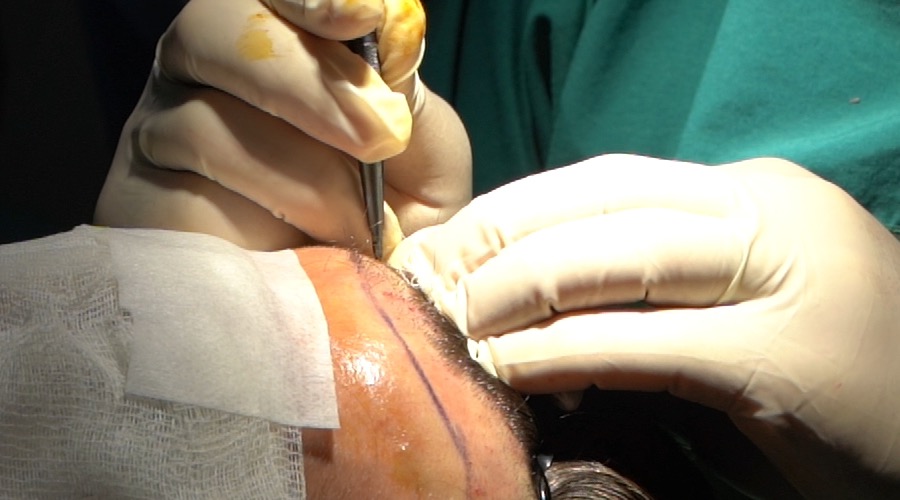
The three primary causes of permanent hair loss in Black women are: traction alopecia (the most common, caused by hairstyling tension), central centrifugal cicatricial alopecia (CCCA, a scarring condition beginning at the crown), and androgenetic alopecia (genetic pattern thinning). Each has different candidacy requirements for hair transplant surgery and requires a different surgical approach.
Dr. Arslan Musbeh has treated Black female patients with all three conditions — patients from West Africa, France, the UK and the Caribbean — using DHI technique as the preferred approach for women due to its ability to place grafts between existing hair without requiring full recipient zone shaving.
Three conditions — three different surgical approaches
Traction alopecia
The strongest candidacy profile for hair transplant surgery. Donor hair is typically unaffected by traction damage (which primarily affects the hairline and nape). Surgery is highly effective once the causative hairstyle has been discontinued for a minimum of 6 months.
Androgenetic alopecia (FPHL)
Female pattern hair loss in Black women follows the Ludwig classification — diffuse thinning across the central scalp with relative preservation of the frontal hairline. Candidacy for surgery requires trichoscopy confirmation that the donor area is sufficiently stable and dense. DHI technique is preferred to preserve existing hair in the recipient zone.
CCCA (Central Centrifugal Cicatricial Alopecia)
The most complex case type. CCCA is a scarring alopecia that must be in sustained remission (no active inflammation for 1–2 years) before hair transplant is considered. Surgery on active CCCA causes the inflammatory process to damage the newly placed grafts. When timing is appropriate, hair transplant for inactive CCCA can achieve meaningful restoration of the crown bald zone.
Why DHI is the preferred technique for Afro women
Most Black women seeking hair transplant have existing hair in the recipient zone — either remaining native hair in the thinning area, or hair around the edges of the bald zone. Standard FUE requires pre-creating channels in the recipient zone, which risks damaging existing follicles in areas where hair is still present.

DHI (Direct Hair Implantation) uses a Choi Implanter Pen that creates the channel and places the graft in a single motion — eliminating the need to pre-create channels and dramatically reducing the risk of damaging adjacent existing hair. For women with diffuse thinning or partial hairline loss, DHI is the superior choice.
Dr. Arslan regularly performs unshaved DHI procedures for Black female patients where the session size allows — meaning the patient leaves with no visible sign that a procedure has taken place.