
Why transplanted hair is permanent — the donor dominance principle
The permanence of hair transplant results rests on a biological principle called donor dominance. Hair follicles in the donor zone — the back and sides of the scalp — are genetically encoded to be resistant to dihydrotestosterone (DHT), the androgen responsible for pattern baldness. When these follicles are extracted and transplanted to the bald or thinning recipient zone, they carry their genetic programming with them. They grow in their new location with the same DHT resistance they had in the donor zone.

This principle was first described in 1959 by Dr. Norman Orentreich and remains the biological foundation of all FUE and FUT procedures performed today. Over 65 years of clinical evidence confirms it: correctly placed donor follicles produce permanent growth.
What to expect at 10 years — and beyond
| Timeframe | Transplanted hair | Native surrounding hair |
|---|---|---|
| Year 1 | Full maturation — final result visible | Continues loss if untreated |
| Years 2–5 | Stable, growing normally | Gradual thinning continues without Finasteride |
| Years 5–10 | Stable, may begin to grey naturally | Further recession may create contrast with transplanted zone |
| Year 10+ | Still growing — same hair, same texture | Significant loss possible in untreated patients — may need second session |
The most important 10-year consideration is not the transplanted hair — it is the native hair. DHT continues to miniaturise native follicles after surgery. Patients on Finasteride maintain their native hair far better than those who are not. This is why post-operative medical management is not optional for patients with ongoing genetic hair loss risk.
Long-term planning — why hairline design matters at 10 years
A hairline designed conservatively at 30 — accounting for the face at 45 and 55 — will look appropriate as native hair continues to recede around it. An aggressively low hairline designed for maximum youth at 30 may look incongruous at 50 surrounded by continued recession.
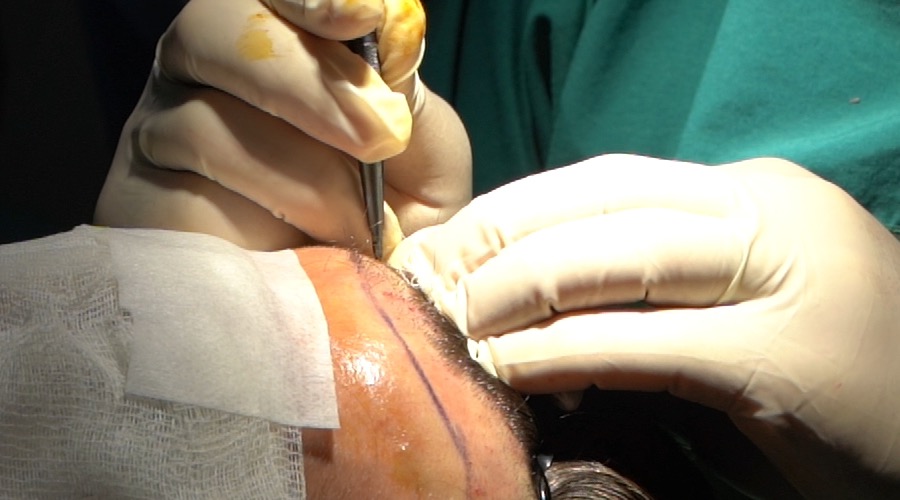
This long-term aesthetic planning is a central part of every consultation at Hairmedico. Dr. Arslan designs hairlines that will look natural across the expected trajectory of the patient's hair loss — not just at the moment of surgery.
Frequently Asked Questions
Transplanted hair is permanent. The follicles are taken from the donor zone — a region genetically resistant to DHT, the hormone that causes pattern baldness. They retain this resistance after transplantation and continue to grow for life.
Transplanted hair will not fall out due to androgenetic alopecia (pattern baldness). The follicles are immune to DHT. However, transplanted hair ages normally — it may grey and thin slightly with age, just as any hair does. This is normal biological aging, not hair loss recurrence.
Native hair continues to be affected by DHT and genetic hair loss after surgery. This is why post-operative medical management (Finasteride) is important — to protect the native hair surrounding the transplanted zone and maintain the overall density and coherence of the result.
- Cranwell W, Sinclair R. Male androgenetic alopecia. Endotext — NCBI Bookshelf. 2023. https://www.ncbi.nlm.nih.gov/books/NBK278957/
- Norwood OT. Male pattern baldness: classification and incidence. Southern Medical Journal. 1975. https://doi.org/10.1097/00007611-197511000-00009
- Bernstein RM. Follicular unit transplantation. Dermatologic Clinics. 2013. https://doi.org/10.1016/j.det.2013.06.002
- Limmer R. Elliptical donor stereoscopically assisted micrografting. Dermatologic Surgery. 1994. https://doi.org/10.1111/j.1524-4725.1994.tb01661.x
- Onda M et al. Follicular unit extraction: a systematic review of the literature. J Plastic, Reconstructive & Aesthetic Surgery. 2020. https://doi.org/10.1016/j.bjps.2019.11.006
All references are peer-reviewed medical literature or official health authority publications. No commercial sources included.
Dr. Arslan Musbeh
- ✓ FUE Europe — Full Member
- ✓ Ministry of Health accredited
- ✓ 17+ years · 4,500+ cases
- ✓ One patient per day
- ✓ Algorithmic FUE™ creator