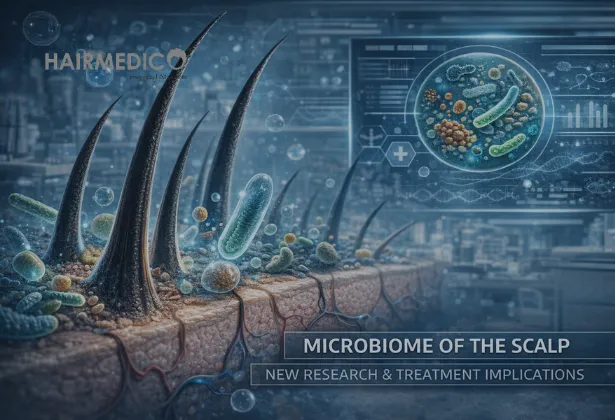
The scalp microbiome has emerged as one of the most important and underestimated factors in hair and scalp health. Over the last decade, advances in molecular biology, genomics, and dermatological research have fundamentally changed how we understand the scalp environment. Hair follicles do not exist in isolation. They function within a complex biological ecosystem composed of microorganisms, immune signaling pathways, sebaceous activity, and epidermal barrier integrity. This ecosystem is collectively defined as the scalp microbiome.
From a clinical and surgical perspective, the microbiome is no longer a cosmetic curiosity. It is a decisive biological variable that influences inflammation, follicular aging, hair loss progression, treatment response, and even long-term outcomes after hair restoration procedures. Modern hair medicine cannot be practiced responsibly without acknowledging the microbiome as a core component of scalp physiology.
This article examines the scalp microbiome through a scientific and clinical lens, integrating current research findings with practical treatment implications. The goal is not to promote trends or products, but to clarify biological mechanisms and translate evidence into responsible medical strategies.
The scalp microbiome refers to the community of bacteria, fungi, viruses, and microscopic organisms that inhabit the scalp surface and follicular openings. Unlike other skin areas, the scalp has a uniquely dense concentration of hair follicles, sebaceous glands, and terminal hairs, creating a lipid-rich and occluded environment. This makes the scalp microbiome structurally and functionally distinct from the microbiome of the face or body.
A healthy scalp microbiome exists in a state of dynamic equilibrium. Commensal microorganisms coexist with the host, supporting barrier function, regulating immune responses, and preventing pathogenic overgrowth. When this balance is disrupted, a state known as dysbiosis develops. Dysbiosis is not merely an infection. It is a shift in microbial diversity and behavior that alters inflammation, sebum metabolism, and follicular signaling.
Recent genomic sequencing techniques have identified that the dominant bacterial genera on the scalp include Cutibacterium, Staphylococcus, and Corynebacterium, while the dominant fungal species is Malassezia. These organisms are not inherently harmful. Under physiological conditions, they contribute to lipid metabolism, immune tolerance, and microbial competition. Problems arise when environmental, hormonal, or immunological factors disturb this balance.
Hair follicles are immunologically active mini-organs. They maintain a state of immune privilege to protect stem cell populations and ensure continuous cycling. The scalp microbiome plays a direct role in preserving or disrupting this immune balance.
When microbial diversity decreases or pathogenic strains dominate, the follicular immune privilege becomes compromised. This results in chronic low-grade inflammation around the follicle, often invisible on routine clinical examination. Over time, this micro-inflammatory state accelerates follicular aging, shortens the anagen phase, and increases the likelihood of miniaturization.
Research increasingly demonstrates that inflammatory scalp conditions such as seborrheic dermatitis, chronic dandruff, folliculitis, and even subclinical inflammation in androgenetic alopecia are strongly associated with microbiome imbalance rather than isolated infection. This insight explains why aggressive antiseptic or antifungal treatments often provide temporary relief but fail to deliver sustainable results.
A biologically healthy scalp is not sterile. It is balanced. Preserving this balance is central to long-term hair preservation strategies and is now considered a foundational principle in advanced hair medicine, including protocols used in comprehensive approaches such as modern hair restoration planning described at https://hairmedico.com/it/.
Recent studies using metagenomic sequencing have shown that individuals with progressive hair loss often exhibit reduced microbial diversity on the scalp. This reduction correlates with increased inflammatory markers, altered sebum composition, and impaired barrier function.
One of the most consistent findings is the altered behavior of Malassezia species. While Malassezia is a normal resident of the scalp, excessive proliferation or metabolic imbalance leads to increased production of free fatty acids from sebum. These byproducts irritate the scalp, activate inflammatory pathways, and disrupt keratinocyte differentiation. This environment is hostile to healthy follicular cycling.
Another critical discovery involves Cutibacterium acnes. Certain strains of this bacterium support healthy lipid metabolism, while others trigger inflammatory cascades. The ratio between beneficial and pro-inflammatory strains appears to be more important than total bacterial load. This explains why conventional antibacterial treatments often worsen scalp health over time by indiscriminately eliminating protective strains.
Emerging evidence also links microbiome dysbiosis with altered androgen signaling. Inflammatory mediators produced in dysbiotic scalps increase local sensitivity to dihydrotestosterone at the follicular level. This interaction suggests that microbiome imbalance does not merely coexist with androgenetic alopecia but actively contributes to its progression.
Follicular aging is a progressive biological process characterized by reduced stem cell activity, diminished vascular support, and impaired signaling within the dermal papilla. Chronic inflammation is one of the most potent accelerators of this process.
A disrupted scalp microbiome sustains inflammation through continuous immune activation. Even in the absence of visible symptoms, inflammatory cytokines accumulate around follicles, damaging the extracellular matrix and impairing communication between epithelial and mesenchymal cells. Over time, this environment shortens growth cycles and promotes irreversible miniaturization.
From a preventive standpoint, addressing microbiome health early can significantly slow follicular aging. This insight has reshaped clinical priorities, shifting focus from purely hormonal or genetic explanations toward integrated biological management.
Clinics that emphasize long-term outcomes, such as those following advanced surgical and medical protocols outlined at https://hairmedico.com/it/dr-arslan-musbeh, increasingly incorporate microbiome assessment into patient evaluation.
Several common scalp conditions are now understood primarily through the lens of microbiome disruption rather than isolated pathology. Chronic dandruff is a classic example. Rather than being a simple fungal issue, dandruff represents an imbalance between Malassezia species, sebum composition, and immune response.
Seborrheic dermatitis represents a more advanced inflammatory state within the same biological spectrum. Folliculitis often reflects bacterial imbalance combined with barrier dysfunction. Even diffuse shedding patterns sometimes labeled as telogen effluvium have been associated with inflammatory scalp environments driven by dysbiosis.
Importantly, many patients presenting for hair transplantation have underlying microbiome imbalance without overt symptoms. Ignoring this factor increases the risk of post-operative inflammation, delayed healing, shock loss, and suboptimal graft survival. This is why responsible surgical planning integrates scalp health optimization before and after procedures, as emphasized in comprehensive hair transplant protocols such as those described at https://hairmedico.com/it/shampoo-dopo-il-trapianto-di-capelli.
Treating the scalp microbiome does not mean eliminating microorganisms. It means restoring balance. This distinction fundamentally changes therapeutic strategies.
Modern approaches prioritize barrier repair, controlled sebum regulation, and selective microbial modulation rather than aggressive antimicrobial eradication. Mild surfactants, pH-balanced formulations, and targeted anti-inflammatory agents support microbiome recovery while preserving beneficial strains.
Topical treatments increasingly focus on prebiotics and postbiotics rather than traditional antibiotics. These compounds nourish beneficial microbes and suppress pathogenic behavior without inducing resistance or long-term dysbiosis.
Systemic factors must also be addressed. Insulin resistance, chronic stress, nutritional deficiencies, and hormonal imbalances all influence microbial behavior on the scalp. Effective treatment therefore requires a holistic medical approach rather than isolated topical intervention.
In surgical hair restoration, microbiome health is directly linked to graft survival and cosmetic outcomes. A dysbiotic scalp exhibits increased inflammatory response to surgical trauma, higher risk of folliculitis, and slower re-epithelialization.
Preoperative scalp preparation aimed at microbiome stabilization significantly improves healing dynamics. Postoperative care that respects microbiome balance reduces complications and supports long-term follicular integration.
Regenerative therapies such as platelet-based treatments also demonstrate improved efficacy in biologically balanced scalps. Growth factor signaling is more effective when inflammation is controlled and microbial equilibrium is maintained.
Ignoring the microbiome in surgical contexts is no longer scientifically defensible. It represents an outdated model incompatible with modern evidence-based practice.
The next phase of research focuses on personalized microbiome profiling. Advances in sequencing technology may soon allow clinicians to identify individual microbial patterns and tailor treatments accordingly. This approach aligns with the broader movement toward precision medicine in dermatology and hair science.
Another emerging area involves the interaction between the microbiome and neural signaling within the skin. Preliminary data suggest that microbial metabolites may influence local nerve activity, contributing to symptoms such as scalp sensitivity and trichodynia.
As research evolves, the scalp microbiome will likely become a standard diagnostic and therapeutic consideration rather than an optional adjunct.
The scalp microbiome is not an accessory to hair health. It is a foundational biological system that influences inflammation, follicular aging, treatment response, and surgical outcomes. Modern hair medicine must move beyond reductionist models and embrace this complexity.
Effective hair preservation and restoration require respect for biological balance rather than attempts to dominate it. Clinicians who understand and integrate microbiome science into practice are better equipped to deliver sustainable, ethical, and scientifically sound outcomes.
In clinical philosophy, managing the scalp microbiome is not about chasing short-term cosmetic improvement. It is about creating a stable biological environment in which hair follicles can function optimally over decades, preserving not only hair density but long-term scalp health and patient confidence.
Your consultant is ready to answer your hair transplant questions, and you can also get a personalized online hair analysis.

 FR
FR
 DE
DE
 RU
RU
 ES
ES
 PL
PL
 PT
PT
 IT
IT
 CS
CS
 AR
AR
 TR
TR
 Free Hair Analysis
 Whatsapp