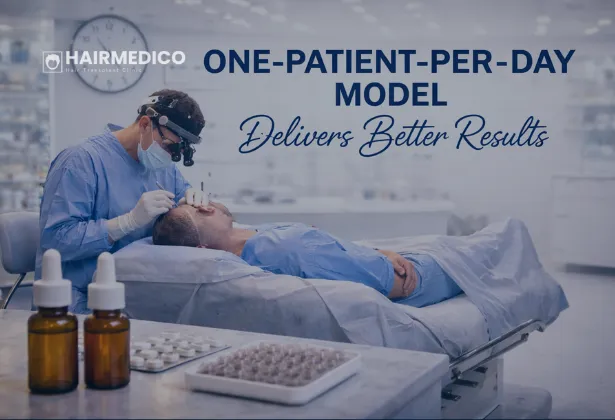
As a hair transplant surgeon with more than 17 years of clinical and academic experience, I have learned one immutable principle: quality in hair restoration cannot be scaled without compromise. The one-patient-per-day model is not a branding choice or a luxury positioning tool. It is a medical and ethical framework designed to protect surgical precision, donor integrity, and long-term patient outcomes.
This article explains—clinically and transparently—why focusing on a single patient per day consistently delivers superior, more predictable, and more durable results.
The one-patient-per-day model means that the surgeon and the medical team dedicate the entire surgical day to a single individual. Planning, anesthesia, donor extraction, channel creation, implantation, and postoperative evaluation are all performed without interruption or divided attention.
This approach stands in contrast to high-volume clinics, where multiple patients are treated simultaneously and the surgeon’s role is often fragmented. At Hairmedico, this model is the foundation of our medical practice, not an exception.
You can review our surgical philosophy and clinical standards here:
👉 https://hairmedico.com
Hair transplantation is a form of microsurgery involving the redistribution of a limited biological resource: the donor area. Each follicular unit extracted is irreversible. Each incision alters scalp anatomy and vascularity. Decisions made during surgery will affect how the patient looks not just in one year, but for decades.
When hair transplantation is treated as a cosmetic commodity, these biological realities are ignored. A one-patient-per-day model respects the fact that permanence demands responsibility.
Time is not neutral in surgery. It directly affects graft survival, transection rates, ischemia time, and the surgeon’s cognitive accuracy. In high-volume environments, procedures are rushed, teams are rotated, and surgeons divide their focus.
When a surgeon works with one patient per day, every step is performed without time pressure. This controlled pace allows continuous assessment, immediate correction, and protection of graft viability throughout the procedure.
The donor area is finite. Overharvesting, poor spacing, and non-strategic extraction lead to irreversible aesthetic damage and eliminate future treatment options. Many patients only realize this years later, when repair is no longer possible.
With a one-patient-per-day approach, donor mapping is performed meticulously. Extraction density is calculated according to scalp characteristics, hair caliber, and projected future hair loss. This philosophy is integral to our FUE methodology, which is explained in detail here:
👉 https://hairmedico.com/techniques/fue-hair-transplant
One of the most important questions a patient can ask is simple: Who is actually performing the surgery?
In many high-volume clinics, technicians carry out most critical steps while the doctor’s role is limited to brief supervision. In a focused surgical model, the surgeon personally designs the hairline, opens all recipient channels, determines donor strategy, and oversees implantation.
Responsibility cannot be delegated. Accountability cannot be shared.
Hair transplantation requires thousands of micro-decisions: adjusting angles by millimeters, transitioning densities between zones, selecting grafts by caliber, and preserving vascular integrity. Mental fatigue increases the likelihood of error.
Limiting surgery to one patient per day preserves cognitive clarity throughout the operation, allowing consistent precision from the first incision to the final graft.
| Aspect | One-Patient-Per-Day Model | High-Volume Clinics |
|---|---|---|
| Surgeon involvement | Continuous and direct | Intermittent |
| Donor strategy | Individualized | Standardized |
| Graft survival | Consistently higher | Variable |
| Long-term planning | Integral | Often neglected |
| Ethical accountability | Clear and direct | Diffuse |
A natural hairline cannot be mass-produced. It must respect facial proportions, age-appropriate recession, ethnic characteristics, and future hair loss patterns. Template-based designs ignore individuality and often lead to artificial results.
A focused surgical day allows hairline design to be sculpted with anatomical logic and aesthetic restraint. Real clinical outcomes can be reviewed here:
👉 https://hairmedico.com/before-after
Every incision disrupts microcirculation. Excessive density or poor spacing compromises blood supply and increases the risk of graft loss or delayed healing. Rushed procedures magnify these risks.
Time allows respect for scalp biology, controlled density planning, and safer healing dynamics.
A calm, controlled environment reduces perioperative stress, stabilizes blood pressure, and minimizes vasoconstriction. Patients who feel attended to—not processed—recover more predictably and experience less postoperative shock loss.
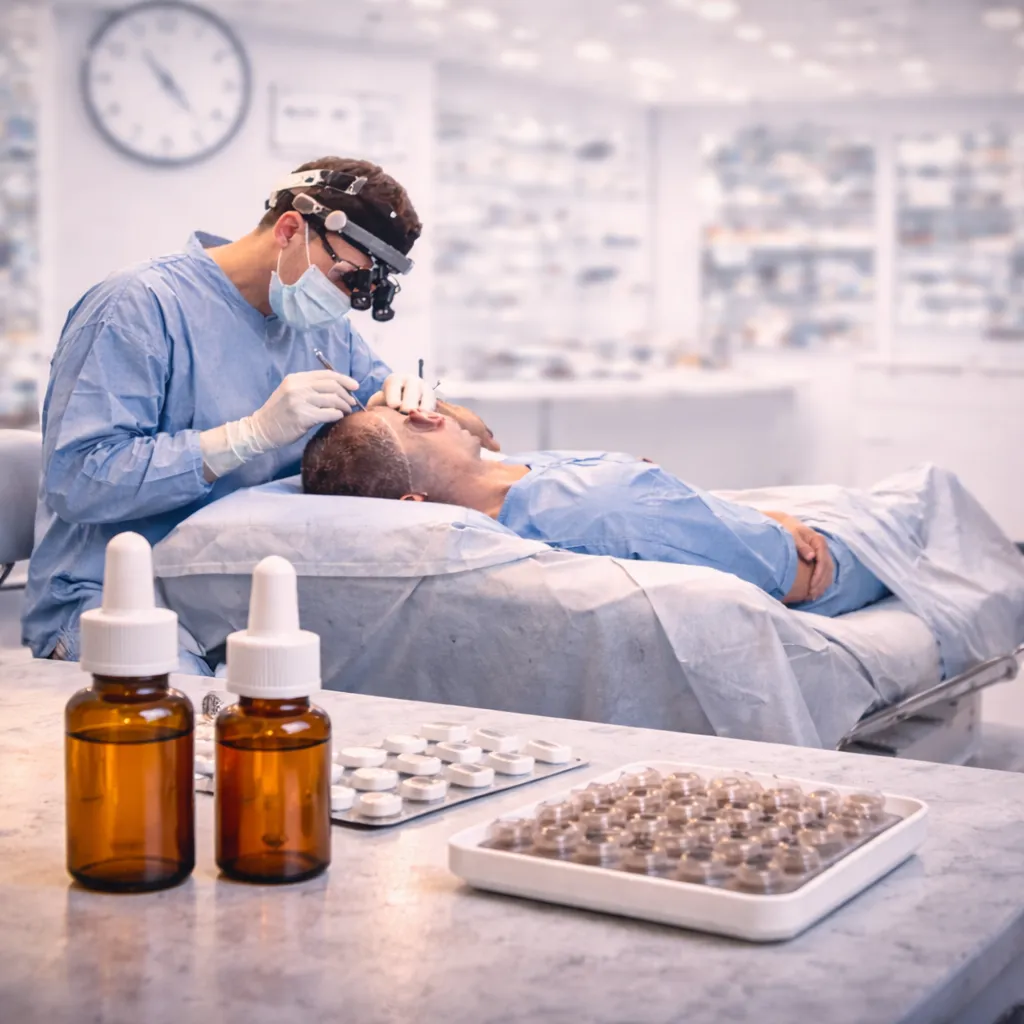
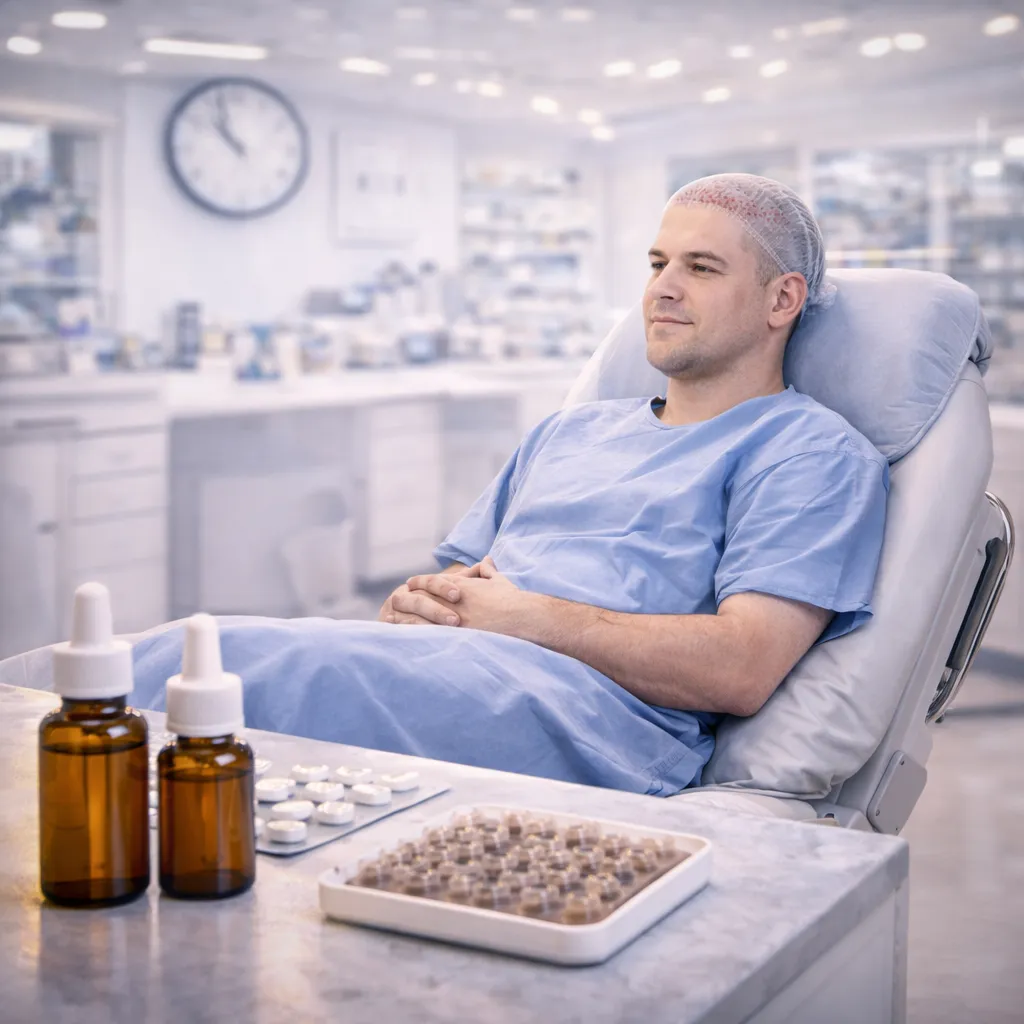
Surgery does not end when implantation is completed. Immediate postoperative evaluation by the operating surgeon allows early detection of complications, precise aftercare instructions, and continuity of responsibility.
This step is routinely neglected in high-volume settings.
Is the one-patient-per-day model only about comfort or luxury?
No. It is primarily about medical safety, precision, and long-term outcome quality. Comfort is a secondary benefit.
Does this model reduce the number of patients a clinic can treat?
Yes, by design. Medicine should not be optimized for throughput.
Is it more expensive?
It reflects the real cost of time, expertise, and accountability. Corrective surgeries cost far more—financially and biologically.
Does it guarantee perfect results?
No ethical surgeon guarantees outcomes. It does, however, maximize all controllable variables.
High-volume systems optimize speed, turnover, and marketing reach. Focused surgical models optimize safety, longevity, and surgeon accountability. Only one of these aligns with medical ethics.
As a surgeon, my name is attached to every result. Dividing my attention would be ethically indefensible. Treating one patient per day allows me to practice medicine with full responsibility, not manufacturing under pressure.
Hair transplantation is permanent. Errors are permanent as well.
The one-patient-per-day model respects this reality by prioritizing biology over volume, precision over speed, and accountability over delegation.
If you are considering hair restoration, ask not only how many grafts are planned—but how much focused surgical attention your procedure will truly receive.
This article has been approved by Dr. Arslan Musbeh.
Your consultant is ready to answer your hair transplant questions, and you can also get a personalized online hair analysis.

 FR
FR
 DE
DE
 RU
RU
 ES
ES
 PL
PL
 PT
PT
 IT
IT
 CS
CS
 AR
AR
 TR
TR
 Free Hair Analysis
 Whatsapp