In hair transplant surgery, results are often judged by the front hairline. Patients focus on density, symmetry, and natural appearance in the recipient area. However, from a surgical and medical standpoint, the donor area is far more critical.
The donor area is not renewable. It is a finite biological resource. Once misused, it cannot be restored.
One of the most serious complications in modern hair transplantation is donor area overharvesting—a problem increasingly seen due to high-volume clinics, technician-led procedures, and aggressive graft marketing.
This article addresses a question many patients ask after it is too late:
If the donor area is overharvested, can hair grow back?
This is a professional, medically grounded analysis, written in the clinical language and philosophy of Dr. Arslan Musbeh, focusing on biology, long-term outcomes, and surgical responsibility.
The donor area is typically located in the occipital and parietal scalp—the back and sides of the head. Hair follicles in this zone are genetically resistant to androgenetic hair loss due to reduced sensitivity to DHT (dihydrotestosterone).
Stable follicles with long-term survival
Higher follicular density than frontal zones
Limited total follicular reserve
Non-regenerative once extracted
Critical fact:
Hair follicles removed from the donor area do not regenerate.
Overharvesting occurs when too many follicular units are extracted, or when extractions are poorly distributed, exceeding the donor scalp’s ability to visually recover.
Overharvesting is not defined solely by graft numbers.
It is defined by biological tolerance and surgical precision.
Excessive graft targets (e.g., 5,000–6,000 graft promises)
Random or clustered extractions
No donor density mapping
Technician-led FUE
High-speed, high-volume clinic models
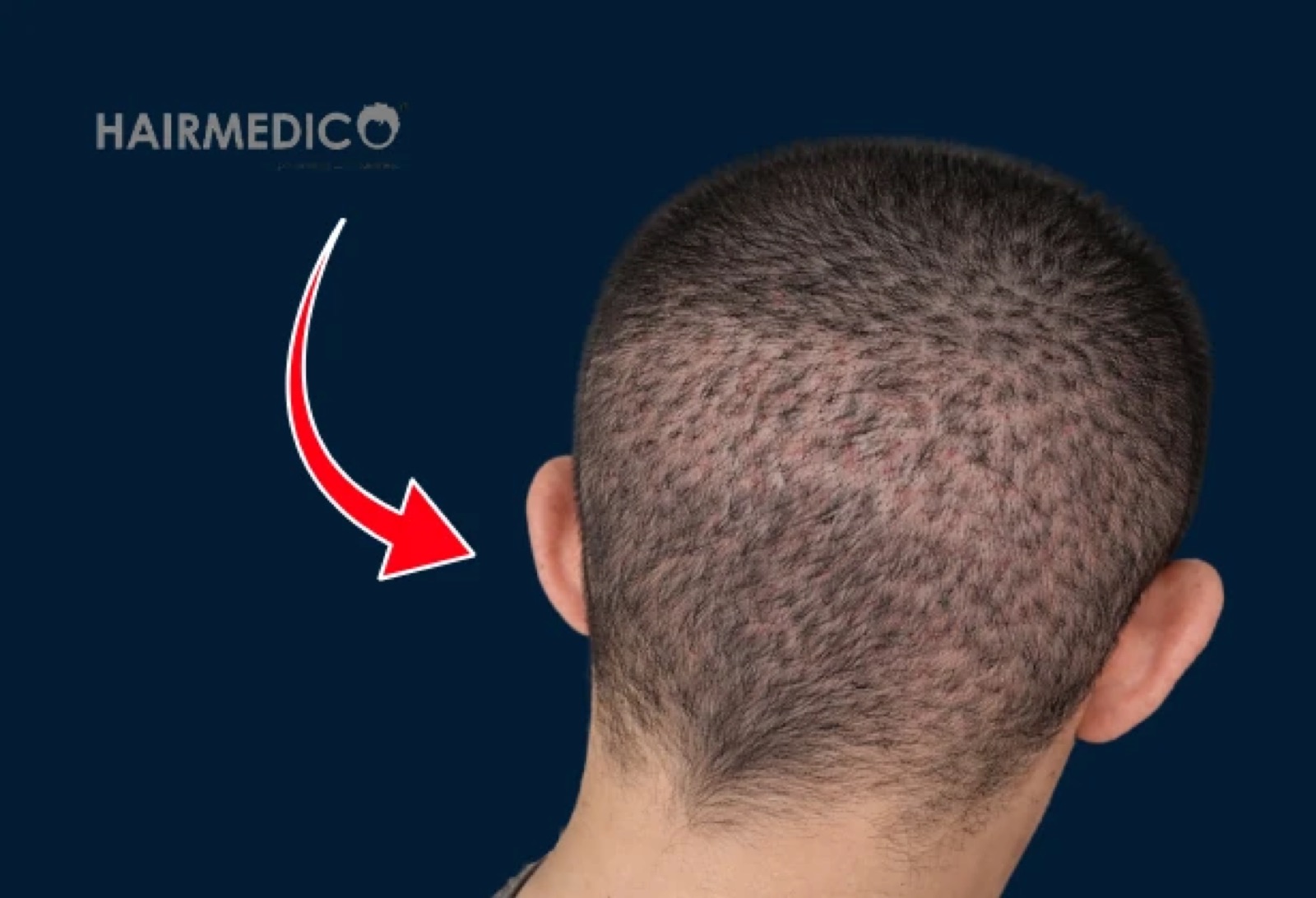
Donor damage is often delayed in appearance, which makes it particularly dangerous.
Prolonged redness
Delayed healing
Patchy scab patterns
Visible thinning
“Moth-eaten” appearance
White dot scarring
Shiny scalp under light
Poor regrowth after shock loss phase
No.
Once a follicular unit is surgically removed, it is permanently lost.
Hair follicles are complex mini-organs. When extracted:
The dermal papilla is destroyed
The follicular stem cell niche is removed
Biological regeneration becomes impossible
Resolution of donor shock loss
Thickening of remaining follicles
Hair length camouflaging density loss
This is visual compensation, not true regrowth.
One of the most frequent sources of confusion is the difference between temporary donor shock loss and permanent damage.
| Feature | Donor Shock Loss | Overharvesting |
|---|---|---|
| Nature | Temporary | Permanent |
| Cause | Surgical stress | Excessive extraction |
| Follicles alive | Yes | No (removed) |
| Regrowth | 3–6 months | Not possible |
| Final outcome | Full recovery | Visible thinning |
Many clinics incorrectly label permanent donor damage as “shock loss” to delay accountability.
Donor safety is not subjective. It is governed by biological limits.
| Donor Density Type | Maximum Safe Extraction |
|---|---|
| High density | 25–30% |
| Medium density | 20–25% |
| Low density | <20% |
Exceeding these limits dramatically increases the risk of permanent donor depletion.
FUE (Follicular Unit Extraction) is not inherently harmful.
Poorly performed FUE is harmful.
Controlled punch depth
Correct angulation
Even spacing
Surgeon-level judgment
Collapsed donor density
Visible scarring
Loss of future transplant potential
There is no true restoration, only partial cosmetic management.
Limited success. Grafts are already scarce.
Camouflages thinning but adds no hair.
Minoxidil, PRP, optimized scalp care may improve hair quality but cannot replace lost follicles.
Longer hair can hide damage, not reverse it.
From a biological perspective:
Follicles do not regenerate
Stem cell environments are destroyed
Scar tissue replaces functional skin
This is why prevention is the only real solution.
At Hairmedico, donor management follows strict principles:
One patient per day surgical model
Surgeon-performed extractions
Detailed donor density mapping
Long-term planning beyond a single session
Conservative graft philosophy
The objective is not maximum graft numbers—but lifelong donor integrity.
Before any hair transplant, patients should ask:
How many grafts can my donor safely provide over a lifetime?
Who performs the extractions—doctor or technicians?
What is the long-term donor strategy?
Can I see donor area results at 12 months, not day 10?
Avoidance of these questions is a red flag.
| Myth | Medical Reality |
|---|---|
| Donor hair grows back | Extracted follicles are gone forever |
| More grafts mean better results | Overharvesting destroys future options |
| Donor thinning is temporary | Often permanent |
| All FUE is safe | Only surgeon-led FUE is safe |
Donor area damage is one of the most preventable yet most destructive mistakes in hair transplant surgery. Once overharvested, the donor area cannot truly recover—only be cosmetically masked.
A successful hair transplant is not defined by how much hair is moved forward, but by how responsibly the donor area is preserved.
In hair restoration, what you protect matters more than what you extract.