Hvad er Algoritmisk FUE™?
Algoritmisk FUE™ er ikke en ny udtagnings- eller implantationsteknik. Det er en systematisk metode — et struktureret sæt beslutningsregler — der anvendes på planlægningen og udførelsen af hver eneste FUE-hårtransplantation hos Hairmedico. Metoden blev udviklet af Dr. Arslan Musbeh gennem 17 år med udelukkende hårrestaureringspraksis, efter at have observeret to konsekvente svigtmønstre i branchen: unaturlige hårgrænser og synlig udtømning af donorområdet.
Begge svigt stammer fra samme årsag: manglende systematisk planlægning, før det første punch foretages. Tilfældige udtagningsmønstre skaber ujævn tæthed i donorzonen. Æstetisk motiverede hårgrænser tager ikke højde for fremtidigt hårtab. Algoritmisk FUE™ adresserer begge dele allerede i planlægningsfasen — før patienten sætter sig i operationsstolen.
Hvorfor Dr. Arslan udviklede denne metode
I 2019 havde Dr. Arslan gennemført over 3.000 personlige indgreb. Det mønster, han observerede i revisionstilfælde — patienter, der kom fra andre klinikker med dårlige resultater — var konsekvent: svigtene var ikke tekniske. Udtagningerne var kompetente. Implantationen var tilstrækkelig. Svigtet lå i planlægningen.
Donorzoner var overhøstet i det centrale område, hvilket efterlod et synligt "mølædt" udseende ved kort hårlængde. Hårgrænser var designet til patienten ved 32 år — ikke til patienten ved 52 år. Graftsene var implanteret korrekt, men på de forkerte steder, i den forkerte tæthedsfordeling, uden nogen langsigtet horisont.
Algoritmisk FUE™ var det formaliserede svar. En ramme af præoperative beslutninger, der omdanner planlægningen af hårtransplantation fra en intuitiv kunstart til en struktureret disciplin — reproducerbar, dokumenterbar og forsvarlig 20 år senere.
Metoden anvendes nu på hver eneste FUE-, DHI- og Sapphire FUE-procedure hos Hairmedico. Det er ikke et premium-tilvalg. Det er standarden.
Fase 1 — Donorkortlægning
Før udtagningen begynder, kortlægger Dr. Arslan hele donorzonen. Det er ikke en visuel inspektion — det er en struktureret vurdering af tre variabler på hvert enkelt sted:
- Follikulær densitet: Antallet af follikulære enheder pr. cm² på hvert punkt i donorzonen. Densiteten varierer — den sikreste zone (det permanente donorområde) strækker sig typisk over de occipitale og parietale regioner.
- Follikelkaliber: Grovere follikler giver mere visuel dækning pr. graft og prioriteres til hårgrænsen.
- Udtagningsvinkel: Den vinkel, hvormed folliklerne forlader huden, bestemmer den mindste punch-diameter, der kræves for at udtage uden transektion.
Denne kortlægning genererer en rumlig plan: hvilke follikler der udtages, fra hvilke præcise steder, og i hvilken rækkefølge. Planen sikrer, at ingen enkelt zone overhøstes, og at donorområdet forbliver naturligt udseende ved enhver hårlængde efter operationen.
Fase 2 — Udtagningssekvens
Tilfældig udtagning — hvor grafts tages, hvor det er bekvemt i øjeblikket — er hovedårsagen til synlig udtynding af donorområdet. Når grafts fjernes uden en rumlig plan, opstår der naturligt en koncentration i de lettest tilgængelige områder, hvilket skaber skaldede pletter omgivet af normal tæthed.
Algoritmisk FUE™ foreskriver en forudbestemt udtagningssekvens. Sekvensen fordeler udtagningerne jævnt over hele den sikre donorzone under hensyntagen til minimumsafstand mellem grafts for at bevare tætheden. Mønstret prioriterer også follikelkvalitet efter rækkefølge: de mest modstandsdygtige follikler med højest kaliber udtages først og reserveres til hårgrænsen — hvor den visuelle effekt af hvert graft er størst.
Denne sekvensering er særlig afgørende i sessioner med store mængder (3.500+ grafts), hvor den kumulative effekt af udtagningen på donortætheden er mest betydelig. Se VIP-pakken for tilfælde, der kræver denne tilgang.
Fase 3 — Medicinsk Funderet Hårgrænsedesign
En hårgrænse, der udelukkende er designet efter æstetisk appel ved patientens nuværende alder, vil se unaturlig ud inden for et årti. Den frontale hårgrænse er ikke et fast anatomisk punkt — den ændrer sig med alderen, og det omkringliggende naturlige hår fortsætter med at vige tilbage omkring det transplanterede område. En hårgrænse, der ser imponerende ud ved 35 år, kan se isoleret og kunstig ud ved 50 år, hvis denne udvikling ikke er taget i betragtning.
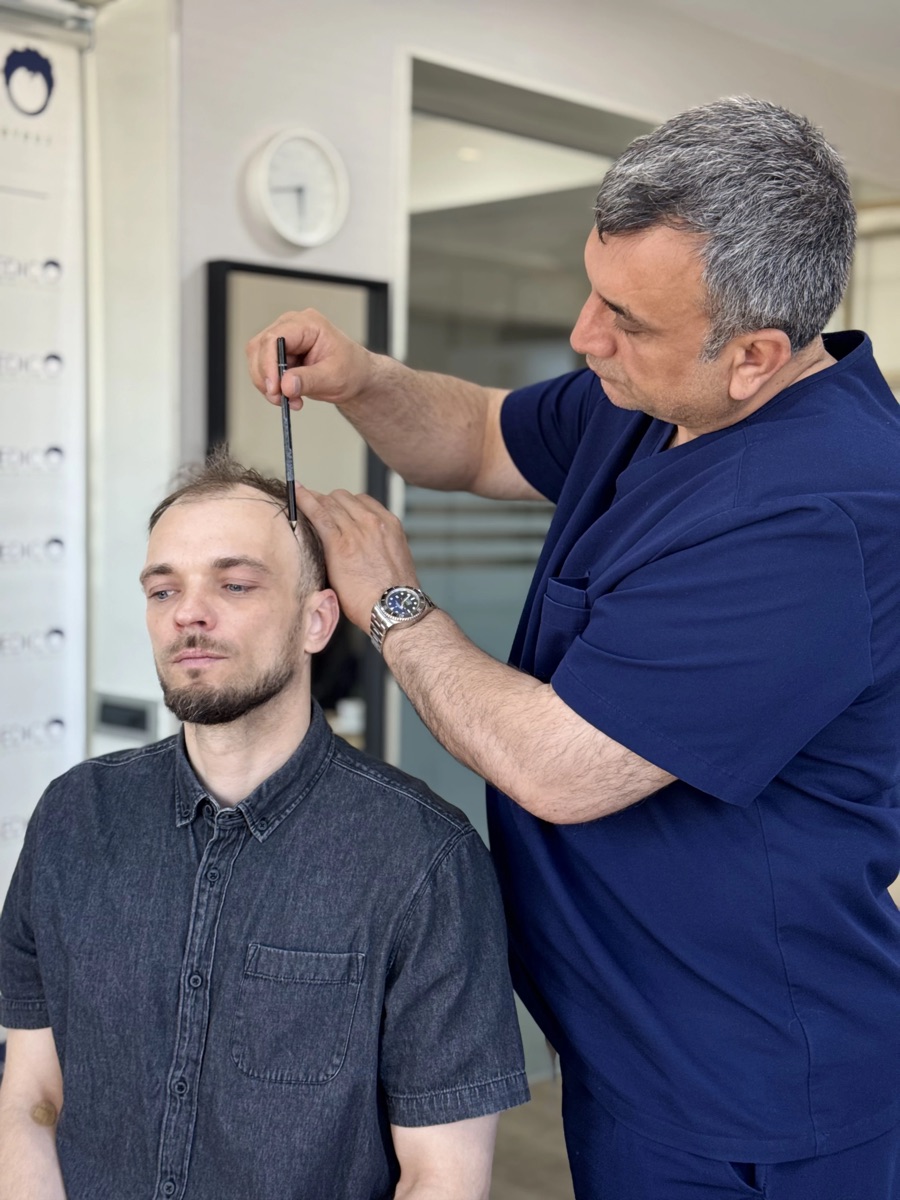
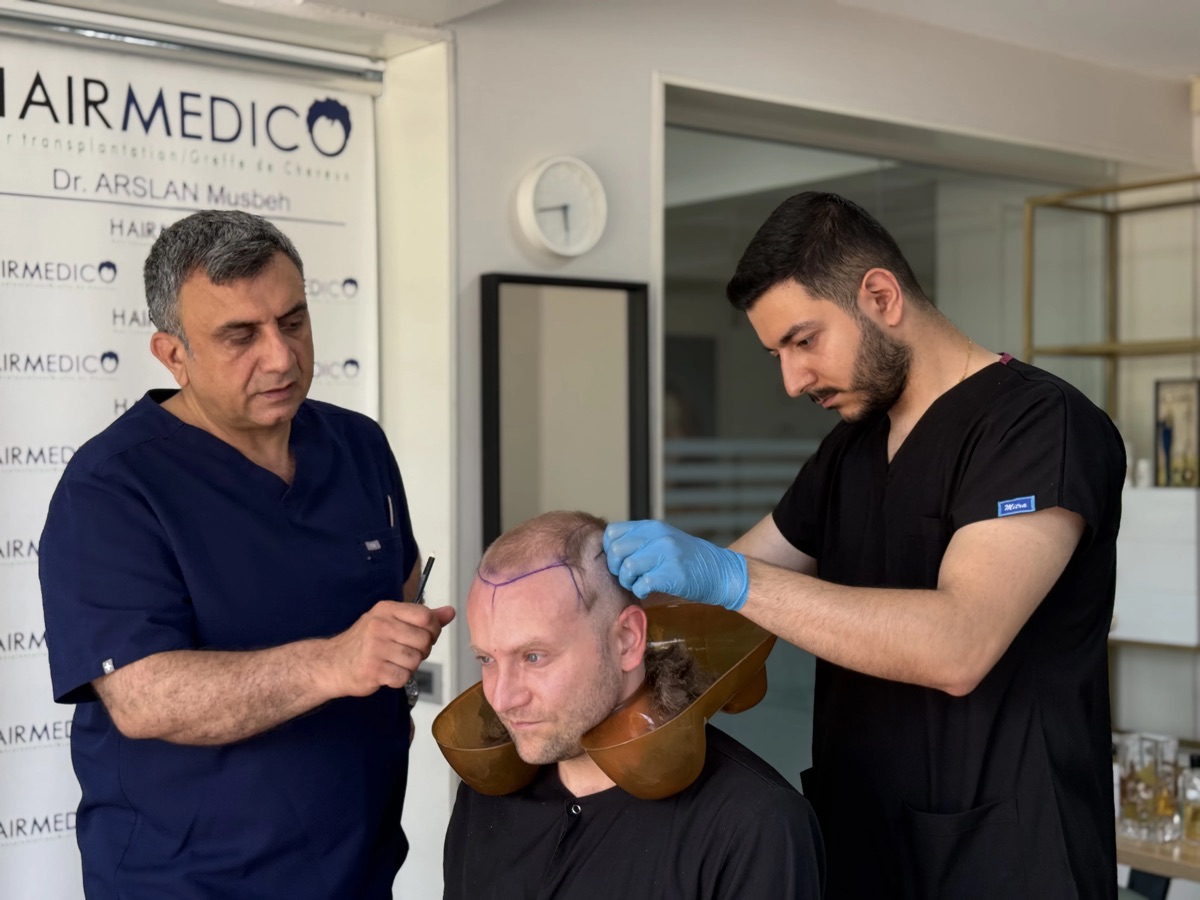
Dr. Arslan designer enhver hårgrænse ud fra anatomiske referencer: ansigtsproportioner, alderssvarende placering og et forudsagt hårtabskort for de næste 20 år. Resultatet er en hårgrænse, der ser naturlig ud nu og fortsætter med at se naturlig ud, efterhånden som patienten ældes — selv uden yderligere indgreb.
Designet tager også højde for donorreserven: hvis en anden session sandsynligvis bliver nødvendig i fremtiden, planlægges den første session, så der er tilstrækkelig donorforsyning tilbage til en meningsfuld opfølgende procedure. Dette er en medicinsk vurdering, der kræver 17+ års mønstergenkendelse — ikke en salgsbeslutning. Se langsigtede resultater fra Hairmedicos patienter.