Ce Este Transplantul de Păr DHI?
DHI — Implantare Directă de Păr — este o rafinare a metodei de extracție FUE care schimbă modul în care sunt implantate grefele. În loc să se creeze mai întâi toate canalele receptoare și apoi să se plaseze grefele, DHI încarcă fiecare unitate foliculară direct într-un stilou implantator Choi și o implantează într-o singură mișcare.
Stiloul Choi este un instrument cu vârf gol care permite chirurgului să controleze adâncimea, unghiul și direcția fiecărei grefe în momentul implantării — creând simultan canalul și plasând foliculul într-o mișcare precisă. Acest lucru elimină faza de așteptare dintre crearea canalului și plasarea grefei, care apare la FUE standard.
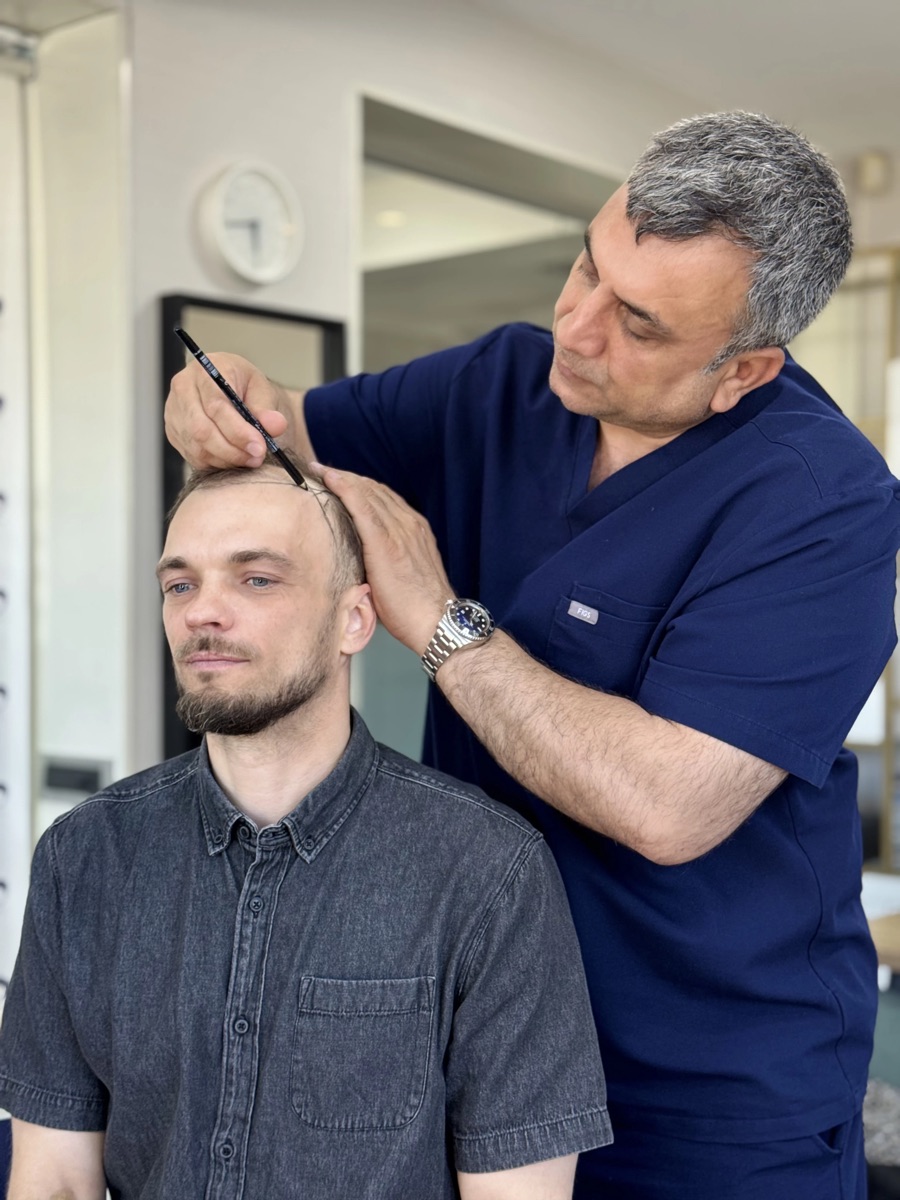
La Hairmedico, dr. Arslan Musbeh efectuează personal extracția în fiecare caz. Încărcarea grefei în stiloul Choi și implantarea propriu-zisă sunt realizate personal de el în pachetul VIP; în Silver și Gold, aceste etape sunt realizate de echipa sa instruită, conform standardelor sale. Acest nivel de control este ceea ce diferențiază rezultatele noastre de procedurile conduse de tehnicieni nesupravegheați.
DHI vs FUE — Diferența Esențială
Atât DHI cât și FUE standard extrag unități foliculare din zona donatoare folosind aceeași tehnică de perforare. Faza de extracție este identică. Diferența este în întregime în etapa de implantare:
- FUE (cu lame Sapphire sau oțel): Chirurgul creează mai întâi toate canalele receptoare, apoi plasează grefele. Două faze separate — crearea canalului, apoi implantarea.
- DHI (stilou Choi): Grefele sunt implantate direct, fără canale pre-create. Crearea canalului și implantarea au loc simultan, într-o singură mișcare.
Consecința practică: DHI permite chirurgului să obțină o densitate mai mare, un control mai precis al unghiului și un timp mai scurt petrecut de grefă în afara corpului. Este tehnica preferată pentru restaurarea liniei părului, lucrul la densitatea creștetului și pacienții cu păr existent în zona receptoare care doresc să evite raderea. Vezi ghidul nostru complet de comparație FUE vs DHI pentru o analiză completă.
Procedura DHI la Hairmedico
O sesiune DHI la Hairmedico urmează aceeași structură generală ca o sesiune FUE, cu faza de implantare gestionată diferit.
Faza de Extracție
Dr. Arslan extrage unități foliculare individuale din zona donatoare folosind un instrument de 0,7–0,9mm, urmând protocolul de secvențiere Algorithmic FUE™. Grefele sunt transferate imediat într-o soluție de conservare.
Faza de Încărcare
Fiecare grefă este încărcată cu grijă într-un stilou implantator Choi de către dr. Arslan. Se pregătesc mai multe stilouri prin rotație, pentru a minimiza timpul în care orice grefă rămâne în afara corpului. Această fază de încărcare necesită o manipulare precisă — un folicul deteriorat în această etapă nu poate fi recuperat.
Faza de Implantare
Dr. Arslan implantează fiecare grefă folosind stiloul Choi, controlând unghiul (0–90°), direcția și adâncimea fiecărei unități în mod individual. Aceasta este faza cea mai solicitantă din punct de vedere tehnic a DHI și motivul principal pentru care implicarea chirurgului este obligatorie pentru un rezultat natural.
De Ce DHI Produce Rezultate Superioare la Linia Părului
DHI nu este universal superior FUE — tehnica potrivită depinde de anatomia pacientului, zona de restaurare și numărul de grefe necesar. Totuși, pentru obiective specifice, DHI depășește constant FUE standard:
- Definirea liniei părului: Implantarea într-o singură mișcare a fiecărei grefe la un unghi selectat individual permite o linie a părului care imită tiparele de creștere naturale cu o precizie excepțională.
- Densitate ridicată: DHI permite plasarea grefelor mai dens, fără ca niciun canal pre-creat să concureze pentru spațiu. Esențial pentru restaurarea aspectului de densitate completă în zonele rărite.
- DHI fără ras: DHI poate fi efectuat fără raderea zonei receptoare — stiloul Choi implantează între firele existente. Potrivit pentru pacienții cu rărire parțială care nu își pot permite o perioadă vizibilă de ras.
- Traumă redusă: Fără canale pre-create înseamnă mai puține incizii deschise simultan în zona receptoare, reducând sângerarea și accelerând vindecarea.
Vezi rezultate DHI reale în galeria noastră înainte și după — filtrabilă după tehnică, numărul de grefe și stadiul Norwood.
Cui I Se Potrivește Cel Mai Bine DHI?
Dr. Arslan recomandă DHI pentru următoarele profiluri de pacienți:
- Pacienți care necesită restaurarea liniei părului (Norwood II–IIIa), unde precizia unghiului este esențială
- Restaurarea creștetului, care necesită o acoperire densă, cu aspect natural
- Pacienți cu păr existent în zona receptoare care doresc un ras minim
- Cazuri care necesită 2.000–4.500 de grefe, unde densitatea maximă este obiectivul principal
- Transplant de barbă și restaurarea sprâncenelor, unde controlul precis al direcției este esențial
Pentru sesiuni care necesită peste 4.500 de grefe, dr. Arslan poate recomanda Algorithmic FUE™ sau o abordare combinată — stabilită după analiza fotografiilor tale.