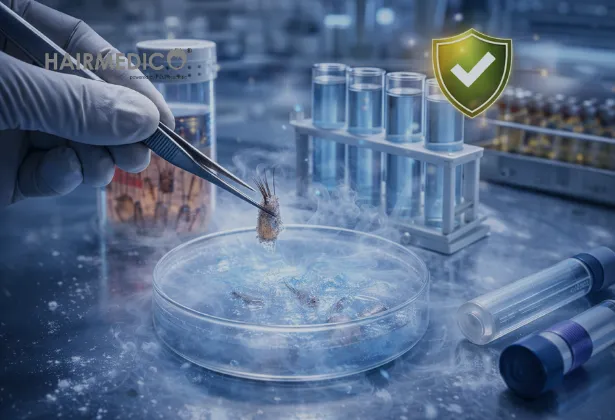
El trasplante capilar no se define por la cantidad de injertos extraídos ni por lo impactante que resulte un plan quirúrgico el día de la intervención. El verdadero éxito de un trasplante capilar se evalúa meses después, cuando los injertos sobreviven, crecen y maduran —o fracasan silenciosamente debido a daños microscópicos ocurridos mucho antes de la implantación. En la restauración capilar moderna, la preservación de los injertos se ha convertido en uno de los factores más decisivos que separan los resultados promedio de los resultados excelentes y duraderos.
En mi filosofía quirúrgica, los injertos no son unidades intercambiables. Cada unidad folicular es un microórgano vivo con requisitos metabólicos, térmicos y de oxigenación precisos. En el momento en que un injerto se extrae del cuero cabelludo, entra en un estado isquémico vulnerable. Cada segundo, cada variación de temperatura y cada error de manipulación importan. Las técnicas avanzadas de preservación de injertos existen para controlar estas variables de forma sistemática, no intuitiva.
Este artículo explora la ciencia, los protocolos y el razonamiento clínico detrás de la preservación avanzada de injertos, y explica cómo se maximizan las tasas de supervivencia mediante una práctica disciplinada y liderada por el cirujano, en lugar de atajos o flujos de trabajo orientados al volumen.
Un injerto capilar es una estructura viva compuesta por células epiteliales, células de la papila dérmica, tejido conectivo y restos microvasculares. Una vez extraído, pierde inmediatamente su suministro sanguíneo y depende de la difusión para obtener oxígeno y nutrientes hasta que se produce la revascularización tras la implantación. Este período se conoce como fase isquémica y es la ventana más peligrosa para la supervivencia del injerto.
Durante la isquemia, el metabolismo celular continúa, produciendo desechos y especies reactivas de oxígeno. Si el injerto se expone al calor, a la deshidratación, a traumatismos mecánicos o a un tiempo excesivo fuera del cuerpo, pueden producirse daños celulares irreversibles. De forma importante, estas lesiones suelen ser invisibles a simple vista. Un injerto puede parecer intacto y, sin embargo, estar biológicamente comprometido.
Las técnicas avanzadas de preservación tienen como objetivo ralentizar el metabolismo, reducir el estrés oxidativo, mantener la integridad de las membranas celulares y acortar la duración de la isquemia. La supervivencia no mejora con optimismo; mejora con control.
El tiempo es el enemigo más subestimado de la supervivencia de los injertos. El tiempo fuera del cuerpo se refiere al intervalo entre la extracción y la implantación. Cuanto más largo es este período, mayor es el riesgo de apoptosis y muerte folicular. Las clínicas avanzadas diseñan sus flujos quirúrgicos para minimizar este intervalo, en lugar de maximizar el número diario de injertos.
Esta es una de las razones por las que los modelos dirigidos por el cirujano y con número limitado de pacientes superan a los centros de alto volumen. En clínicas como <a href="https://hairmedico.com">Hairmedico</a>, el ritmo quirúrgico está determinado por la tolerancia biológica, no por la presión de la agenda. La extracción, la clasificación y la implantación se sincronizan para que los injertos se muevan de forma continua, en lugar de acumularse en bandejas de conservación durante largos periodos.
Reducir el tiempo fuera del cuerpo no es solo una cuestión de rapidez. Se trata de orquestación, disciplina del equipo y de negarse a superar cifras de injertos seguras para una sola sesión.
Reducir la temperatura de los injertos es una de las formas más eficaces de ralentizar el metabolismo celular y prolongar la viabilidad. La preservación hipotérmica disminuye la demanda de oxígeno y retrasa el daño isquémico. Sin embargo, el control de la temperatura debe ser preciso. Un frío excesivo puede dañar las membranas celulares, mientras que un enfriamiento insuficiente no reduce adecuadamente la actividad metabólica.
Los protocolos avanzados mantienen los injertos en un rango estable entre 2 °C y 8 °C mediante soluciones de preservación validadas y contenedores aislados. Se evita el contacto directo con el hielo, ya que la congelación daña las estructuras foliculares. La temperatura se supervisa de forma continua, no se da por supuesta.
El concepto es simple pero implacable: la estabilidad importa más que los extremos. Las clínicas que dependen de métodos de enfriamiento improvisados introducen una variabilidad que reduce directamente la consistencia de la supervivencia.
Durante mucho tiempo se consideró que el suero fisiológico era suficiente para almacenar injertos. La evidencia moderna demuestra que no lo es para una supervivencia óptima. El suero carece de capacidad tampón, antioxidantes y soporte metabólico. La preservación avanzada requiere soluciones específicamente diseñadas para mantener la homeostasis celular durante la isquemia.
Las soluciones contemporáneas contienen electrolitos equilibrados, agentes tampón para estabilizar el pH, antioxidantes para reducir el estrés oxidativo y, en algunos casos, sustratos energéticos. Reducen la hinchazón celular, preservan la función mitocondrial y mejoran la recuperación tras la implantación.
La elección de la solución no está guiada por el marketing. Es una decisión clínica basada en la composición, la osmolaridad y la compatibilidad con el tejido folicular. El uso de soluciones avanzadas es un requisito básico en una práctica quirúrgica seria, no una mejora opcional.
La deshidratación es una de las formas más rápidas de destruir un injerto. Incluso una exposición breve al aire puede provocar el secado del tejido folicular y causar daños irreversibles. Los protocolos avanzados garantizan que los injertos nunca se expongan innecesariamente y permanezcan completamente hidratados desde el momento de la extracción.
Esto incluye la transferencia inmediata a la solución, la manipulación cubierta durante la clasificación y una exposición controlada durante la implantación. Los equipos quirúrgicos están formados para tratar cada injerto como un tejido sensible al tiempo, no como un objeto estático.
Las lesiones por deshidratación no se manifiestan durante la cirugía. Revelan sus consecuencias meses después, en forma de baja densidad, crecimiento retardado o resultados irregulares.
El trauma mecánico es un destructor silencioso de injertos. El aplastamiento, el estiramiento, la presión excesiva de las pinzas y la manipulación repetida dañan las estructuras foliculares y comprometen la supervivencia. La preservación avanzada incluye protocolos estrictos de manipulación y el uso de instrumental especializado.
La selección de pinzas, la formación en control de presión, la limitación de la remanipulación y una clara separación de funciones dentro del equipo contribuyen a la reducción del trauma. Los injertos deben tocarse lo menos posible y solo por personal capacitado.
En centros de alto nivel, la manipulación de injertos no se delega de manera casual. Las responsabilidades están claramente definidas y las desviaciones del protocolo no se toleran, porque el coste es permanente.
Aunque el oxígeno es esencial para la vida, una exposición excesiva durante la isquemia puede, paradójicamente, aumentar el estrés oxidativo. Las especies reactivas de oxígeno se acumulan cuando la respiración celular se ve alterada, dañando el ADN y las membranas celulares.
Las estrategias avanzadas de preservación buscan equilibrar la exposición al oxígeno ralentizando el metabolismo en lugar de inundar el tejido con oxígeno. Las soluciones ricas en antioxidantes y el control de la temperatura trabajan conjuntamente para limitar el daño oxidativo hasta que se produce la revascularización tras la implantación.
Comprender este equilibrio requiere alfabetización biológica, no conjeturas.
La preservación no termina cuando comienza la implantación. El entorno del sitio receptor desempeña un papel decisivo en la supervivencia del injerto. Sitios mal preparados, sangrado excesivo, trauma tisular o una profundidad incorrecta comprometen la revascularización.
Las técnicas avanzadas enfatizan la creación atraumática de sitios, la angulación precisa y una planificación de densidad que respete el suministro vascular. El hacinamiento de injertos aumenta la competencia por oxígeno y nutrientes, reduciendo la supervivencia incluso si la preservación fue óptima.
Por ello, la preservación de injertos y el diseño quirúrgico no pueden separarse. La supervivencia es el resultado de un sistema, no de un solo paso.
Las clínicas que integran protocolos de preservación con métodos de implantación refinados —como los utilizados en <a href="https://hairmedico.com/sapphire-fue">el trasplante capilar Sapphire FUE</a>— logran resultados a largo plazo más consistentes y naturales.
Existe una relación inversa directa entre el volumen diario de injertos y la calidad de su preservación. A medida que aumenta el volumen, se intensifica la presión de tiempo, se multiplican los errores de manipulación y se alargan los intervalos isquémicos. Ningún lenguaje de marketing cambia esta realidad.
La preservación avanzada de injertos es incompatible con la cirugía de tipo fábrica. Requiere límites, pausas y la disposición a decir no a cifras inseguras. La fatiga del cirujano, la sobrecarga del equipo y los atajos logísticos reducen las tasas de supervivencia.
La calidad de la preservación es una elección filosófica tanto como una decisión técnica.
Las primeras 72 horas tras la implantación son críticas. Durante este periodo, los injertos dependen de la imbibición plasmática antes de que se formen nuevos vasos sanguíneos. Cualquier alteración —presión, trauma, deshidratación o infección— puede comprometer la supervivencia.
Las clínicas avanzadas educan a los pacientes de manera meticulosa sobre el cuidado postoperatorio, no como una ocurrencia tardía, sino como una extensión directa de la estrategia de preservación. Las instrucciones son precisas porque la biología lo es.
La supervivencia no termina cuando termina la cirugía.
La verdadera supervivencia de los injertos no se juzga a las dos semanas ni al mes. Se evalúa entre los 9 y 12 meses, cuando el calibre del cabello, la densidad y los patrones de crecimiento revelan si los folículos sobrevivieron intactos. Las clínicas que documentan y publican resultados consistentes a largo plazo demuestran la eficacia real de sus protocolos de preservación.
Estos principios se reflejan claramente en los <a href="https://hairmedico.com/before-after">resultados antes y después del trasplante capilar</a>, donde la uniformidad de la densidad y los patrones de crecimiento naturales indican una alta supervivencia y no una ilusión cosmética.
Prometer densidad sin garantizar supervivencia es poco ético. La sobreextracción, la prisa en los procedimientos o comprometer la preservación para aumentar el volumen conduce a una pérdida irreversible de los recursos donantes. Los pacientes no pueden regenerar los folículos perdidos.
Por lo tanto, la preservación avanzada de injertos es una obligación ética, no una preferencia técnica. Protege tanto el resultado inmediato como las opciones a largo plazo del paciente.
La investigación continúa en la optimización hipotérmica, los protectores celulares y la modulación metabólica. Sin embargo, la tecnología nunca reemplazará la disciplina. El futuro pertenece a las clínicas que combinan rigor científico con contención quirúrgica.
La preservación seguirá siendo el determinante silencioso del éxito: rara vez publicitada, nunca espectacular, pero siempre decisiva.
Las técnicas avanzadas de preservación de injertos no son mejoras opcionales. Son la base del trasplante capilar exitoso. Al controlar el tiempo, la temperatura, la hidratación, la manipulación y el entorno biológico, los cirujanos maximizan la supervivencia de los injertos y ofrecen resultados que maduran de forma natural a lo largo de los años, no solo en semanas.
En mi filosofía quirúrgica, cada injerto merece el máximo respeto. La preservación no es un paso del procedimiento; es su núcleo biológico y moral.
Your consultant is ready to answer your hair transplant questions, and you can also get a personalized online hair analysis.

 FR
FR
 DE
DE
 RU
RU
 ES
ES
 PL
PL
 PT
PT
 IT
IT
 CS
CS
 AR
AR
 TR
TR
 Free Hair Analysis
 Whatsapp