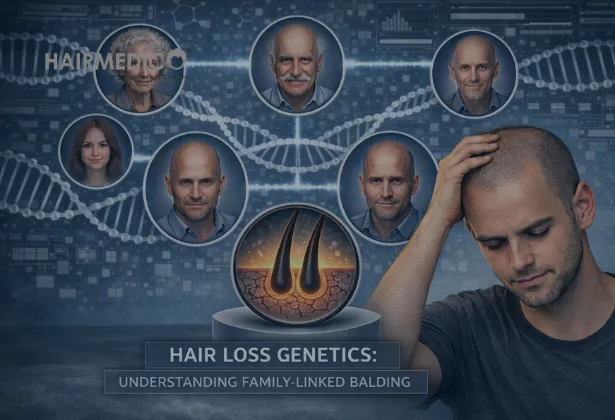
Hair loss is a deeply personal experience with far-reaching implications for confidence, identity, and self-perception. While lifestyle, environment, and health all contribute, genetics often plays a central role — especially in patterns we recognize as male or female pattern hair loss. This professional, authoritative exploration examines how inherited traits influence balding, what science tells us about risk factors, and how modern medical pathways can give patients clarity and effective options.
Every hair follicle on your scalp operates under intricate biological instructions coded in your DNA. These molecular blueprints dictate when follicles cycle through growth (anagen), regression (catagen), rest (telogen), and shedding. While this rhythm is natural, genetics can accelerate shifts that lead to thinning and balding.
Scientists have mapped multiple genes associated with hair density, follicle sensitivity to hormones, and the duration of the growth phase. When specific variations in these genes are inherited, hair follicles can become increasingly sensitive to dihydrotestosterone (DHT), a hormone derivative of testosterone known to miniaturize hair follicles and shorten their growth cycles.
This progressive miniaturization is a hallmark of androgenetic alopecia — a genetically influenced form of hair loss often referred to as male or female pattern baldness. Although environment and health factors matter, your genetic script lays the foundation.
Understanding genetic hair loss begins with looking at family history. If close relatives — particularly parents, grandparents, or siblings — experienced early or pronounced balding, your chances may be higher.
Hair loss doesn’t always follow simple inheritance rules like eye color. Instead, it reflects polygenic inheritance, meaning multiple genes contribute. This complexity explains why:
Some individuals with balding ancestors maintain a full head of hair.
Others with no obvious family history experience significant hair loss.
Patterns and age of onset vary widely even among siblings.
A detailed family history helps clinicians assess the probability that genetics are contributing to hair thinning. Knowing patterns across both maternal and paternal sides enriches the picture.
At the molecular level, androgenetic alopecia involves several interacting components:
Some hair follicles are genetically programmed to express higher levels of androgen receptors. When hormones like DHT bind to these receptors, they trigger biochemical signals that shorten the growth phase while prolonging the resting phase. Over time, follicle size diminishes, producing thinner, shorter hairs — a process known as miniaturization.
While androgen receptor sensitivity is key, research has identified additional genetic contributors:
Genes regulating inflammation: Chronic low-grade inflammation around follicles can accelerate shedding.
Genes affecting the extracellular matrix: These influence follicle support structures.
Cell-cycle regulation genes: Variations can change how rapidly follicles progress through their growth cycle.
Emerging science highlights epigenetics — how environmental factors influence gene expression. Stress, nutrition, and lifestyle factors may switch certain genes on or off, modulating hair loss risk even in genetically predisposed individuals.
Understanding whether hair loss is likely genetic helps patients seek timely interventions. Typical signs include:
Gradual thinning of the crown or temple areas.
Receding hairline in a defined pattern.
Family history of similar patterns.
Increased shedding without obvious triggers like illness or medication.
Healthcare professionals typically use clinical evaluations and trichoscopic imaging to assess follicle health, density patterns, and miniaturization — yielding a clearer picture of genetic influence.
Diagnosis starts with a comprehensive scalp examination and medical history. In some cases, providers may use supportive diagnostics such as:
Scalp imaging to quantify miniaturization.
Blood panels to rule out nutritional deficiencies or hormonal imbalances.
Genetic assays (though still emerging in clinical use) to assess predisposition.
Discussing family patterns, age of onset, and progression speed informs the likelihood that genetics are the dominant driver.
While genetic hair loss cannot be “cured” in the classical sense, a wide range of evidence-based therapies can slow progression and stimulate regrowth. The right plan depends on patient goals, age, hair loss stage, and lifestyle.
Topical treatments: Minoxidil is widely used to stimulate follicle activity and prolong the growth phase.
Oral medications: Finasteride and similar agents reduce DHT levels, slowing follicle miniaturization in many male patients.
Adjunctive therapies: Low-level laser therapy and platelet-rich plasma (PRP) injections offer supportive stimulation in select cases.
For many patients with advanced thinning or pattern baldness, surgical restoration offers transformative results. A medically guided journey — grounded in individualized assessment — ensures optimal outcomes.
Understanding the investment associated with advanced procedures is important for planning. Transparent pricing helps patients align expectations and resources with their goals; you can explore current options here: https://hairmedico.com/price.
A successful transformation involves more than the procedure itself. Effective programs integrate education, preparation, and ongoing care — creating a seamless experience for patients seeking confidence and long-term satisfaction. Deep insight into each phase of treatment enhances both outcomes and patient peace of mind; discover what to expect throughout the process at https://hairmedico.com/hair-transplant-journey.
Restoration doesn’t end when the procedure does. Comprehensive post-care is vital to protect grafts, support healing, and maximize results. This includes:
Medically supervised wound care.
Activity guidance to prevent strain on treated areas.
Nutritional support and lifestyle recommendations.
Follow-up evaluations to monitor regrowth patterns.
Understanding typical healing timelines, potential side effects, and milestones keeps patients informed and confident. Explore detailed aftercare protocols here: https://hairmedico.com/post-operation.
Although genetic hair loss often presents differently in women, its impact can be just as profound. Female pattern hair loss typically manifests as diffuse thinning across the crown and widening of the central parting, rather than the pronounced recession seen in many men.
Women with a family history of hair thinning should pay particular attention to hormonal changes associated with:
Pregnancy and postpartum periods.
Menopause.
Thyroid fluctuations.
Targeted clinical strategies — including hormonal assessments and specialized topical treatments — can temper progression and support density.
Hair loss is subject to numerous misconceptions. Let’s clarify several widespread myths:
Myth: Baldness comes only from your mother’s side.
Truth: Genetic hair loss involves multiple genes from both parents.
Myth: Hats or shampoos cause genetic hair loss.
Truth: Mechanical factors don’t influence genetic predisposition, though scalp health matters.
Myth: Hair loss stops after a certain age.
Truth: Without intervention, genetic hair loss often progresses over decades.
Clear, evidence-based communication empowers patients to make informed decisions with confidence.
While genetics sets the stage, day-to-day choices influence overall hair quality and resilience. Encourage habits that support follicular well-being:
Balanced nutrition rich in protein, iron, zinc, and B vitamins.
Stress management strategies like mindfulness and structured sleep.
Protective hair care practices to minimize damage.
Regular clinical check-ins to monitor changes early.
Holistic approaches complement targeted therapies and contribute to long-term satisfaction.
Hair thinning — particularly when driven by genetic factors — can impact self-esteem and emotional well-being. Patients often benefit from empathetic support and community connections. Clinicians trained in hair loss medicine recognize these dimensions and integrate compassionate guidance into care plans.
Encouraging patients to voice concerns, set realistic expectations, and participate actively in their treatment journey fosters empowerment and positive outcomes.
Emerging research continues to deepen understanding of hair loss genetics:
Gene expression profiling sheds light on individualized patterns.
Stem cell therapies hold potential for future follicle regeneration.
Targeted molecular treatments aim to modulate pathways involved in follicle sensitivity.
Although many innovations are still in clinical trial phases, progress signals a future where personalized, gene-informed strategies reshape care paradigms.
Not all hair thinning warrants specialist intervention, but signs that professional evaluation is advisable include:
Rapid progression or sudden changes.
Thinning accompanied by scalp irritation or inflammation.
Family history of early, pronounced balding.
Emotional distress affecting quality of life.
Early engagement with a qualified hair loss clinician enables proactive management and broader therapeutic options.
Every patient’s genetics, lifestyle, and goals are unique. Effective care plans are built through:
Thorough assessment of family history and clinical presentation.
Data-driven selection of medical and surgical options.
Ongoing measurement of progress and adaptive adjustments.
Integrated support addressing psychological, aesthetic, and functional needs.
This holistic, patient-centric model maximizes treatment value and long-term satisfaction.
While genetics significantly influences hair loss — especially in pattern balding — it does not consign individuals to a predetermined outcome. With informed evaluation, evidence-based therapies, and structured care pathways, patients can achieve meaningful improvements, preserve existing hair, and restore confidence.
Empowering individuals with knowledge about genetic risks and modern solutions ensures they make decisions aligned with their goals and lifestyle. Whether considering medical regimens, surgical options, or comprehensive lifestyle strategies, the right guidance unlocks real potential.
Hair loss genetics may tell part of your story — but with professional insight and tailored care, you define your future.
Your consultant is ready to answer your hair transplant questions, and you can also get a personalized online hair analysis.

 FR
FR
 DE
DE
 RU
RU
 ES
ES
 PL
PL
 PT
PT
 IT
IT
 CS
CS
 AR
AR
 TR
TR
 Free Hair Analysis
 Whatsapp