מהי השתלת DHI?
DHI — השתלה ישירה — היא חידוד של שיטת החילוץ FUE שמשנה את אופן ההשתלה של השתלים. במקום ליצור תחילה את כל ערוצי הקליטה ולאחר מכן להשתיל, DHI טוענת כל יחידה זקיקית ישירות לתוך עט השתלה מסוג Choi ומשתילה אותה בתנועה אחת.
עט ה-Choi הוא מכשיר בעל קצה חלול המאפשר למנתח לשלוט בעומק, בזווית ובכיוון של כל שתל ברגע ההשתלה עצמו — יצירת הערוץ והנחת הזקיק מתבצעות בו-זמנית בתנועה מדויקת אחת. הדבר מבטל את שלב ההמתנה בין יצירת הערוצים להשתלת השתלים, המתקיים ב-FUE הרגילה.
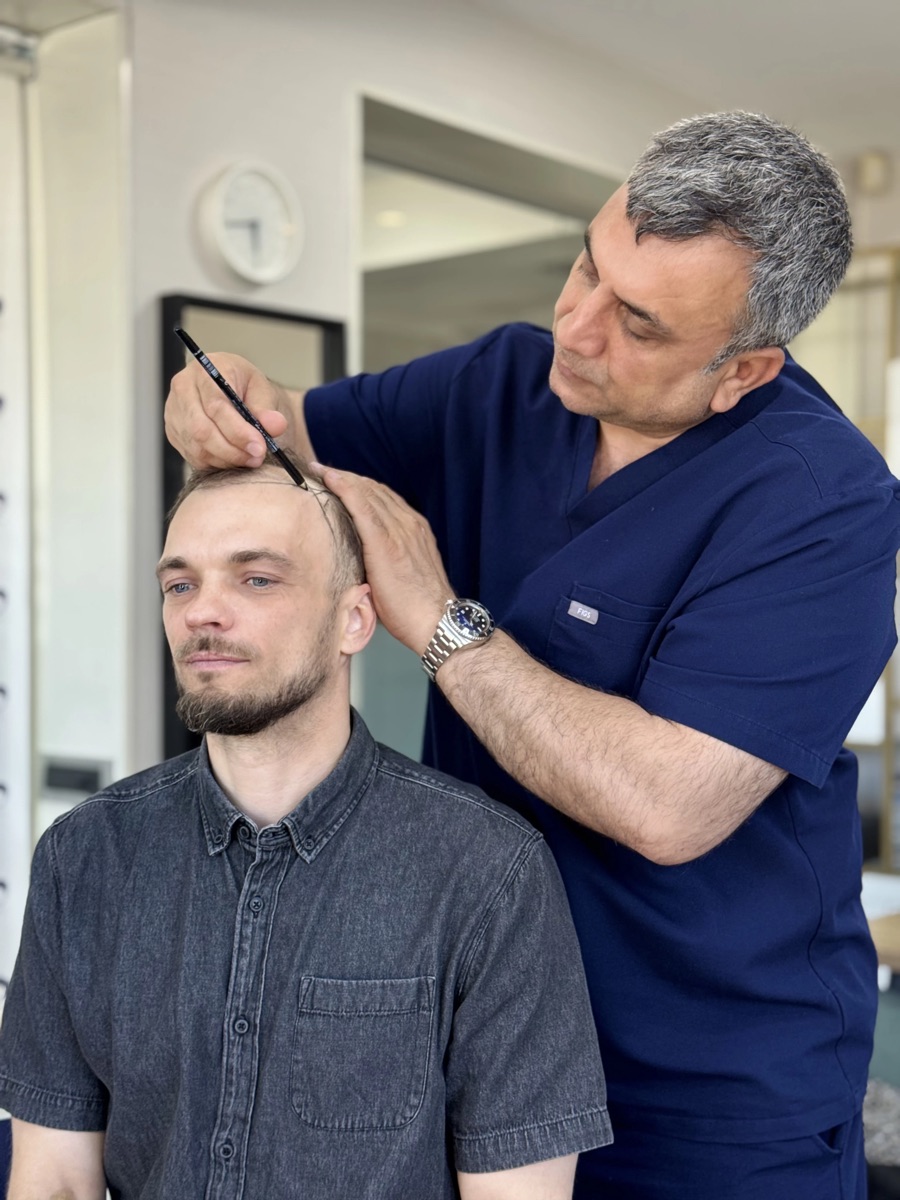
ב-Hairmedico, ד״ר ארסלן מוסבה מבצע אישית את שלב החילוץ ב-DHI ב-VIP. ב-VIP הוא גם טוען בעצמו כל שתל לתוך עט ה-Choi ומבצע את ההשתלה עצמה; ב-Silver וב-Gold שלב זה מתבצע בידי צוותו המיומן. רמת שליטה זו היא מה שמייחד את התוצאות שלנו מניתוחים המבוצעים על ידי טכנאים ללא פיקוח.
DHI מול FUE — ההבדל המרכזי
גם DHI וגם FUE הרגילה מחלצות יחידות זקיקיות מאזור התורם באמצעות אותה טכניקת ניקוב. שלב החילוץ זהה. ההבדל הוא כולו בשלב ההשתלה:
- FUE (עם להבי ספיר או פלדה): המנתח יוצר תחילה את כל ערוצי הקליטה, ולאחר מכן משתיל את השתלים. שני שלבים נפרדים — יצירת ערוצים, ואז השתלה.
- DHI (עט Choi): השתלים מושתלים ישירות, ללא ערוצים מוכנים מראש. יצירת הערוץ וההשתלה מתבצעות בו-זמנית בתנועה אחת.
המשמעות המעשית: DHI מאפשרת למנתח להשיג צפיפות גבוהה יותר, שליטה מדויקת יותר בזווית, וזמן קצר יותר שהשתל שוהה מחוץ לגוף. זוהי הטכניקה המועדפת לשיקום קו השיער, לעבודה על צפיפות הקודקוד, ולמטופלים עם שיער קיים באזור הקליטה המעוניינים להימנע מגילוח. ראו את מדריך ההשוואה המלא בין FUE ל-DHI לפירוט מלא.
הליך ה-DHI ב-Hairmedico
ניתוח DHI ב-Hairmedico פועל לפי אותו מבנה כללי כמו ניתוח FUE, כאשר שלב ההשתלה מטופל באופן שונה.
שלב החילוץ
החילוץ מתבצע באמצעות מכשיר ניקוב בגודל 0.7–0.9 מ"מ, לפי פרוטוקול הרצף של Algorithmic FUE™ שפיתח ד״ר ארסלן. השתלים מועברים מיד לתמיסת שימור.
שלב הטעינה
כל שתל נטען בקפידה לתוך עט השתלה מסוג Choi על ידי הצוות המקצועי בהובלת ד״ר ארסלן. מספר עטים מוכנים בסבב כדי לצמצם את הזמן שבו כל שתל שוהה מחוץ לגוף. שלב הטעינה דורש טיפול מדויק — זקיק שניזוק בשלב זה אינו ניתן לתיקון.
שלב ההשתלה
ההשתלה מתבצעת באמצעות עט ה-Choi, תוך שליטה בזווית (0–90°), בכיוון ובעומק של כל יחידה בנפרד; ב-VIP מבוצעת אישית על ידי ד״ר ארסלן. זהו השלב המורכב ביותר מבחינה טכנית ב-DHI, והסיבה העיקרית לכך שמעורבות המנתח אינה ניתנת לפשרה עבור תוצאה טבעית.
למה DHI מניבה תוצאות עדיפות בקו השיער
DHI אינה עדיפה על FUE באופן גורף — הטכניקה הנכונה תלויה באנטומיה של המטופל, באזור השיקום ובמספר השתלים הנדרש. עם זאת, ליעדים מסוימים, DHI עולה באופן עקבי על FUE הרגילה:
- חדות קו השיער: השתלה בתנועה אחת של כל שתל בזווית שנבחרה באופן פרטני מאפשרת קו שיער שמחקה דפוסי צמיחה טבעיים בדיוק יוצא דופן.
- צפיפות גבוהה: DHI מאפשרת השתלת שתלים בצפיפות גבוהה יותר ללא ערוצים מוכנים מראש שמצטופפים זה בזה. קריטי לשחזור מראה של צפיפות מלאה באזורים מדוללים.
- DHI ללא גילוח: ניתן לבצע DHI ללא גילוח אזור הקליטה — עט ה-Choi משתיל בין השערות הקיימות. מתאים למטופלים עם דילול חלקי שאינם יכולים לעבור תקופה עם קרקפת מגולחת גלויה.
- פחות טראומה: ללא ערוצים מוכנים מראש, פחות חתכים פתוחים באזור הקליטה בכל רגע נתון, מה שמפחית דימום ומאיץ את ההחלמה.
צפו בתוצאות DHI אמיתיות בגלריית לפני ואחרי שלנו — ניתן לסנן לפי טכניקה, מספר שתלים ודרגת נורווד.
למי מתאימה DHI במיוחד?
ד״ר ארסלן ממליץ על DHI עבור פרופילי המטופלים הבאים:
- מטופלים הזקוקים לשיקום קו השיער (נורווד II–IIIa) שבו דיוק הזווית קריטי
- שיקום קודקוד הדורש כיסוי צפוף ובעל מראה טבעי
- מטופלים עם שיער קיים באזור הקליטה המעוניינים בגילוח מינימלי
- מקרים הדורשים 2,000–4,500 שתלים שבהם צפיפות מרבית היא היעד העיקרי
- השתלות זקן ושיקום גבות, שבהן שליטה מדויקת בכיוון חיונית
עבור ניתוחים הדורשים יותר מ-4,500 שתלים, ד״ר ארסלן עשוי להמליץ על Algorithmic FUE™ או גישה משולבת — שתיקבע לאחר בדיקת התמונות שלכם.