Co je Norwoodova škála?
Norwood-Hamiltonova škála (běžně nazývaná Norwoodova škála) je standardní klasifikační systém pro mužské androgenní vypadávání vlasů. Vyvinul ji dr. James Hamilton v 50. letech 20. století a revidoval dr. O'Tar Norwood v roce 1975. Rozděluje mužskou androgenní alopecii do sedmi stadií podle vzoru a rozsahu vypadávání vlasů.
V Hairmedico používá dr. Arslan Musbeh Norwoodovu škálu jako jednu ze součástí komplexního posouzení — spolu s hustotou dárcovské oblasti, kalibrem vlasu, věkem a předpokládaným budoucím vypadáváním — k určení vhodnosti pro transplantaci a volbě techniky.
Sedm stadií
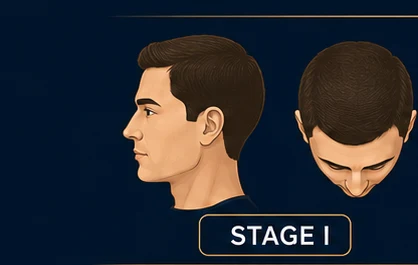
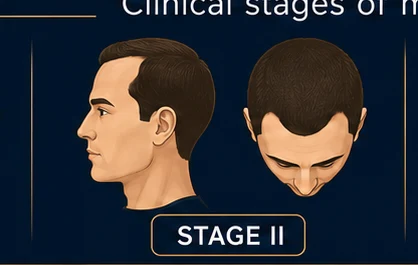
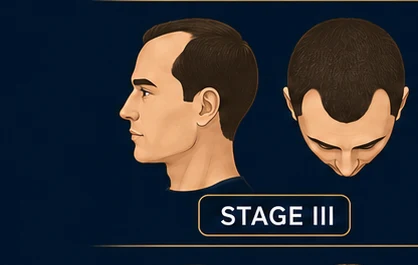
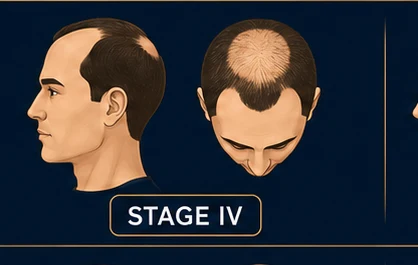
Norwood I — Bez výrazného vypadávání
Plná vlasová linie bez ústupu. Zpravidla nevhodné pro transplantaci vlasů. Doporučuje se sledování.
Norwood II — Mírný ústup ve spáncích
Drobný ústup ve spáncích. Lze zvážit časnou úpravu vlasové linie. Obvykle postačuje 800–1 500 štěpů. Pro přesnou práci na vlasové linii v tomto stadiu se běžně doporučuje DHI.
Norwood III — Středně výrazný ústup
Výraznější ústup ve spáncích tvořící zřetelný tvar M nebo V. 1 500–2 500 štěpů. Nejběžnější stadium, ve kterém pacienti poprvé vyhledávají léčbu. Zahrnuje také stadium IIIv — řídnutí temene s minimálním ústupem vlasové linie.
Norwood IV — Výrazný ústup + temeno
Znatelný ústup vlasové linie v kombinaci s řídnutím temene. Můstek vlasů mezi čelem a temenem se zužuje. 2 500–3 500 štěpů. Podle prioritní oblasti se volí Sapphire FUE nebo DHI.
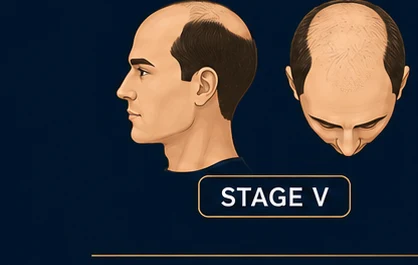
Norwood V — Rozsáhlé vypadávání
Můstek mezi čelem a temenem je zúžený nebo zcela chybí. Vypadávání postihuje většinu horní části hlavy. 3 500–5 000 štěpů. Vyžaduje pečlivé plánování dárcovské oblasti — metodika Algorithmic FUE™ je v tomto stadiu obzvláště důležitá.
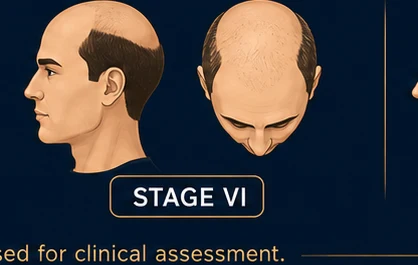
Norwood VI — Pokročilé vypadávání
Čelo, temeno i horní část hlavy jsou z velké části holé. Zůstává jen pruh vlasů ve tvaru podkovy po stranách a vzadu. 4 500–6 000 štěpů. Limitujícím faktorem se stává dostupnost dárcovské oblasti. Dr. Arslan před přijetím těchto případů pečlivě posuzuje životaschopnost dárcovské oblasti.
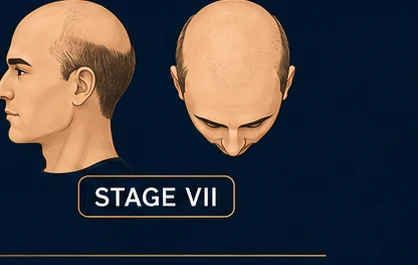
Norwood VII — Závažné vypadávání
Zůstává jen tenký pruh vlasů po stranách a vzadu. Velmi omezená dárcovská oblast. Transplantace může poskytnout částečnou obnovu — rozsah je určen tím, co dárcovská oblast bezpečně poskytne bez viditelného vyčerpání.
Přibližný počet štěpů podle stadia
Jedná se o obecné rozsahy — individuální potřeba závisí na velikosti hlavy, ploše pokrytí, kalibru vlasu a požadované hustotě:
- Norwood II: 800–1 500 štěpů
- Norwood III: 1 500–2 500 štěpů
- Norwood IIIv/IV: 2 500–3 500 štěpů
- Norwood V: 3 500–5 000 štěpů
- Norwood VI: 4 500–6 000 štěpů
- Norwood VII: Posuzuje se individuálně — omezeno dárcovskou oblastí
Přesný počet štěpů určí dr. Arslan po prohlédnutí vašich fotografií. Prohlédněte si skutečné výsledky podle Norwood stadia a projděte si možnosti balíčků pro váš rozsah počtu štěpů.