
FUE explained — the fundamentals
FUE (Follicular Unit Extraction) is the most widely performed hair transplant technique globally. It extracts individual hair follicles in their natural groupings of 1–4 hairs from the donor zone (back and sides of the scalp) and transplants them to areas of thinning or baldness. The procedure leaves no linear scar, requires no stitches and produces permanent, naturally growing results.
FUE replaced the older FUT (strip) technique as the standard of care because it: produces no linear scar; allows flexible donor zone management; enables the unshaved option in many cases; and provides a shorter, less demanding recovery period.
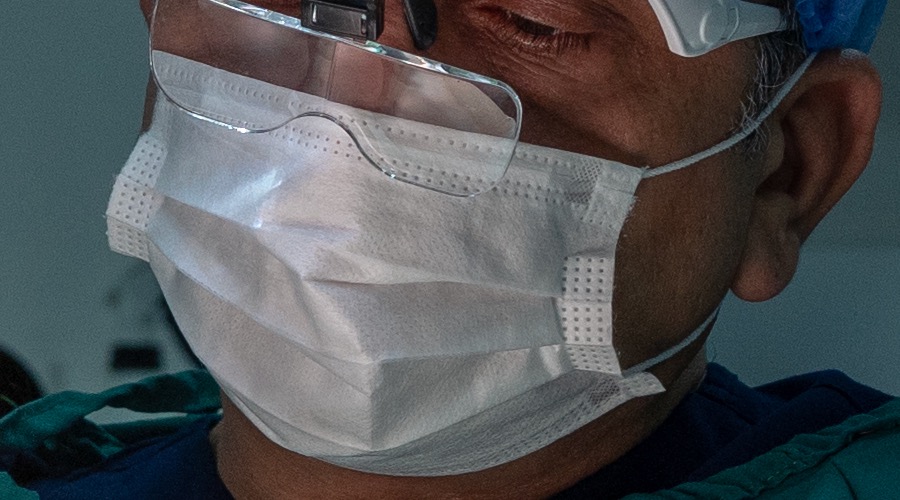
The complete step-by-step procedure
Step 1 — Morning consultation and design (Day 0, 8:00–9:00): Trichoscopy assessment. Hairline design with Dr. Arslan. Patient approval.
Step 2 — Anaesthesia: Comfort-in needle-free injector. Local anaesthetic administered without needles. Scalp fully numb within 10 minutes.
Step 3 — Extraction (3–4 hours): Dr. Arslan extracts follicles individually with 0.75–0.85mm micro-punch. Each inspected under magnification. Stored in chilled preservation solution.
Step 4 — Channel creation (45–90 min): Sapphire blades create recipient channels at precise angles, directions and depth. The most artistically demanding phase.
Step 5 — Implantation (2–3 hours): Single-hair grafts at hairline. Two and three-hair grafts mid-scalp for density.
Step 6 — Post-operative: Dressing. Aftercare kit. First wash at clinic Day 2.
FUE recovery timeline
Day 1–10: Critical graft anchoring period — minimal contact with recipient zone. Day 10–14: Scabs shed naturally. Week 2–5: Shock loss. Month 3–5: Nouveau growth begins. Month 12–14: Final permanent result. Desk work: 5–7 days off. Physical labour: 14 days. Exercise: 21 days for light activity.

Frequently Asked Questions
Yes. AI is used for trichoscopy donor density mapping, graft count estimation from photographs, and digital hairline design simulation. At Hairmedico, AI-assisted trichoscopy is part of the Algorithmic FUE planning process. Robotic extraction is not used — Dr. Arslan's manual FUE achieves lower transection rates across all hair types.
AI simulation tools can show proposed hairline positions on photographs, but cannot predict actual graft survival (depends on surgeon quality), actual density (depends on hair calibre), or how the result interacts with future native hair loss. They are design communication aids, not result guarantees.
Not in the foreseeable future. AI adds value in data analysis (density mapping, graft counting) but cannot replace the aesthetic judgment required for natural hairline design, the technical adaptation required for diverse hair types, or the long-term clinical planning that accounts for individual hair loss trajectories.
- International Society of Hair Restoration Surgery. Practice census — global hair restoration statistics.. 2022. fue-europe.com
- Onda M et al. Follicular unit extraction: a systematic review. J Plastic & Aesthetic Chirurgie. 2020. doi.org
- NHS. Hair loss — overview. National Health Service UK. 2023. nhs.uk
- MedlinePlus NIH. Hair transplantation — clinical overview. U.S. National Library of Medicine. 2024. medlineplus.gov
- Bernstein RM. Follicular unit transplantation. Dermatologic Cliniques. 2013. doi.org
All references are peer-reviewed medical literature or official health authority publications. No commercial sources included.
Dr. Arslan Musbeh
- ✓ FUE Europe — Full Member
- ✓ Ministry of Health accredited
- ✓ 17+ years · 3,000+ cases
- ✓ One patient per day
- ✓ Algorithmic FUE™ creator