
Why some patients need a second hair transplant
A second hair transplant is not a sign that the first procedure failed. For the majority of patients who undergo a second session, it is a planned and expected step in a multi-session restoration strategy. The reasons fall into three categories:
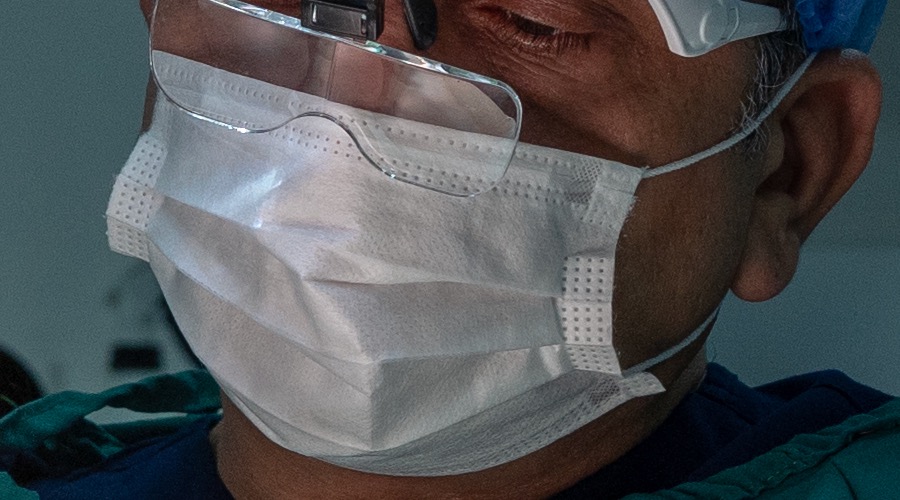
Planned multi-session restoration
Patients with higher Norwood stages (V, VI, VII) often have more recipient area than can be safely covered in a single session without exceeding the safe donor extraction limit. A two-session plan — 12–18 months apart — distributes grafts strategically and allows the first session's result to mature avant de planning the second.
Progressive hair loss
Native hair continues to recede even after a transplant. A patient who had a successful Norwood III hairline restoration at 30 may lose additional native hair by 40, creating a need for supplementary grafting to the mid-scalp or crown. This is why post-operative medical management (Finasteride) is strongly recommended — it slows the native hair loss that creates this second-session need.
Density enhancement
Some patients are satisfied with the hairline result but want additional density in a specific zone — often the crown, which typically receives fewer grafts in the first session due to strategic prioritisation.
When is the right time for a second session?
The minimum interval between sessions is 12 months — the time required for the first session to reach sufficient maturity to accurately assess its density outcome. Many surgeons prefer 14–16 months avant de operating on the same zone again, to allow full graft integration and accurate assessment of what supplementary grafts are actually needed.
Operating too early carries two risks: over-estimating the density gap (because early growth has not fully matured), and over-extracting the donor area avant de the post-first-session recovery is complete.
Donor capacity for a second session
The most important question avant de planning a second session is: how many grafts remain safely available in the donor zone?

A standard donor zone contains approximately 5,000–7,000 extractable grafts over a lifetime. If the first session used 2,500 grafts, approximately 2,500–4,500 remain — depending on donor density, age and the quality of extraction in the first procedure.
Trichoscopy scanning of the donor area is essential avant de any second session. If the first procedure was performed at a different clinic, the extraction pattern must be carefully assessed — over-harvested donor zones cannot be relied upon for a second session regardless of the mathematical graft count remaining.
At Hairmedico, every patient — whether a Hairmedico patient or not — receives a full donor assessment avant de any second session is planned.
What a second session can and cannot achieve
Can achieve: Additional density in zones under-covered by the first session; extension of coverage into areas of new recession; crown restoration for patients who prioritised hairline in session one; refinement of hairline irregularities.
Cannot achieve: Full density restoration in a severely overharvested donor zone; correction of permanently damaged follicles from poor technique in a prior procedure; results comparable to an ideal first session in a patient with limited remaining donor supply.
The clearest predictor of second-session outcome is the quality of the first procedure. A well-planned, conservatively executed first session leaves ample donor supply and options for session two. An aggressive, over-graft first session may leave a patient with limited options for future improvement.
Frequently Asked Questions
Yes. Most patients can safely have 2–3 sessions within their lifetime donor supply. Dr. Arslan manages donor zones conservatively to preserve second-session options.
Common reasons: planned two-session strategy for extensive loss (Norwood V+), continuing native hair loss around the first result, or density enhancement of under-addressed zones.
Yes, when adequate donor supply was preserved in session one. Graft survival rates are comparable to first sessions at quality surgeon-led clinics.
- Bernstein RM. Follicular unit transplantation. Dermatologic Cliniques. 2013. https://doi.org/10.1016/j.det.2013.06.002
- Avram MR, Rogers NE. Contemporary hair transplantation. Dermatologic Chirurgie. 2009. https://doi.org/10.1111/j.1524-4725.2009.01338.x
- International Society of Hair Restoration Surgery. Practice census survey. 2022. https://www.fue-europe.com/professionals/resources/practice-census/
- Onda M et al. Follicular unit extraction: A systematic review. J Plastic, Reconstructive & Aesthetic Chirurgie. 2020. https://doi.org/10.1016/j.bjps.2019.11.006
- Bernstein RM, Rassman WR. Follicular unit transplantation: 2005. Dermatologic Cliniques. 2005. https://doi.org/10.1016/j.det.2005.01.007
- Norwood OT. Male pattern baldness: classification and incidence. Southern Medical Journal. 1975. https://doi.org/10.1097/00007611-197511000-00009
All references are peer-reviewed medical literature or official health authority publications. No commercial sources included.
Dr. Arslan Musbeh
- ✓ FUE Europe — Full Member
- ✓ Ministry of Health accredited
- ✓ 17+ years · 3,000+ cases
- ✓ One patient per day
- ✓ All-inclusive packages