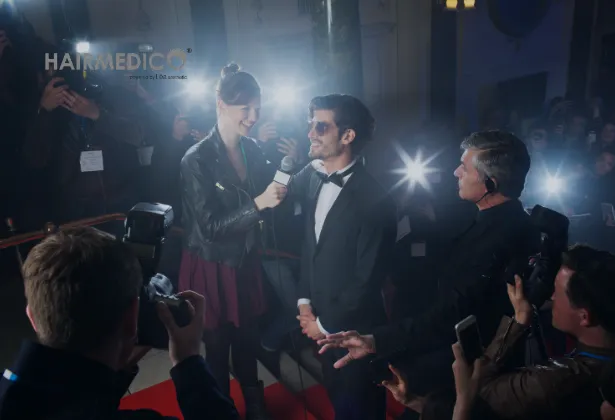
Few aesthetic procedures are scrutinized as closely as hair transplants performed on celebrities. Public figures live under constant visual pressure—high-definition cameras, unforgiving lighting, and social media magnification. When a visible transformation occurs, curiosity follows.
Yet what most people see is only the result, not the medical strategy behind it. Celebrity hair transplants are often misunderstood as “high graft count miracles” or “secret techniques.” In reality, they succeed for the same reasons any excellent transplant succeeds: planning, restraint, surgeon involvement, and respect for biology.
This article separates myth from medicine and explains what non-celebrities can realistically learn from famous hair transformations.
One of the most persistent misconceptions is that celebrities receive special follicles, experimental techniques, or shortcuts unavailable to ordinary patients. This is false.
Celebrities benefit from:
Early intervention
Conservative, staged planning
Top surgeon involvement
Strong donor preservation
Long-term strategy
They do not benefit from breaking biological rules. Hair follicles behave the same in actors, athletes, and office workers.
The most impressive celebrity hair transplants share several characteristics:
Subtle Hairline Design
Natural celebrity results avoid aggressive, youthful hairlines. Instead, surgeons design age-appropriate lines with micro-irregularities.
Moderate Density, Perfect Distribution
Rather than extreme graft numbers, density is created visually through correct angles and spacing.
Single-Hair Grafts in the Front
The hairline zone is built almost exclusively with single-hair follicular units.
Multiple Sessions Over Time
Many celebrity transformations occur gradually across 2–3 sessions, not one extreme procedure.
These principles are universal—not exclusive.
While ethical medicine avoids naming or diagnosing individuals directly, many widely discussed transformations follow similar medical logic.
Early Thinning, Early Action
Celebrities who address hair loss at Norwood II–III stages often require fewer grafts and achieve better density.
Combination Therapy
Hair transplantation is usually combined with medical treatments to stabilize existing hair.
Density Illusion, Not Overcrowding
Even when the scalp looks “full,” actual graft density often remains within safe biological limits.
The lesson: timing and planning matter more than visibility.
Ironically, the biggest difference between celebrity and non-celebrity patients is what they avoid:
They do not chase unrealistic graft numbers
They do not demand one-day miracles
They do not ignore long-term donor management
They do not treat hair transplants as cosmetic shortcuts
Most poor outcomes come from impatience, not from technique.
Celebrities can disappear from public view during the early healing phase. This allows:
Proper scab resolution
Natural shedding without anxiety
Calm, inflammation-free recovery
Ordinary patients often rush social exposure too early, increasing stress and poor decisions (such as premature cosmetic concealment).
The biological timeline is the same—but lifestyle choices differ.
Early intervention preserves donor hair and allows conservative planning.
Celebrity surgeons plan results that still look natural at age 50 or 60.
Visual density beats numeric density every time.
FUE, Sapphire FUE, and DHI are tools—not guarantees.
Every successful celebrity case respects three core medical rules:
| Principle | Why It Matters |
|---|---|
| Donor preservation | Enables future corrections |
| Angle control | Determines natural appearance |
| Biological healing | Protects long-term survival |
Breaking any of these rules leads to artificial or short-lived results—famous or not.
High-volume clinics focus on speed, not artistry. Celebrities almost always choose:
Surgeon-led procedures
Low daily patient volume
Customized planning
Manual control of critical steps
This difference alone explains most outcome gaps.
At clinics such as Hairmedico, the philosophy mirrors this approach: individualized surgery rather than production-line medicine.
One overlooked element in celebrity transformations is confidence. Natural results enhance facial harmony rather than dominate it. Over-dense, artificial hairlines draw attention; subtle ones disappear into the face.
The best transplant is the one no one notices.
No—and ethical surgeons will refuse.
Your face shape, age, donor capacity, and hair characteristics are unique. Celebrity inspiration should guide principles, not designs.
Do celebrities use more grafts than regular patients?
Usually not. They often use fewer, placed better.
Do celebrities get multiple surgeries?
Yes, staged planning is common.
Are their results permanent?
Yes, when donor management is respected.
Can I achieve similar results?
With realistic expectations and proper medical planning, yes.
Celebrity hair transplants are not magical—they are disciplined. They succeed because biology is respected, surgeons are deeply involved, and time is allowed to do its work.
The real lesson is not who had a transplant—but how responsibly it was done.
Dr. Arslan Musbeh is an internationally recognized hair transplant surgeon and founder of Hairmedico. With over 17 years of experience, he approaches hair restoration as a balance of medical science, long-term planning, and aesthetic restraint. Working under a strict one-patient-per-day model, he focuses on natural, sustainable outcomes rather than short-term visual impact.

 FR
FR
 EN
EN
 DE
DE
 RU
RU
 ES
ES
 PL
PL
 IT
IT
 CS
CS
 AR
AR
 TR
TR
 Análise capilar gratuita
 Whatsapp